Why EU is shifting its Arctic strategy towards defence and what it means for India
The EU is shifting its Arctic strategy towards defence due to Russia’s military actions, China’s ambitions, and tensions over Greenland, impacting Europe's security and India's Arctic partnerships.
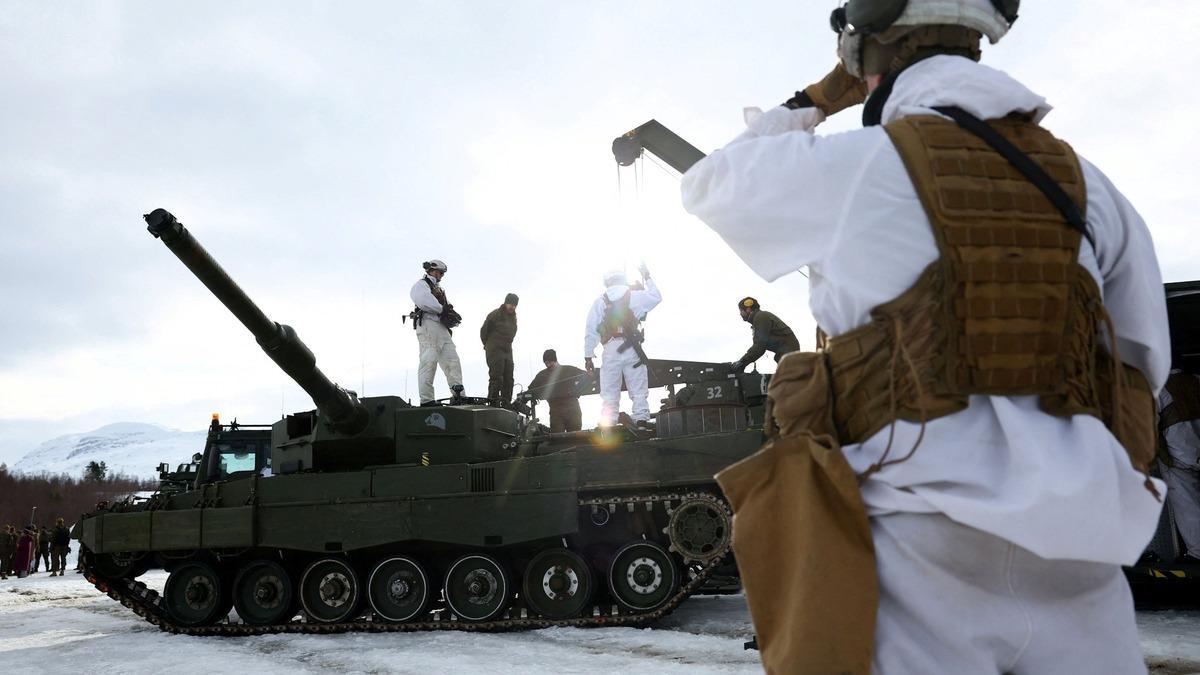
Russia’s military actions, China’s growing Arctic ambitions and tensions over Greenland are changing Europe’s priorities in the far north. The European Union’s new Arctic strategy, announced on Tuesday (October 20), puts security at the centre of its response. The plan calls for greater icebreaking capacity, closer military coordination with NATO and stronger protection for undersea cables. According to the European Commission, climate action and scientific cooperation remain priorities but Europe also needs to strengthen its ability to operate in the region and protect critical infrastructure.
“The Arctic is no longer insulated from the world’s geopolitical tensions,” EU foreign policy chief Kaja Kallas said, according to Euronews. The shift from the bloc’s 2021 approach is clear: cooperation now sits alongside a stronger emphasis on defence and preparedness. For India, that shift has practical relevance. New Delhi is deepening Arctic research partnerships with Nordic countries while pursuing shipping cooperation with Russia, giving it interests on both sides of the region’s widening political divide.
There are two changes that explain Europe’s new strategy: a warming Arctic and a deteriorating security environment. According to the Commission, the region is warming nearly four times faster than the global average. Retreating ice makes some routes and resources more accessible, while threatening ecosystems and livelihoods. The European Parliamentary Research Service said Russia’s invasion of Ukraine undermined Arctic cooperation and increased mistrust.
It noted that while the 2021 policy addressed security, it did not make defence a central pillar. NATO’s assessment identifies Russia’s reopening of military sites and testing of weapons, alongside growing Chinese interest in energy, minerals and maritime access. Finland and Sweden’s accession has also strengthened NATO’s northern presence, the alliance said. Icebreakers, surveillance and military mobility Brussels is responding with proposals that combine military preparedness with equipment and infrastructure serving civilian needs.
According to the Commission’s strategy, Europe will assess its icebreaker requirements and explore joint purchasing and resource-sharing. These vessels support navigation, research, emergency response and cable repair. A planned maritime security hub would bring together information from EU countries and partners. The Commission said it would improve monitoring of maritime infrastructure, shadow-fleet activity, illegal fishing and pollution, while supporting search-and-rescue operations.
Euronews reported that the strategy also envisages satellite-based surveillance and closer cooperation with NATO to improve military mobility. Better transport connections would help move troops and equipment across the Arctic when required. The practical implication is that roads, ports and communications systems will increasingly be planned around both civilian needs and defence requirements. Northern routes could shorten some journeys between Europe and Asia and offer alternatives to the Suez Canal and Red Sea.
But the Northern Sea Route follows Russia’s Arctic coast. As Euronews reported, Moscow has invested in that corridor while China promotes its Polar Silk Road. Europe therefore has to consider whether greater northern access also creates new dependencies. Traffic in the region is already increasing with the Arctic Council’s marine working group, PAME, recording 1,812 individual ships in the Arctic Polar Code area in 2025, 40% more than in 2013.
The combined distance they travelled rose 95%. Those figures cover regional activity, not simply Europe-Asia crossings. Fishing vessels accounted for 40% of ships, PAME said. The figures do not establish that Arctic routes can replace Suez. The International Maritime Organization also warned that remoteness makes rescue and pollution clean-up difficult and costly. Digital connections raise similar questions.
The Commission’s factsheet proposes a secure cable linking Greenland directly to Europe, with potential extensions towards Canada and Japan. Euronews reported plans for an Arctic cable hub to protect and repair submarine connections. Additional routes would reduce vulnerability when an existing link fails. New Delhi wants closer scientific cooperation with Nordic countries while developing shipping links with Russia — the country at the centre of Europe’s Arctic security concerns.
The scientific stakes reach back home. India’s 2022 Arctic policy prioritises understanding links between Arctic changes, India’s climate and the Himalayas, according to the Ministry of Earth Sciences. A May 2026 PIB backgrounder identifies monsoon patterns, food and water security among India’s concerns. Arctic research therefore has practical relevance for a country heavily dependent on seasonal rainfall.
That research already has a European base. India operates Himadri in Norway’s Svalbard archipelago, according to the National Centre for Polar and Ocean Research. At the May 2026 India-Nordic summit, Prime Minister Narendra Modi pledged deeper Arctic and polar research cooperation. Alongside this, India is pursuing commercial opportunities with Moscow. The December 2025 India-Russia summit statement committed the two countries to strengthening the Northern Sea Route and welcomed an agreement to train specialists for ships operating in polar waters.
These are concrete cooperation commitments, although they do not establish the commercial viability of any particular route. The EU strategy announced no India-specific initiative. Its significance for New Delhi lies in the changing conditions around these partnerships: European investment in polar science could support collaboration, while deeper confrontation with Russia could complicate shipping ambitions.
India’s challenge is to expand its Arctic engagement as its partners increasingly approach the region through competing security priorities. The test of delivery For Europe, delivery remains the immediate test. Joint procurement requires agreement over funding and access; cables, transport links and mines take years to develop. There is also a local test. More than 500,000 EU citizens live in the Arctic, according to the Commission.
The strategy commits to Indigenous Peoples’ free, prior and informed consent in decisions affecting them. Europe’s new approach brings security, economic opportunity and environmental protection into the same policy. Its credibility will depend on whether investment produces useful infrastructure and protection while respecting the people whose home is becoming an arena of strategic competition.