The outcome of the US midterm elections will determine if Trump becomes a lame or angry duck president, influencing US-Iran war dynamics, global oil prices, and India's strategic energy ties with the western hemisphere.
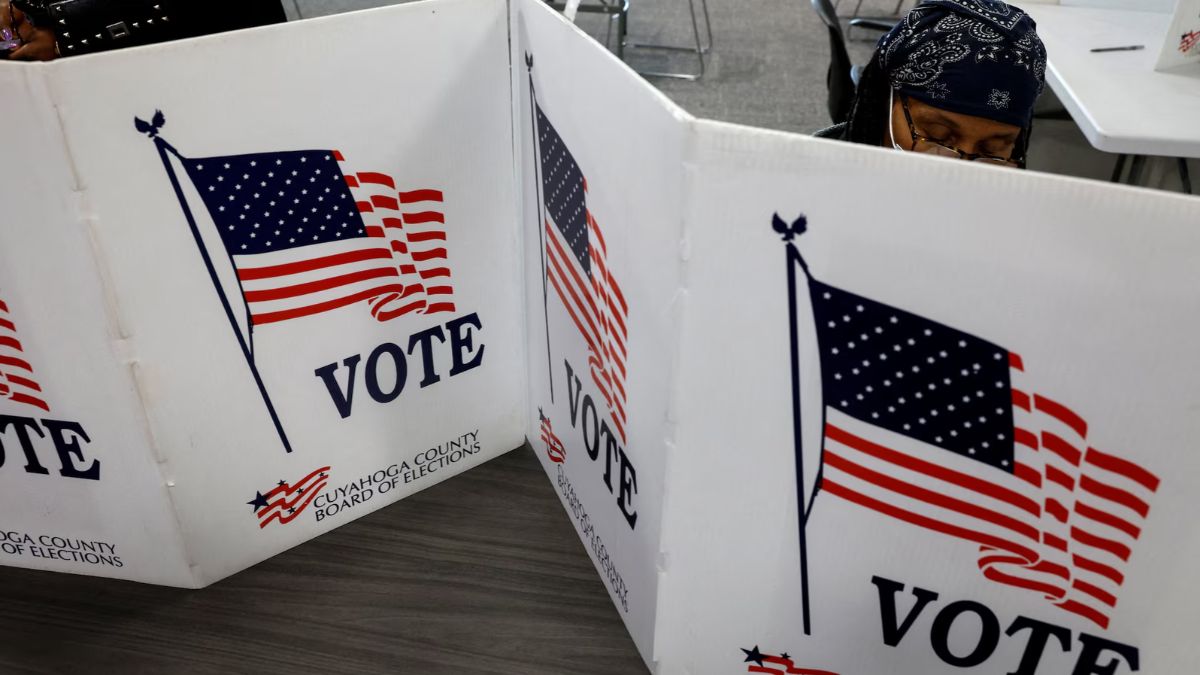
By N Chandra Mohan The US midterm elections, which concluded yesterday, will soon indicate whether Donald Trump becomes a lame or angry duck US President depending on whether the Republicans lose control of the House of Representatives (HoR) and Senate. The opinion polls—which can go wrong—suggest that the Democrats are favoured to win a majority of seats in the HoR. If they flip the Senate as well, Trump becomes a lame duck US President as his administration will be tied up in endless investigations and subpoenas.
The US Congress might even vote to end his war on Iran. But Trump is unlikely to accept defeat and will force a showdown in Capitol Hill. As an angry duck President, he will use his executive or veto powers to push his agenda. Topping his priorities after the midterm elections is the prospect of striking Iran. Oil prices have drifted lower due to last-minute peace initiatives but a potential escalation is imminent.
Although the war—that has been going on since February 28—has been punctuated by recurring ceasefire episodes, Brent spot prices averaged $103 a barrel in March-October 2026, up 51% from March-October 2025. Fuel shocks don’t augur well for energy import-dependent countries like India. The average Indian crude basket hit $120 barrel in October as the war entered a dangerous phase following strikes by Iran-backed Yemeni Houthi forces on Saudi Arabia and closure of the Strait of Hormuz, through which a fifth of global oil supplies pass.
If Democrats control the US Congress, Trump has only a narrow window of two to three months to resume bombing Tehran. According to the US President, higher oil prices are a small price to pay for the security of the US and the world. But he will certainly face the heat if they oppose open-ended funding for the war and even demand inspection of damaged US bases in West Asia, all of which increases pressure on him to negotiate a ceasefire.
Around 274 structures at 24 installations were damaged in the war’s first six months. Earlier this month, five Democrats on the Senate Armed Services Committee urged the Defense Department to publicly disclose the cost of damage to US facilities, according to the Wall Street Journal. However, the war on Iran objectively advances Trump’s ambitious agenda to ensure energy dominance of the western hemisphere.
The eight month-long conflict has seen surging oil prices as more than 2 billion barrels of oil have been lost due to attacks on energy infrastructure and tankers in the Strait, some of which is washing up on the shores of the United Arab Emirates. As this conflict is perceived to be prolonged, the advantage is shifting to the western hemisphere. Due to “resource imperialism”, the US now controls more than 65 billion barrels of proven oil reserves in Venezuela.
Argentina’s Vaca Muerta shale formation is believed to be three times the size of the Permian Basin in Texas, the heart of the US shale boom. Herein lies perhaps the only benefit for India in dealing with a lame or angry duck Trump administration. This is to process oil from Venezuela and the western hemisphere and sell it to customers who are keen to diversify away from West Asia. The US sees Venezuela as a potential substitute for Saudi Arabia, which is having a lot of difficulty getting its oil to the global market due to double chokepoints in the Strait of Hormuz and Bab-el-Mandeb.
The Saudis have no option but to send oil north through the Suez Canal that is longer and costlier for its exports. The shift to the western hemisphere will also erode any medium-term pricing power traditionally enjoyed by the Saudis or the oil cartel, Organisation of Petroleum Exporting Countries. The Jamnagar refinery’s Nelson Complexity index of 21.1—the highest in the world—gives it the flexibility to process almost all the crude oil grades including the heavier Venezuelan oil.
Simply put, the US wants Reliance to process crude from Venezuela and pump refined products like diesel into the global oil market. Reliance is also backing a refinery in Brownsville, Texas, that will process lighter shale oil produced in the US. The big question is how India can strategically leverage Reliance’s growing importance for Indo-US ties. Post-midterms, India unfortunately does not have much else to be gained from a weakened Trump administration.
War clouds gathering again over Tehran cannot come at a worse time for our external accounts. Elevated global oil prices will raise domestic inflation and further widen the current account deficit this fiscal, besides weakening the rupee. The interim bilateral trade deal was bedevilled by uncertainties over the tariff architecture. Although Trump will resist congressional oversight over tariffs, it remains to be seen how the changing balance of power in the HoR and Senate might influence the contours of a mutually beneficial interim trade deal.
The writer is an economics and business commentator based in New Delhi Disclaimer: The views expressed are the author's own and do not reflect the official policy or position of Financial Express.