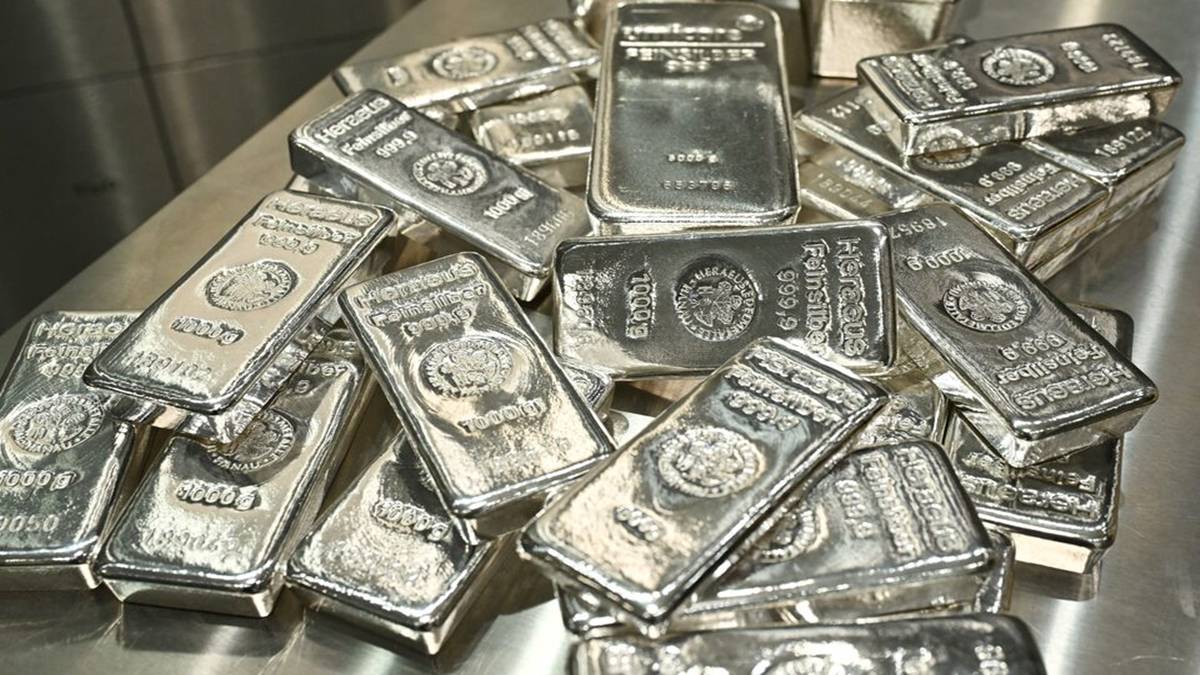
Silver crashes 46% from record high in India; what should investors watch next?
Silver has fallen about 45.8% from its record Rs 3,84,632 per kg in India, while international prices have plunged around 54% from their January peak of $121 per ounce. Investors are watching whether the correction will deepen or the metal will recover.
Indian silver investors are facing steep losses after the metal suffered a sharp correction from its record high. Silver touched Rs 3,84,632 per kg on January 29. By October 19, it had fallen to Rs 2,08,380 per kg, a decline of Rs 1,76,252, or about 45.8%, from the peak. In the international market, silver prices fell to around $56.50 per ounce on Tuesday, extending recent losses. The metal has dropped more than 13% in the past month, although it remains up around 17% over one year.
From its January peak of $121 per ounce, silver has plunged about 54%, giving back much of its record-breaking rally. What has changed? Higher oil prices are fuelling inflation concerns, bond yields remain elevated, and the US dollar has strengthened. These factors have raised expectations that central banks may keep monetary policy tight for longer, putting pressure on silver. Silver price outlook: Where could prices go next?
J.P. Morgan Global Research expects silver to trade at $63 per ounce in the fourth quarter of 2026. It forecasts an average price of $70 per ounce for 2026 and $63 per ounce in 2027. The bank has cut its 2026 average forecast from $84 per ounce, which it had projected in May, to $70. The revision signals a more cautious outlook after the metal's sharp correction. Mike McGlone, senior commodity strategist at Bloomberg Intelligence, has also warned of further downside.
According to Kitco, he sees the possibility of silver falling to $50 per ounce in the near term, with prices potentially remaining in a $50–$84 range for an extended period. For investors, the key question is whether the current correction will deepen or whether easing inflation and lower bond yields will help silver recover. Oil above $110 adds to inflation worries Oil prices are a major factor to watch.
Brent crude climbed above $110 per barrel on Tuesday, reaching its highest levels since May as escalating conflicts in the Middle East and Eastern Europe overshadowed signs of strong energy flows from the Persian Gulf. Iran continued to assert control over the Strait of Hormuz, while maritime authorities reported multiple attacks on commercial ships. Higher oil prices can push up transport, production and other business costs, making inflation harder to control.
That could force central banks to maintain restrictive monetary policies or consider further rate increases. This is a headwind for silver because the metal does not pay interest. When investors can earn more from interest-bearing assets, silver can become less attractive. Stronger dollar and rising bond yields weigh on silver The US dollar and bond yields are adding to the pressure. The dollar index is trading around 102, up nearly 3% over the past year, according to the figures provided.
A stronger dollar makes silver more expensive for buyers using other currencies, potentially weakening demand. Rising bond yields also increase the opportunity cost of holding a metal that generates no interest income. If yields continue to climb, silver could struggle to regain momentum. A weaker dollar and falling yields, on the other hand, could help support prices. Fed seen holding rates, but December hike bets rise The US Federal Reserve is widely expected to keep interest rates unchanged at its October 27–28 meeting.
However, markets are pricing in roughly a 94% probability of a rate hike in December, according to the figures provided. That changes the outlook for silver. If inflation remains stubborn and the Fed signals that rates may need to rise, investors could move towards interest-bearing assets and the dollar, leaving silver under pressure. The upcoming US Consumer Price Index (CPI) and Producer Price Index (PPI) reports will be important.
CPI tracks changes in consumer prices, while PPI measures price changes at the producer level. Both can influence expectations for the Fed's next move. A softer inflation reading could ease rate concerns and support silver. Hotter-than-expected data could reinforce expectations of tighter policy and trigger further selling. What should silver investors watch next? Silver's direction will depend on three key factors.
First, oil prices. If Brent crude stays above $110 per barrel, inflation concerns could persist. A sustained fall in oil prices would ease some of that pressure. Second, US inflation and the Fed. The next CPI and PPI readings could influence expectations for a December rate decision. Persistent inflation would be a headwind, while signs of cooling could help silver recover. Third, the dollar and bond yields.
Further gains in the dollar and Treasury yields could limit silver's upside. A reversal in either trend could provide support. Can Indian silver prices find support? The May import duty increase has provided some support to domestic silver prices. Higher duties make imported silver more expensive, cushioning Indian prices to some extent when international prices fall. However, this protection is limited.
Domestic prices remain influenced by global silver prices, currency movements and other costs. The metal's decline of about 46% from its Indian record high shows that import duties cannot prevent a sharp correction. The bottom line Silver has suffered a steep correction, and more volatility is possible. High oil prices, inflation concerns, a stronger dollar and rising bond yields are all weighing on the metal.
Forecasts from J.P. Morgan and Bloomberg Intelligence also point to the possibility of prices staying under pressure. For investors, the recent fall is not by itself a signal that silver has become a bargain. Those considering fresh purchases should watch oil prices, US inflation data and the Fed's rate outlook, and assess how much volatility they can tolerate. Staggering purchases rather than committing all funds at once may help manage timing risk, but it does not guarantee profits or prevent losses.