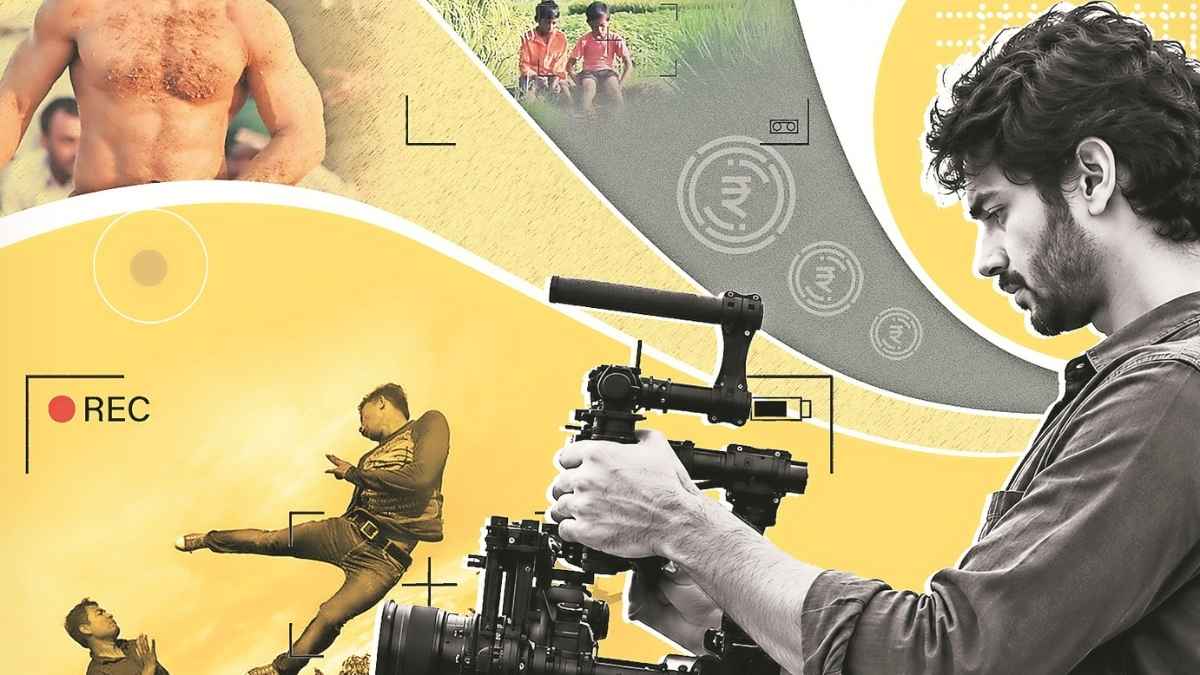
Indie filmmakers are increasingly turning to crowdfunding to bridge the financing gap, one contribution or campaign at a time
Independent filmmakers have always wrestled with a familiar challenge: finding money without compromising creative vision. While mainstream studios continue to dominate commercial cinema, a parallel ecosystem of documentary makers, regional storytellers and experimental directors has increasingly turned to crowdfunding to bridge the financing gap. By inviting audiences to become early backers rather than passive viewers, filmmakers are not only raising capital but also building communities around their work long before release.
“People don’t fund projects; they fund people,” says Priyanka Agarwal of Wishberry. The former crowdfunding platform, which helped fund over 600 creative projects and raised a total of Rs 17 crore, had emerged as one of the most recognised platforms dedicated to creative projects. Founded in 2012 by Agarwal and Anshulika Dubey, Wishberry helped finance films, music, theatre, publishing and design.
Its curated approach has helped hundreds of creative campaigns secure funding while mentoring artists on campaign strategy, audience engagement and storytelling. Assamese filmmaker Bhaskar Hazarika’s Kothanodi successfully raised funds through Wishberry before going on to earn international festival acclaim. Similarly, Goonga Pehelwan, directed by Mit Jani, and Breaking Free, directed by Sridhar Rangayan — both crowdfunded through the platform — received National Film Awards, demonstrating that audience-backed projects can achieve both artistic and institutional recognition.
The 2017 film Sisak, which famously became the first Indian LGBTQIA+ short film directed by Faraz Arif Ansari, was also funded by Wishberry. Ansari later went on to make notable films such as Sheer Qorma and Bun Tikki. The idea of public participation in filmmaking, however, is not entirely new — Shyam Benegal’s 1976 film Manthan was famously financed through contributions from nearly 500,000 dairy farmers.
Another prominent example is Punyakoti (2020), billed as the world’s first Sanskrit animated feature. Directed by Ravi Shankar Venkatesan, the film raised over Rs 42 lakh from 282 backers, many of whom had never met the filmmaker. The campaign became a milestone for Indian creative crowdfunding. Then there is the remake of Albert Pinto Ko Gussa Kyun Aata Hai? (2019), directed by Soumitra Ranade and starring Nandita Das and Manav Kaul.
The project drew attention not only because it revisited a well-loved film, but also because it showed that established artistes are also willing to embrace creative projects without a reputed production house backing them. Crowdfunding has also opened doors for emerging regional filmmakers. Assamese director Kenny Basumatary used Wishberry to support Local Kung Fu 2, as he wanted to grow the scale of his sequel.
The original, released in 2013, was produced on a shoestring budget but went on to become a super hit, grossing approximately 19 times its production budget. Speaking about the campaign, Basumatary had reportedly said that while the first film had been made for around Rs 50,000, crowdfunding allowed the team to create “a bigger film” after building a loyal fan base. Rather than relying on producers, Chatterjee appealed directly to audiences, as he sees crowdfunding “as an act of faith in viewers themselves”.
Chatterjee is a self-proclaimed fan of director Ritwik Ghatak, and repeats his infamous words: “It is a sin to lose faith in people.” He says that he decided to do away with the hassle of producers and reach out to people directly. Chatterjee’s campaign through Beeyodo not only raised money from contributors in amounts ranging from Rs 50 to Rs 60,000, but it also moved supporters to promote the project on social media.
Catapooolt, another early crowdfunding platform that has since halted operations, raised over Rs 2 crore from 400-plus contributors towards various projects, “some of which then even raised further VC rounds”, as per its founder Satish Kataria. “Of this, the funds raised for creative projects/films would be approximately Rs 20-30 lakh. Those were early days of crowdfunding in India and the concept was very new with respect to market adoption.”
For filmmakers, this community-building aspect often proves as valuable as the funds themselves. Unlike studio financing, where audiences are discovered after completion, crowdfunding creates an invested audience before cameras even begin rolling. Contributors frequently become the project’s earliest marketers, sharing updates, attending previews and championing releases across digital platforms. “While the content continues to grow as an alternative asset — its economies and access remain very opaque to individual investors, as this remains a kind of fiefdom by the studios,” says Kataria.
“Crowdfunding and asset tokenisation will hence open up this space for participation by individual and other institutional investors in a transparent and structured way, thus helping to significantly further grow the industry.” Changing audience habits have also strengthened the model. According to a young Indian independent filmmaker who is in the thick of shooting her own crowdfunded film and prefers not to be named, says, “The growth of streaming platforms has expanded opportunities for low-budget and regional cinema, making independent films commercially more viable than before.”
“Every successful campaign inspires confidence for the next generation of creators, creating a self-reinforcing ecosystem,” she adds. Creators agree that digital platforms such as Netflix and Amazon have also broadened monetisation options while encouraging more filmmakers to explore crowdfunding. The impact extends beyond feature films. Documentary projects, animation, student films and socially engaged cinema have all benefitted from direct audience support.
Sahiba Sumar’s documentary Azmaish, exploring religious extremism across India and Pakistan, and Nishil Sheth’s Bhasmasur are among the films that gained visibility after successful crowdfunding campaigns and subsequent festival recognition. Yet crowdfunding is not a guaranteed solution. Campaigns demand meticulous planning, consistent communication and relentless promotion. Many creators discover that running a crowdfunding campaign is almost a full-time marketing exercise alongside filmmaking itself.
Also, India’s crowdfunding landscape remains relatively modest compared with global platforms such as Kickstarter or Indiegogo, but its influence on independent cinema is increasingly evident. It has enabled regional languages to flourish, amplified underrepresented voices and reduced dependence on traditional gatekeepers. “Most importantly, it has shifted part of the decision-making power from financiers to audiences,” says a spokesperson for a leading Indian crowdfunding platform.