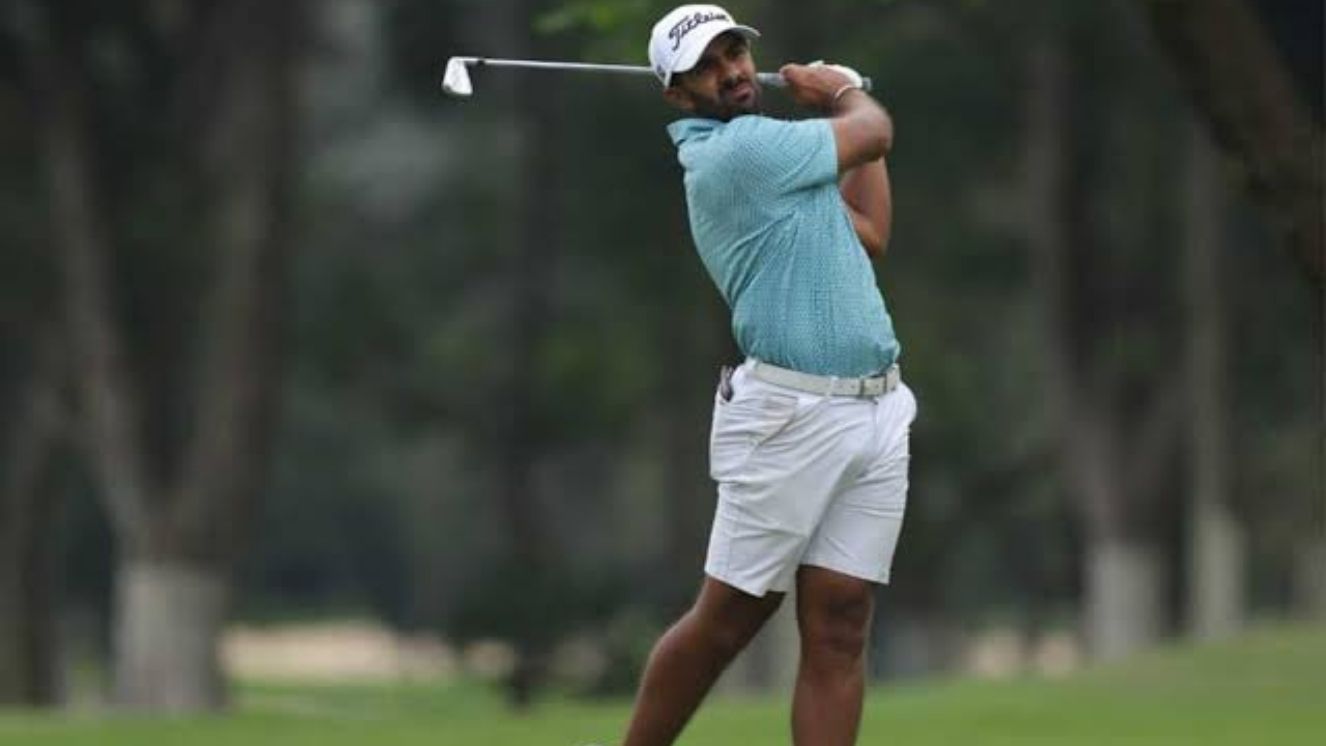
The DP World India Championship showcased fierce competition and highlighted Indian golf talent like Eugenio Chacarra and rising stars, emphasizing the need for more exposure against European players.
I was in Macau last week, playing the SJM Macao Open, while Delhi was busy putting on quite a show of its own. So I was following the DP World India Championship at Delhi Golf Club from a distance — which, as every golfer knows, is sometimes the safest place to watch a tournament. You can analyse everyone else's mistakes without having to explain your own. The first thing that struck me was the rough.
Delhi Golf Club had decided that last year's rough wasn't quite intimidating enough, so this time they made it thicker. The course is only around 6,900 yards, which by modern professional standards is practically a pitch-and-putt. But those narrow fairways, overhanging trees and thick rough can make a 6,900-yard course feel considerably longer. The players quickly figured that out. In fact, some of the biggest names in the field decided that their driver was better off staying in the bag.
Rory McIlroy once again chose not to carry one, and plenty of others followed suit. Only 56 of the 138 players in the field had a driver in their bag, down from 80 the previous year. That tells you something about Delhi Golf Club. When Rory McIlroy doesn't think he needs a driver, perhaps the rest of us should stop worrying about how far we can hit ours. The course was asking a very old-fashioned question: can you put the ball where you want it?
And suddenly, the shortest club in the bag became more important than the longest. Eugenio Chacarra seemed to have the answer. The Spaniard won the tournament by two shots at 21-under, completing a marathon final day in which he played 25 holes. He even did it with a fractured toe, which is enough to make the rest of us feel slightly embarrassed about complaining about a stiff back after nine holes.
This was Chacarra's third DP World Tour victory of 2026 and his second victory in India, after winning the Hero Indian Open last year. Two wins in India in less than two years. I think Chacarra has officially earned the right to claim Delhi as his second home. What I liked about his victory, though, was that it wasn't about overpowering Delhi. He actually gained strokes off the tee while playing conservatively, and he was one of the few players who carried a driver but also put a one-iron in the bag.
That tells you what the course demanded. It wasn't about hitting the longest drive. It was about hitting the right drive. And then there was the Indian challenge. Six Indians made the cut, with Anirban Lahiri finishing as the best at eight-under and tied 23rd. It wasn't exactly the result we were hoping for from the home contingent, but I don't think we should look at it simply through the prism of where they finished.
Because something bigger is happening in Indian golf. Look at the PGTI. Saptak Talwar has just won the Order of Merit and, as a result, earned his card for the 2027 DP World Tour season. He had a win, a runner-up finish and six other top-10s during the year. Khalin Joshi won four times on the PGTI. Sixteen-year-old Kartik Singh was named Emerging Player of the Year. And then you look at the IGPL. Gaganjeet Bhullar just won his fifth IGPL title in Hyderabad.
Karandeep Kochhar and C Muniyappa were right behind him. The league is giving Indian professionals another competitive environment and another platform to play against each other regularly. So there is clearly talent. There is depth. There are players winning tournaments. The question is: what happens when they stand on the first tee alongside Rory McIlroy, Tommy Fleetwood, Justin Rose, Shane Lowry or Robert MacIntyre?
That, for me, is the interesting part. I actually watched Sachin Tendulkar's review of the tournament along with former England captain Kevin Pietersen and Sir Nick Faldo. Sachin was there as a DP World ambassador, and Faldo was also getting a close look at his golf. Apparently, Faldo was impressed with Sachin's touch around the greens — which shouldn't surprise anyone who has watched that man play a cricket ball.
Sachin also had a lovely analogy about golfers leaving their drivers in the bag. He compared it to his own experience of taking the cover drive out of his game when it was getting him into trouble. That's the thing about sport. Sometimes your favourite shot is the shot you have to stop playing. But watching the tournament and listening to people like Sachin and Faldo discuss it got me thinking about the Indian players.
I honestly believe our boys need more opportunities to play against the Europeans. When many of us were coming through, we got a lot of exposure to the better Asian Tour players. We played against them week after week. We lost to them, learnt from them, and eventually started beating them. And India produced champions. A lot of them. The Europeans are another level, of course. The depth, the experience, the quality and the consistency are extraordinary.
But I don't think the gap is as enormous as it sometimes appears. I think there is a mental barrier. You stand on the first tee and see a guy who has won a Major, played Ryder Cups or finished inside the top 20 in the world, and subconsciously you have already given him an advantage. That's the funny thing about golf. The opponent can beat you without hitting a shot. He just has to make you believe that you don't belong there.
The only way to remove that feeling is exposure. Play them. Lose to them. Learn from them. Beat them. Then turn up the following week and do it again. That's how the mental barrier disappears. And perhaps that is the biggest takeaway from the DP World India Championship for Indian golf. We shouldn't be trying to protect our players from the best golfers in the world. We should be putting them in the same tournaments, on the same fairways and under the same pressure as often as possible.
Others will follow. The PGTI is getting stronger. The IGPL is giving players another competitive platform. The pathway is slowly beginning to look much better. We just need to make sure the players walk through it. As for Delhi Golf Club, it reminded the world that golf doesn't always have to be about 350-yard drives and bomb-and-gouge. Sometimes it's about finding a fairway that looks the size of a corridor, hitting the right club, avoiding the jungle masquerading as rough and then making a five-footer when your hands are shaking.
Chacarra understood that. Our boys are getting there. And maybe the next time an Indian golfer stands on the first tee next to one of Europe's biggest stars, he won't think, “That's Rory McIlroy.” He'll just think, “That's the guy I'm playing against.” That's when we'll know the barrier is finally gone. And if Delhi Golf Club makes the rough any thicker next year, I'll happily watch that battle from Macau again.
My golf game doesn't need any help finding trouble! Rahil Gangjee is a professional golfer, sharing through this column what life on a golf course is like