How could El Niño disrupt the Panama Canal and global trade?
See how El Niño-driven drought could slow Panama Canal traffic, delay Asia-US shipments and raise supply-chain costs.
The Panama Canal faces a growing threat from drought and the El Nino weather phenomenon, raising concerns about global shipping, supply chains and the cost of moving goods between Asia and the United States. The waterway is one of the world’s most important trade routes, but its dependence on freshwater makes it vulnerable to changing rainfall patterns. The Panama Canal Authority reportedly handles roughly 5% of global maritime trade, connecting the Atlantic and Pacific oceans to streamline international shipping.
The consequences were clearly visible during the 2022-2023 drought, when falling water levels forced authorities to restrict ship movements. A 2026 study by the Asian Development Bank (ADB), titled 'Panama Canal Drought and Supply Chain Disruptions in Asia-United States Trade', found that container shipments continuing to use the canal took an average of 5.54 days longer to complete their voyages during the drought.
Panama also depends on the canal for economic activity, drinking water and electricity generation. As another drought threatens the country, the experience of 2022-2023 offers important lessons about the vulnerability of international trade to climate-related disruptions. Why the Panama Canal depends on rainfall The approximately 80-kilometre waterway plays a key role particularly in Asia-US trade, with China, Japan, South Korea and other Asian economies relying on the canal to reach American markets.
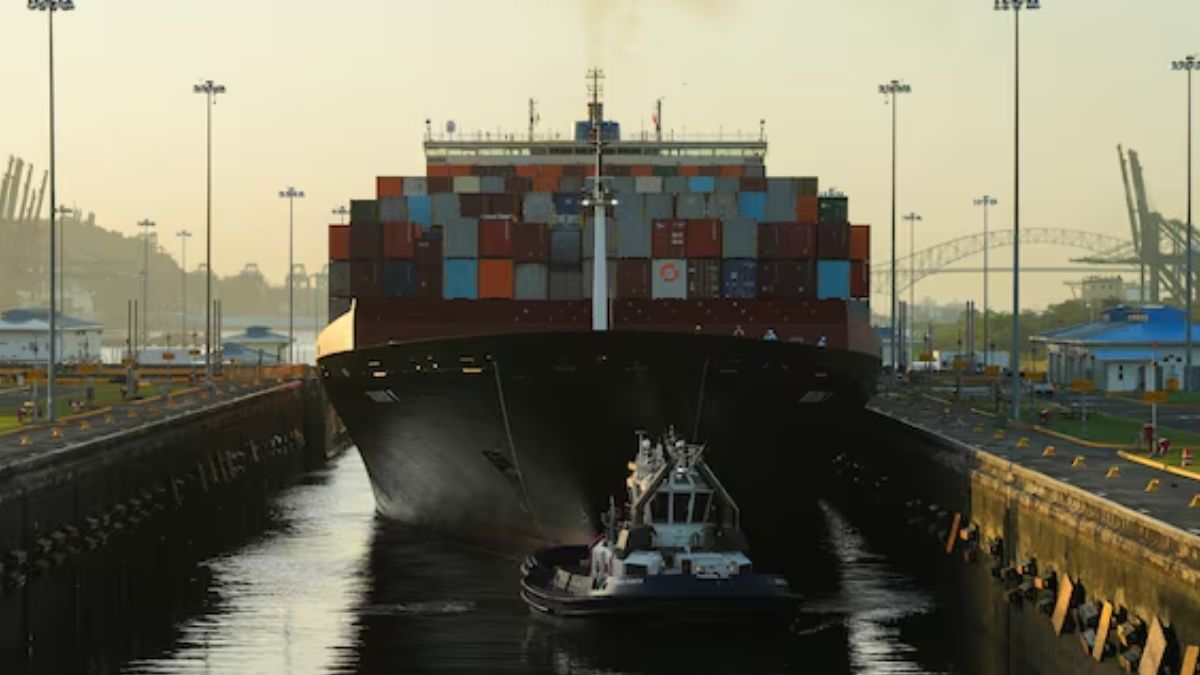
The canal operates through a system of locks that raise and lower vessels as they move between different water levels. Freshwater is essential to this process. Gatun Lake, one of the canal’s main water sources, supplies the water needed to operate its locks. The Alhajuela reservoir also contributes to the wider water system. The waterway is one of the world’s most important trade routes, but its dependence on freshwater makes it vulnerable to changing rainfall patterns (Panama Canal Authority) When rainfall declines, these water reserves fall.
Canal authorities must then conserve the available water by limiting the number of ships allowed to pass or reducing the maximum depth at which vessels can travel. These measures reduce the canal’s capacity. Ships may have to wait longer for a transit slot, while vessels carrying heavy cargo can face restrictions on how deeply they sit in the water. The canal therefore depends not only on its physical infrastructure but also on a reliable supply of freshwater.
It changes atmospheric circulation and rainfall patterns across different regions, including Central America. In Panama, El Nino can contribute to below-average rainfall, increasing pressure on rivers, reservoirs and lakes that supply the canal. The ADB study found that an El Nino-linked rainfall deficit pushed Gatun Lake to its lowest wet-season level in nearly three decades during the 2022-2023 drought.
October 2023 was the driest October since 1950, with rainfall 41% below normal. The resulting water shortage forced the Panama Canal Authority to introduce increasingly strict operating restrictions. These included reducing the maximum permitted vessel draft and cutting the number of daily transits. The consequences continued into 2024. According to the study, daily transit capacity, which had been reduced to 20 ships in January 2024, recovered to 36 by September that year as conditions improved and operational measures took effect.
A separate report by 'The Guardian', published on October 20, 2026, describes another serious water crisis in Panama. The country declared a national state of emergency in August, with the government warning of rainfall deficits exceeding 50% in some regions until December. As another drought threatens the country, the experience of 2022-2023 offers important lessons about the vulnerability of international trade to climate-related disruptions (Panama Canal Authority) Panama’s environment minister, Juan Navarro, warned of the threat posed by the developing El Nino.
“For Panama, this is life or death. The canal is life and death for our economy, and for our drinking water supply.” The report says the government expects the El Nino-intensified dry season to put further pressure on canal operations from December. The precise severity of the disruption will depend on rainfall and water availability. What the ADB study found about shipping delays The ADB study provides detailed evidence of how the 2022-2023 drought affected international trade.
Researchers Paul H. Jung, Kijin Kim, Ah-Hyun Jo and Joseph Seong-Hyun Cho combined vessel tracking information with US Customs shipment records to measure changes in shipping performance. Their dataset matched vessel movements with customs records, allowing them to compare shipments that passed through the Panama Canal with shipments using alternative routes. The findings revealed three major effects.
First, container voyages through the canal took an additional 133.78 hours, equivalent to 5.54 days, compared with the pre-drought period. This represented an increase of 12.19% in voyage duration. Second, vessels spent an additional 33.59 hours stopped, an increase of 35.39%. These stops included time spent at anchor, waiting in queues or dealing with port and canal operations. Third, average vessel speed fell by 2.32 kilometres per hour, a decline of 10.15%.
This is an important finding because it indicates that the main source of disruption was slower movement and longer waiting times, rather than widespread rerouting. The canal normally provides a substantial efficiency advantage. Before the drought, using the Panama Canal reduced voyage duration by about 150 hours compared with alternative routes serving the same origin and destination ports. The drought effectively erased this advantage.
Ships that would normally save time by using the canal instead faced delays that removed the benefit of taking the shorter route. The study's findings demonstrate how a shortage of freshwater can disrupt trade even when a major shipping route remains operational. Why delays affect global trade Shipping schedules are closely connected to production, distribution and retail activity. Manufacturers depend on raw materials and components arriving on time, while retailers need regular deliveries to maintain inventories.
When ships are delayed, businesses may have to hold larger stocks, change production schedules or pay for alternative transport arrangements. Longer journeys can also increase the time that money remains tied up in goods travelling between markets. The ADB study notes that additional shipping time can raise costs and increase the risk of stock shortages. These effects can spread beyond the companies directly using the canal because manufacturers and distributors are connected through wider supply chains.
The canal is especially important for Asian exports reaching the eastern and Gulf coasts of the United States. Without it, ships may need to travel through the Suez Canal and across the Atlantic, adding an estimated 10 to 14 days to some journeys, according to the ADB study. Other options, including transcontinental rail connections, can be more expensive. When the canal becomes congested, shipping companies must weigh the cost of waiting against the cost of using a different route.
Neither option is necessarily easy to implement because shipping schedules, commercial contracts and port arrangements are often established well in advance. The result can be a disruption that spreads across multiple industries and markets. Which goods are most affected? The ADB study found that the drought did not affect every type of cargo equally. The biggest delays were recorded for machinery, mechanical products and metallic raw materials.
Shipments of machinery and mechanical products experienced a delay penalty around 2.84 percentage points above the overall mean. Metallic raw materials recorded an additional 1.81 percentage points. These goods include heavy machinery, aluminium ingots and semi-finished steel. Their weight makes them particularly vulnerable when canal authorities reduce the maximum permitted vessel draft. Ships carrying heavy cargo have less flexibility to adjust their loads to meet the restrictions.
By contrast, food products, mineral products and petroleum shipments showed no statistically significant slowdown in the study. Researchers suggest that reserved transit slots for some energy and raw material carriers may have helped petroleum shipments avoid longer queues. Perishable food shipments may also have been diverted to alternative routes before delays became severe. These findings show why the impact of a canal disruption depends on the type of goods being transported, not simply the number of ships affected.
The economic and environmental cost for Panama The canal's importance extends well beyond international shipping. According to The Guardian, it accounts for up to 7.7% of Panama's gross domestic product. The freshwater lakes supplying the canal's locks also provide drinking water to about two million people, nearly half the country's population. The surrounding watershed supports a significant share of the country's hydroelectricity generation.
This creates a difficult challenge when rainfall declines. Water must be managed to meet the competing needs of ships, households, agriculture and electricity generation. The current crisis has also exposed weaknesses in Panama's wider water infrastructure. The Guardian reports that hundreds of thousands of people lack reliable access to drinking water. Ageing and leaking pipes reportedly account for the loss of around 50% of water in some areas, according to government estimates cited by the newspaper.
The government has announced emergency funding and longer-term investment in water infrastructure. One major proposal is a reservoir on the Indio River, estimated to cost about $1.5 billion, intended to supply Lake Gatún and meet future demand. The project, however, has generated strong opposition. The Guardian reports that it would flood the lands of 550 families across 38 rural communities, affecting approximately 2,500 people.
What can be done to reduce future disruptions? The ADB study argues that countries and shipping companies must prepare for climate-related disruptions rather than rely entirely on the continued availability of the canal. One important recommendation is to develop more flexible shipping arrangements. Companies could maintain access to ports on both the US East and West coasts, allowing them to switch routes when the Panama Canal becomes severely congested.
The study also recommends stronger coordination between shipping companies, ports and customs authorities. Faster customs clearance for vulnerable goods could help offset delays at sea. Better sharing of shipment records and vessel-tracking information could also help authorities identify disruptions earlier and plan accordingly. The government's proposed reservoir is intended to increase the water available for canal operations, although such projects also need to address their environmental and social consequences.
The ADB researchers emphasise that supply chains should have multiple routing options. Their study also acknowledges that its analysis has limitations, including the need for further research into differences between individual vessels and more detailed commodity categories. The evidence from 2022-23 nevertheless makes one point clear: relying on a single efficient shipping corridor can leave international trade vulnerable when that route faces a physical constraint.
The Panama Canal drought shows how a climate-related event can become a global trade problem. Reduced rainfall lowers freshwater reserves, forcing restrictions on ship movements and slowing cargo deliveries. Those delays can affect manufacturers, exporters, retailers and consumers across continents. The ADB study measured an average delay of 5.54 days for container voyages that continued to use the canal during the 2022-2023 drought.
It also found that the canal's normal time-saving advantage disappeared. The renewed water crisis described by The Guardian shows why the issue remains important. Future disruption will depend on rainfall, reservoir levels and the measures authorities take to conserve water. The central lesson is that the resilience of global trade depends not only on ships, ports and transport infrastructure, but also on the availability of natural resources.
Preparing alternative routes, improving water management and planning for climate-related risks will be essential to reducing the economic consequences of future droughts.