Gulf economies face multi-billion-dollar hit as airport shutdowns disrupt travel and trade
Gulf airspace shutdowns are draining billions from aviation, trade and tourism as conflict persists; see how key hubs and carriers are affected.
Gulf economies have taken a massive hit amid the West Asia conflict — with airspace closures triggering multibillion-dollar losses. The International Monetary Fund has also warned of a 0.3% economic contraction across the Middle East and Central Asia region as the conflict remains deadlocked and attacks continue there. Several eye-watering figures have made headlines over the past few months, including estimates suggesting that a single week of airspace closures in the Gulf cost more than $800 million.
According to a post by ALG Transportation, closures in early March cost the regional aviation and transit sector dearly. Subsequent estimates suggest that the losses have continued to mount. Local media reports, citing the Dubai Civil Aviation Authority, pegged total damages at more than 5 billion after Dubai International Airport and Al Maktoum International experienced near-total shutdowns between February 28 and March 3.
The verified economic loss was reportedly pegged at about $1 million per minute in March. The Gulf region sits at the intersection of the world's most important long-haul aviation corridors. More than 10,000 flights typically cross the airspace per day – with over 3,000 landings and departures in the region, handling up to 1 million passengers. The region includes major global nodes such as Dubai, Doha, Abu Dhabi, Riyadh and Jeddah.
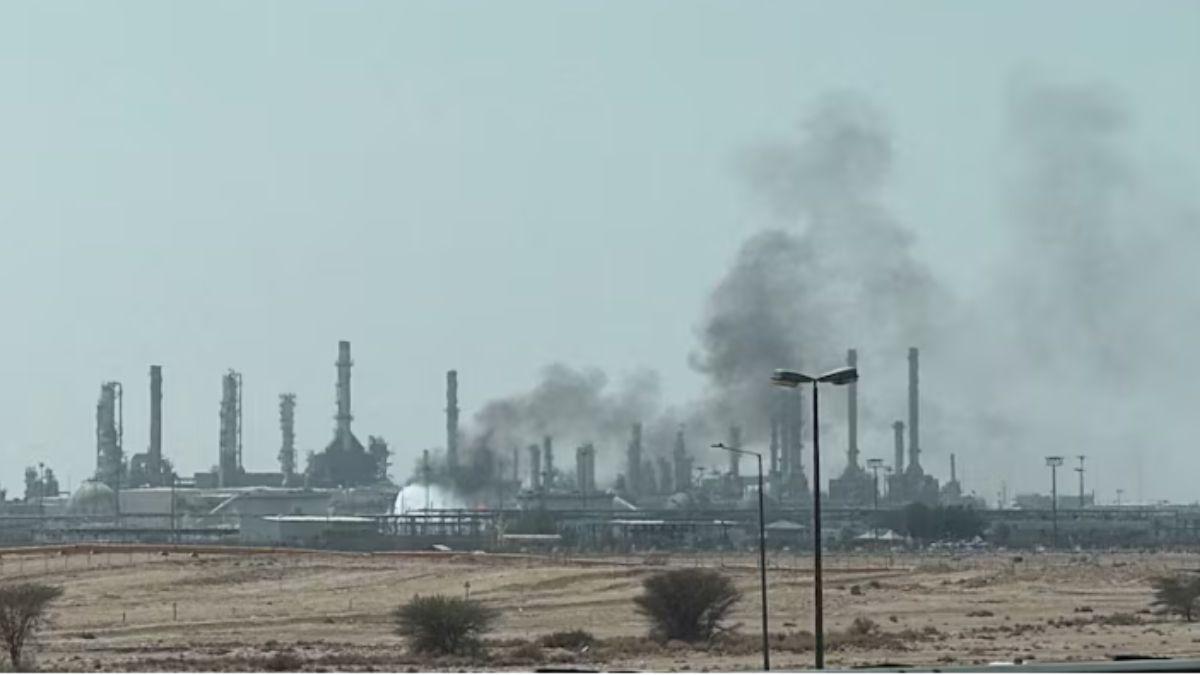
The US-Israeli war against Iran set off massive aviation, travel, and safety crises in February. Matters worsened amid recent Houthi-led attacks in Saudi Arabia that targeted King Khalid International Airport and other key areas. Airspace closures remain in effect over multiple countries in the region — joining other active conflicts in Eastern Europe and parts of Africa. A prolonged shutdown has already impacted regional GDP — choking trade and tourism flows vital to non-oil growth.
The Economic Cost of Gulf Airspace Shutdowns Over the past two decades Gulf nations have moved beyond oil – using an economic diversification strategy that hinges on global connectivity. Aviation serves as a central engine driving tourism, financial services, real estate, and multimodal freight in the region. According to an October 2025 white paper, aviation's contribution to regional GDP will surge by more than 150% by 2043 to reach $730 billion.
Data released by the International Air Transport Association indicates aviation contributed 18.2% to the GDP of the United Arab Emirates in 2023. The impact goes well beyond these numbers, with the UAE alone providing roughly a million jobs and handling a million tons of air cargo. Meanwhile Saudi Arabia saw the aviation sector's GDP contribution increase by more than 150% to $91 billion between 2016 and 2023.
The World Travel and Tourism Council indicated in its 2025 Economic Impact Report that travel and tourism contributed $178 billion to Saudi GDP in 2025, representing 46% of the region's total tourism economy. The international connectivity also underpins major multibillion-dollar expansion projects in the region that aims to capture global transit and business flows. Flagship state-backed carriers: Emirates in Dubai, Qatar Airways, and Etihad in Abu Dhabi have borne the brunt of these airspace closures.
According to aviation data firm Cirium, 40,000 flights were cancelled during the first 10 days of the Iran conflict. This included about 57% of regional traffic, with reports suggesting over 12,300 were cancelled across seven major airports in Dubai, Doha, and Abu Dhabi. More recently, a Khaleej Times report on Thursday night indicates more than 4,000 flights departing Saudi Arabia have been cancelled or grounded since October 8.
According to the HVS market report released in May, hotel booking cancellations reached 60% within 48 hours in major tourism markets such as Dubai. Hotel chains have seen their net profits halve in early 2026 while others delayed major pipeline projects across the region by several months. Others still have opted to close facilities as tourism dropped and attacks continued. A short-lived ceasefire announced in June 2026 had brought a semblance of calm to the region even as the United States and Iran continued to trade strikes.
The recent devastating missile and drone strikes targeting the Saudi aviation grid have brought the crisis back into focus. Every Month of Conflict Costs GCC Economies 1% of GDP According to economist Ludovic Subran, every month of the regional conflict is costing GCC economies the equivalent of 1 percentage point of GDP in deficit. A report by Khaleej Times also quoted the Allianz chief economist as saying during the Rise summit at Dubai World Trade Center that the region would need to secure financing and maintain investor confidence to navigate the economic fallout amid the prolonged crisis.
The International Air Transport Association also slashed its 2026 global airline industry profit forecast in half to $23 billion over soaring jet fuel prices and the ongoing West Asia conflict. It is pertinent to note that this estimate was shared in early June — well before the attacks in Saudi Arabia. An assessment by Airports Council International and Flare Aviation Consulting revealed nine major airports across the Middle East suffered revenue losses between $900 million and $1 billion over March and April.
The 55% shortfall in revenue was observed between February 28 and April 30 as one fifth of the global East-West capacity (or about 97,000 passengers per day) remained absent and cargo throughput suffered a 52% year-on-year loss to 571,000 tonnes. The global aviation and infrastructure consultancy must include the cost of mass cancellations, flight rerouting expenses, and the immediate financial burden of supporting thousands of stranded passengers at various hubs.
Rerouting long-haul flights around restricted zones can also add up to two hours of flight time per leg — generating additional costs of approximately $15,000 to $20,000 per rerouted long-haul flight, considering that the operating costs per flight hour of a widebody sit around $9,000. The report noted that the biggest portion of the additional cost generated by the operational and passenger disruption went to insurance exposure.
A recent example is the 2022 invasion of Ukraine — when Western leasing companies were unable to recover hundreds of aircraft from Russia. The resulting insurance claims are estimated at more than $10 billion and considered one of the largest disputes in aviation insurance history. Key Gulf aviation hubs take the hit The UAE carries high exposure to flight suspensions as the largest hub for foreign transfer traffic in the region.
Dubai International Airport is the world's busiest for international passenger traffic — processing some 92.3 million international passengers in 2024. Both DXB and Zayed International Airport in Abu Dhabi activated emergency traffic-management protocols in June to limit the travel disruption. Meanwhile the Hamad International Airport in Doha is facing a somewhat unique structural challenge because its massive physical infrastructure relies almost entirely on being a high-volume transit hub for international transfers.
According to aviation data firm OAG, about 47% of Dubai passengers, 54% of Abu Dhabi travellers and 74% of those landing in Doha were there to board connecting flights in 2025. The Gulf aviation model follows a unique geography-dependent model where passengers are flown in from cities across the world to meet carefully timed connections taking them to equally far-flung destinations. But this massive network has crumbled after war broke out in Iran.
Delays in the sixth freedom hub network (as it is sometimes called) also force carriers to store widebody capacity or operate long detours over northern and eastern corridors. Saudi Arabia has borne the brunt of aviation disruptions since war broke out in late February — facing heavy drone barrages and relentless attacks from the Iran-backed Houthis. The country has faced missile and drone strikes during every single active month of the conflict — with the Houthis claiming the vast majority of attacks.
Iran directly fired cruise missiles and drones into Saudi territory in late March while Iran-backed militias operating out of Iraq made up the third front for attacks. King Khalid International Airport in Riyadh suffered extensive passenger terminal damage and fatalities during a recent attack that forced a complete closure until at least October 17. Severe operational disruptions and flight cancellations have also rippled across King Fahd International Airport in Dammam as well as the regional airports in Jazan, Abha, and Najran in recent weeks.
Both the UAE and Qatar are experiencing severe flight flow restrictions, mandatory detours via longer northern routes and persistent GPS interference that complicates flight management. The two countries had also faced extensive airport closures during the early weeks of the Iran war as missiles rained down on Dubai, Abu Dhabi and Doha. State-run carriers have also accumulated massive financial losses as planes were forced to bypass large corridors of Gulf airspace or cancel routes.
Most recently, the deadly October 10 attack against Riyadh airport prompted Oatar Airways to suspend all flights to and from Riyadh and Dammam. Emirates and flydubai cancelled multiple daily flagship routes connecting Dubai to Riyadh, Dammam, Jeddah, and Abha. Etihad Airways has grounded its entire schedule Abu Dhabi and Riyadh, Dammam, and Jeddah till October 19. Indefinite shutdown? The European Union Aviation Safety Agency recently extended its conflict zone warning for EU airlines — requiring operators to avoid the over-water airspace of the UAE, Bahrain, Kuwait, Oman, and Qatar until at least November 16.
But the US-Israeli war against Iran remains an active point of concern as ceasefire talks remain deadlocked. US President Donald Trump has reportedly ruled out attacks before the midterm elections on November 5. But he also told a Republican convention in September that the conflict was “going to end immediately after the elections”. He also asserted that the American military has been sending more forces to the region in recent weeks.
The POTUS has also hinted that it may be “possible” to ramp up bombing after the polls — with experts predicting further strikes if the conflict escalates.