Centre absorbs global fertiliser price rise to shield farmers from cost burden, says PM
PM Narendra Modi launched development projects worth over ₹14,000 crore in Banaskantha, Gujarat, affirming that the Centre absorbed rising global fertiliser costs to protect Indian farmers.
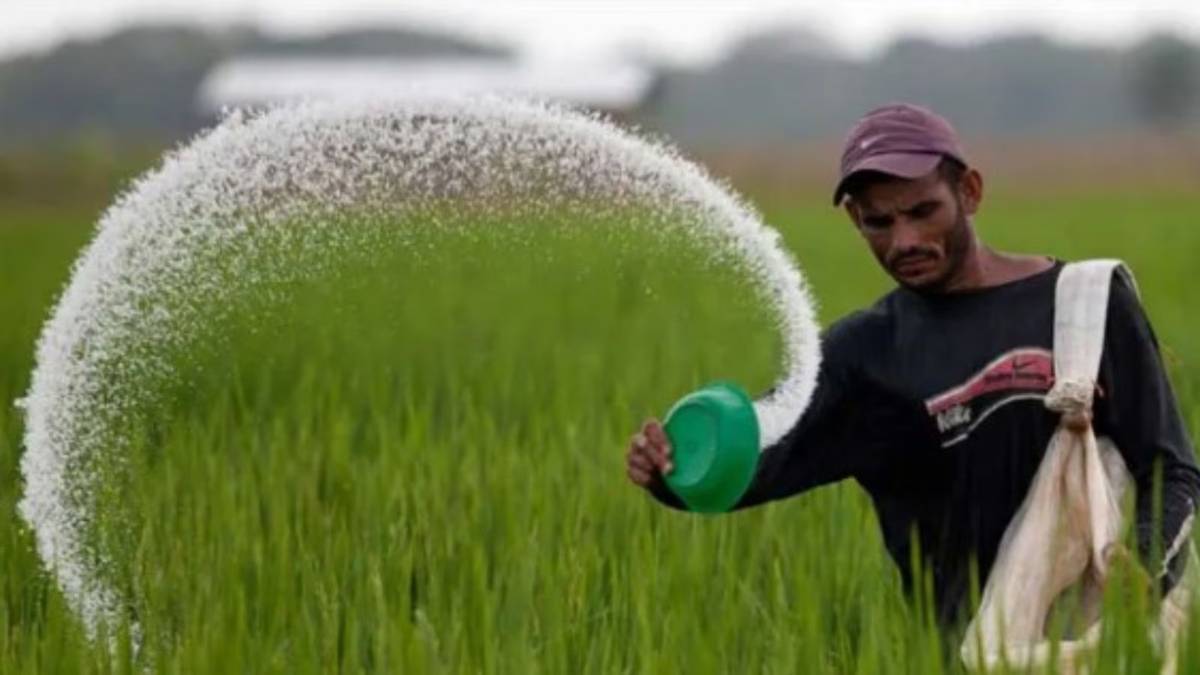
Amid concerns over rising global fertiliser prices and supply uncertainties due to crisis in the Gulf region, Prime Minister Narendra Modi on Friday said the Centre had absorbed the increase in input costs rather than passing the burden on to farmers. Addressing a gathering in Bhildi, Banaskantha, he cited subsidised fertiliser prices and direct benefit transfers to farmers while inaugurating and launching development projects worth over Rs. 14,000 crore in Gujarat.
Modi said a bag of urea costing around Rs. 3,000 in the international market was being made available to Indian farmers for less than Rs. 300, while DAP fertiliser, whose international price had crossed Rs. 5,000 a bag, continued to be sold at Rs. 1,350. He said the government had spent around Rs. 1.6 lakh crore to keep fertiliser prices affordable despite the increase in global prices. Targeting the Opposition, the Prime Minister accused some political groups of spreading rumours about shortages of fertilisers, cooking gas and other essential supplies amid the West Asian conflict, with the intention of creating panic and politically targeting him.
He said farmers had not faced a shortage of fertilisers despite the ongoing uncertainty. Modi also released the 24th instalment of the PM-KISAN Samman Nidhi, transferring Rs.18,680 crore to more than 9.34 crore eligible farmers. He said over 50 lakh farmers in Gujarat had benefited from the scheme, receiving more than Rs.1,000 crore. The Prime Minister claimed that government schemes and policy interventions had provided farmers with financial support and savings totalling over Rs. 50 lakh crore over the years.
He said nearly Rs. 4.5 lakh crore had been transferred directly to small farmers through five schemes, including PM-KISAN. Referring to MSP procurement, he said the government had transferred Rs. 24 lakh crore to wheat and paddy farmers. He also cited over Rs. 2 lakh crore in crop insurance compensation and the distribution of 12 lakh solar pumps under the PM-KUSUM scheme, which, he said, had helped farmers save on diesel and irrigation costs.
He inaugurated the Bharat Bovine Breeding and Research Centre (BBBRC) at Bhildi, built by Banas Dairy at a cost of Rs. 324.77 crore across 127 acres. The facility will focus on genetic improvement of indigenous cattle and buffalo breeds, including Kankrej, Gir, Sahiwal, Mehsana and Jaffarabadi, using advanced breeding technologies such as embryo transfer and in-vitro fertilisation. It aims to accelerate breed improvement and enhance milk productivity.
Two other Banas Dairy projects inaugurated were a French fries processing plant at Sanadar, developed at Rs. 51.65 crore, and an automated storage and retrieval system for ultra-high-temperature dairy products at Palanpur, costing Rs. 31.14 crore. Together, the three projects represent an investment of Rs. 407.56 crore. He also laid the foundation stones for two Bio-CNG plants at Tharad and Radhanpur, which will process 75 and 100 tonnes of cattle dung daily, respectively.
The facilities are intended to generate clean fuel and organic fertiliser while providing livestock owners an additional income stream. Modi marked the commencement of work under 12 horticulture clusters covering around 1.46 lakh hectares and expected to benefit over 1.3 lakh farmers. Two clusters in North Gujarat will focus on potatoes. Other projects included the foundation stone for widening the Ahmedabad-Mehsana highway from four to eight lanes at an estimated cost of Rs. 2,600 crore, and the development of 4,030 child-friendly anganwadis with an investment of Rs. 800 crore.
The latter initiative is expected to benefit over four lakh people. He also flagged off the Ahmedabad (Sabarmati)-Varanasi Express and the Mehsana-Becharaji-Sabarmati MEMU service, and laid the foundation stone for extensions of Ahmedabad Metro to the airport and GIFT City. Calling for greater use of science and technology in agriculture, Modi said milk productivity had increased from less than five litres per animal daily in 2013-14 to around eight litres now.
He also highlighted the doubling of honey production over the past 12 years and the growth in seafood exports. He recalled Gujarat's earlier challenges relating to electricity and water availability, saying irrigation through the Narmada network and drip irrigation had transformed agriculture in Banaskantha. He urged farmers to continue conserving water and electricity.