How a three-pronged model addressed market access gaps facing manufacturing SMEs
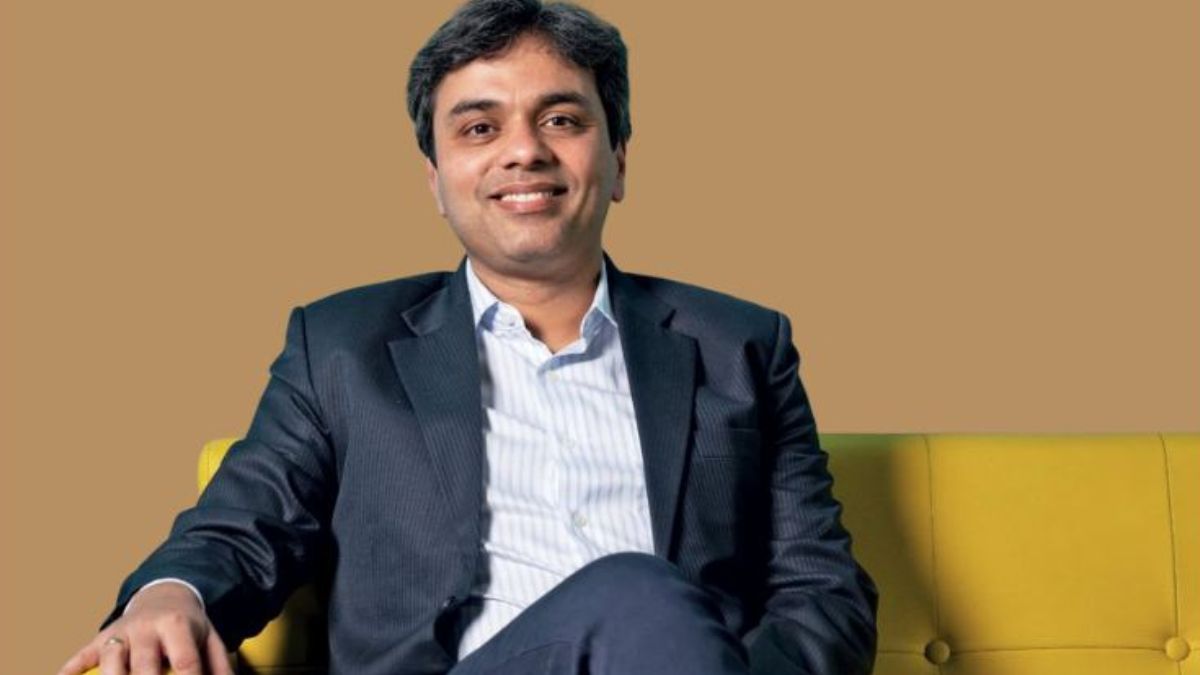
The idea for OfBusiness took shape in late 2014, when Asish Mohapatra was working as a venture capitalist at Matrix Partners, now Z47. He was watching capital and entrepreneurial talent flow into business-to-business (B2B) startups spanning financing, procurement and logistics. But his experience of running a small business, investing in one and interacting with small and medium enterprises (SMEs) had shown him that an important gap remained.
While many entrepreneurs were attempting to solve individual problems, few were building an integrated business around the needs of manufacturing and infrastructure companies. The opportunity, however, was not simply to create another B2B marketplace. The founders wanted to build a business that could help SMEs source raw materials at competitive prices, secure financing to buy them and find customers for their output.
They also made an early decision to focus on sizeable manufacturing and infrastructure SMEs rather than smaller businesses or intermediaries, a choice that continues to define the company’s approach. Mohapatra, who was 35 when the venture took shape, worked on the idea with co-founders Bhuvan Gupta, group chief technology officer, Ruchi Kalra, chief executive of its financial services arm Oxyzo, and Vasant Sridhar, chief sales officer.
Their first attempt, in the finished-goods healthcare segment, was abandoned within weeks. Instead, they spent time researching the problems SMEs faced and identified three interconnected requirements: procurement, working capital and revenue generation. OfBusiness was incorporated in February 2016 as a technology-led B2B platform combining raw material sourcing with supply chain financing. The company began with 30 employees in a 3,000-square-foot office in Gurugram.
The immediate priority was to establish a revenue-generating business, followed by profitability and cash flow generation. With margins in the business inherently thin, the founders kept operating costs low. Within a year, OfBusiness had scaled to around `50 crore in monthly business. “Frugality became one of our key drivers,” Mohapatra said. The emphasis on keeping costs under control was important because the company was building a business in which scale alone would not guarantee profitability.
OfBusiness has since expanded well beyond its initial aggregation model, adding financing and private-label products while retaining raw material procurement as its core activity. Its operating revenue reached `20,000 crore in FY26, according to the company. The scale of the business also reflects the breadth of its operations, which bring together commerce and financial services rather than treating them as separate offerings.
The founders had secured their first round of funding from Matrix Partners before the launch. The company subsequently attracted investors including SoftBank, Norwest Venture Partners, Tiger Global and Alpha Wave Global. Yet the evolution of the business was not without missteps. Mohapatra believes financing should have been introduced earlier, given how closely it was linked to procurement. The company also started with too many products and took longer than it should have to bring experienced professionals into the organisation.
“We should have probably started in a smaller set,” he said, adding that the founders had relied on their own judgement for too long instead of bringing in people who had already encountered similar business challenges. The Covid-19 pandemic became a defining milestone. OfBusiness grew around 2.5 times during the pandemic year across both its financing and raw material commerce businesses. The experience reinforced the founders’ belief that SMEs needed more than access to suppliers.
They needed a combination of lower input costs, working capital and opportunities to generate revenue. The company also helps businesses access government tenders, widening their potential customer base. The model’s distinguishing feature, Mohapatra argues, is that its three components support one another. Procurement gives SMEs access to raw materials, financing helps them pay for those supplies, and access to tenders can create demand for their products.
Each activity can therefore strengthen the others, rather than operating as an isolated service. “Our USP remains the same. We believe in holistic improvement for the SME,” he said. While individual companies have attempted to address procurement, financing or market access separately, OfBusiness has built its model around bringing all three together. The company has added products and expanded its scale, but its original bet remains that manufacturing SMEs are better served when the services they need to operate and grow are connected within a single business.