‘Why resort to mock Parliament?’ Nirmala Sitharaman slams INDIA bloc over street protests
Finance Minister Nirmala Sitharaman criticizes Opposition INDIA bloc for holding mock parliaments and street protests, urging them to debate and question within the Parliament instead for true accountability.
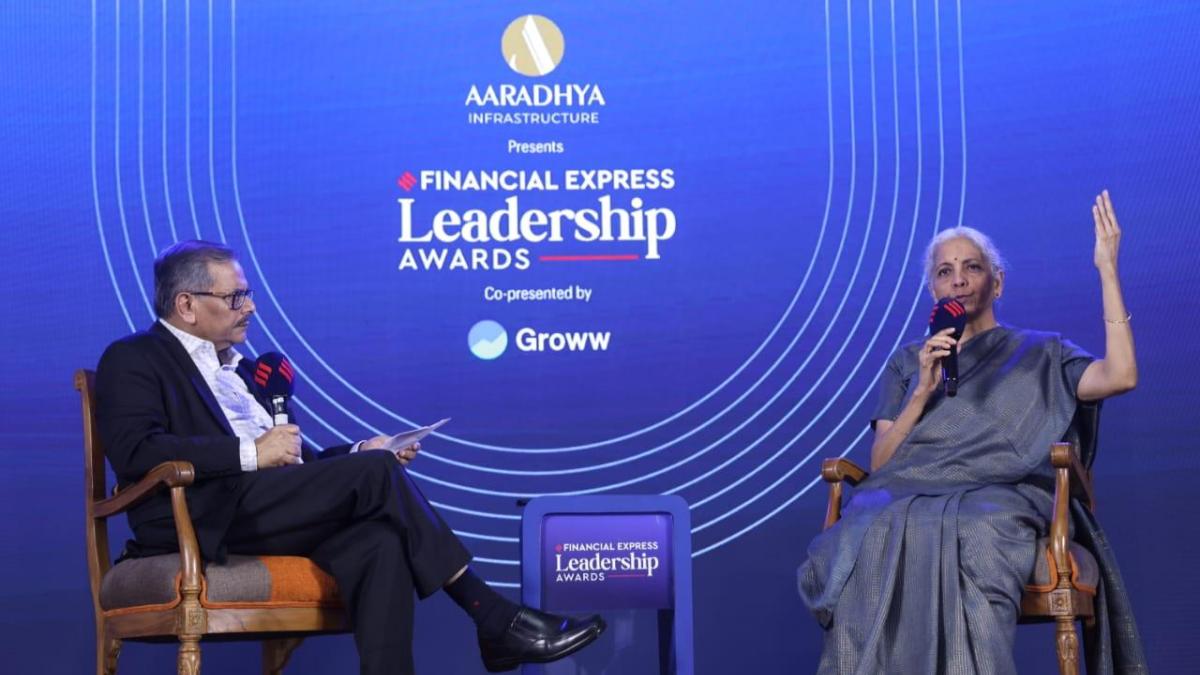
Finance Minister Nirmala Sitharaman on Monday criticised the Opposition INDIA bloc over its recent ‘mock parliament’ and street protests, saying elected representatives should question the government inside Parliament instead of holding parallel proceedings outside. Speaking at the inaugural Financial Express Leadership Awards 2026 in Mumbai, where she was the chief guest, Sitharaman said the Opposition had every right to question the government and demand answers.
However, she stressed that such protests should take place within Parliament through debates and discussions. “To be in the opposition and to put the government on the mat to answer questions is absolutely right. I am not against that. I want that protest to happen in Parliament, not mock Parliament,” she said during a fireside chat with Financial Express Editor Shyamal Majumdar. The Opposition followed this with a march and a large rally at Delhi’s Ramlila Maidan on November 1.
The INDIA bloc has been protesting against alleged irregularities in the Special Intensive Revision (SIR) of electoral rolls and has demanded Kumar’s resignation. ‘Regime change happens through elections, not street protests’ In a video clip shared by her office, Sitharaman questioned why Opposition leaders were holding mock parliamentary proceedings when people had elected them to work inside the House.
“People have voted you to function in Parliament. Why resort to mock parliaments? Regime change happens through the electoral process, not street protests. If you don’t believe in the electoral process, how did your governments in Karnataka, Telangana and Himachal Pradesh get elected?” she said. The Finance Minister also criticised the way the Opposition conducts itself during parliamentary proceedings.
She pointed out that the main Opposition party has around 100 MPs who were elected by the people to raise questions and hold the government accountable. However, she alleged that these MPs often do not stay through parliamentary debates, raise allegations against the government and then walk out when ministers begin responding. She also accused them of remaining absent during voting and interrupting replies from the treasury benches.
“What’s the fun in doing that as a mock Parliament outside?” she asked. Sitharaman said she had no objection to mock parliaments organised in schools and colleges, as they help students understand how Parliament works. However, she said elected representatives should not hold such exercises outside the actual Parliament when they have been given the responsibility of working inside it. “Unfortunately for the opposition, they pick up on issues which they themselves don’t want to continue after a point… Every point is hypocritical.
No conviction whatsoever,” she said. She further pointed out that parties which question industry and businesses at the national level appear to have no problem working with the same companies in states where they are in power. The Finance Minister also warned that repeated street protests and mock parliamentary proceedings could create an impression of political instability. She said the country needed to focus on growth and development rather than prolonged political agitation.
Repeating her argument, Sitharaman said governments change through elections, which are held every five years, and not through street protests. The discussion also covered foreign portfolio investor (FPI) outflows, the performance of equity markets and expectations from the upcoming Union Budget. Other topics included skill development and employment opportunities in the age of artificial intelligence (AI), private investment, the role of micro, small and medium enterprises (MSMEs), and the leadership dispute within the Tata Group.
Sitharaman says India's economy is not dominated only by big companies Responding to concerns that a small number of large business groups were gaining greater control over India's economy, Sitharaman said the presence of big companies did not tell the entire story. She pointed to the growth of micro, small and medium enterprises (MSMEs), saying smaller businesses were also expanding. The Finance Minister defended the government's decision to change the definition of MSMEs.
She said the changes were made to help businesses grow without losing the benefits they received under the MSME category. “The very reason why we had to change the definition of MSMEs, meaning even if they grew bigger you would retain them either as micro, small or medium industry without them losing the benefits, is because we wanted the micro not to remain like a dwarf,” she said. “We wanted the micro to grow into small, small to grow into medium, medium to grow big and that is why we are loved for this definitional change, making it possible for them to grow but yet get the benefit,” she added. Sitharaman said large companies had an important place in the economy, but the growth of smaller businesses also needed to be recognised.