Why France’s unrest exposes a deeper crisis over debt, pensions and public spending
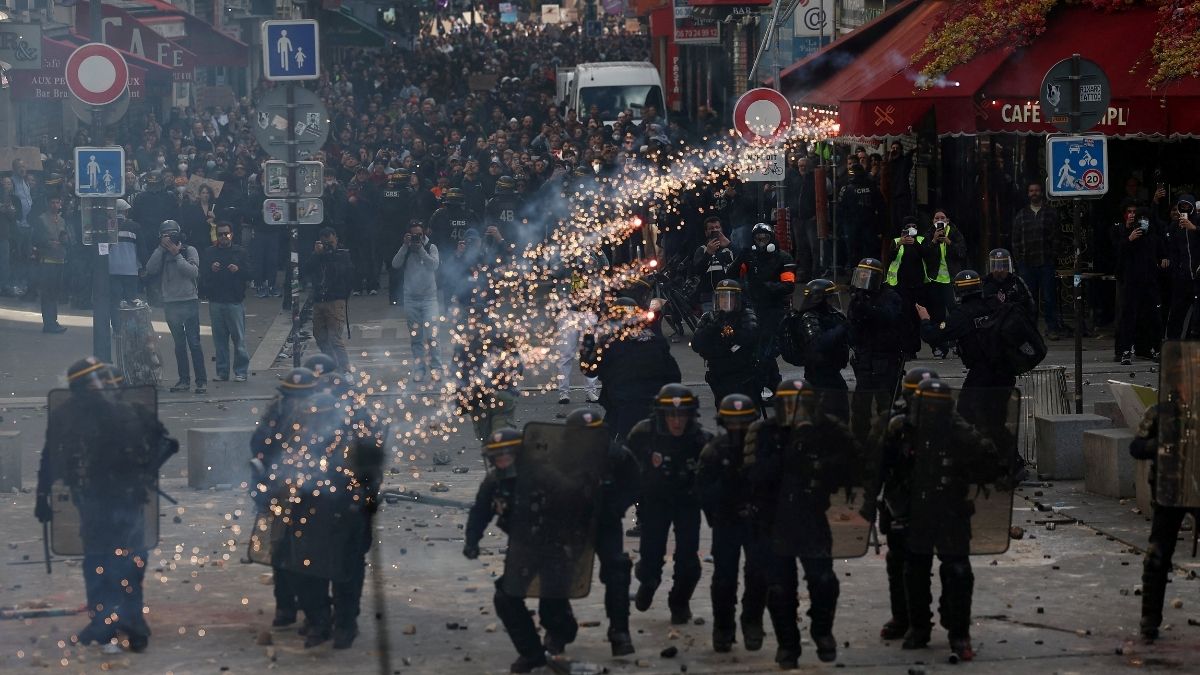
France has called for local curfews after riots left businesses damaged, thousands arrested and security services under scrutiny.
France is facing some of its worst unrest in years as demands for better schools, public services and relief from living costs collide with efforts to curb government borrowing. Behind the immediate security crisis is a difficult budget question - how to meet those demands while financing pensions and servicing a growing public debt. The unrest followed weeks of student demonstrations over poor school conditions and rising living costs.
Violence spread to businesses and public buildings in several cities, with nearly 1,000 security officers injured and around 2,400 people arrested, Reuters reported. One protester died after suffering cardiac arrest during demonstrations in Paris, the agency reported. Why is France’s budget under pressure? The unrest has intensified scrutiny of France’s public finances, including its persistent budget deficits, high pension costs and mounting public debt.
France funds pensions, healthcare, education and other public services through taxes, social contributions and borrowing. The difficulty is that spending persistently exceeds revenue, leaving the government dependent on further borrowing even as it tries to reduce its deficit. The Indian Express, citing OECD figures, reported that France’s budget deficit stood at 5.1% of gross domestic product (GDP) in 2025, while public debt reached 115.5% of GDP.
The deficit measures the gap between government spending and revenue over a given period. Public debt is the accumulated stock of borrowing. Persistent deficits typically add to the debt, creating further interest costs. The French government’s draft budget targets a deficit of 5% of GDP in 2027, compared with an estimated 5.4% in 2026. It also forecasts economic growth of just 0.5% this year, illustrating how weak growth complicates efforts to improve the public finances.
That leaves the government trying to contain spending at a time when protesters are demanding better-funded services. Why are pensions central to the dispute? France’s Pensions Advisory Council, known as the COR, puts pension-system spending at €422.2 billion in 2025, equivalent to 14.1% of GDP and nearly a quarter of public expenditure. France’s ageing population adds to long-term pension spending, while weak economic growth can constrain the increase in tax revenue available to finance these commitments.
The 2023 pension reform provided for a gradual increase in the statutory retirement age from 62 to 64. However, the increases in retirement age and required contribution periods were subsequently suspended until 2028 under the 2026 social security financing law, according to France’s official Service Public website. Critics said that workers should not have to remain employed for longer to receive retirement benefits, while supporters of the reform said changes were necessary to make the pension system financially sustainable.
A car burns at Republique square during a protest against rising living costs, joining students' grievances, in Paris, Saturday, Oct. 17, 2026. (AP Photo) The OECD says delaying the reform raises fiscal costs. In analysis cited by Indian Express, economist Paul Krugman argues that pension spending has squeezed funding for other services, notably education. His argument connects students’ complaints about schools with the wider dispute over how France distributes public money.
Pensioners want to protect retirement income, students and teachers seek better-funded schools, families want relief from living costs, and businesses want support amid economic uncertainty. Reducing pension spending or cutting other public programmes can trigger opposition from people who rely on them. Raising taxes can face resistance from households and businesses, while continued borrowing adds to the debt burden and interest costs.
Business losses add to demands for support The Federation of Trade and Retail said almost 3,000 shops had been affected over the weekend and called for tax and social security relief for businesses facing losses. “Behind every ransacked shop are business owners, employees and families who have seen years of work and effort wiped out in a matter of hours,” the federation said, according to Reuters.
Lecornu said the government would introduce furlough measures from Tuesday to support affected businesses. The damage creates additional spending pressures, including repairs to public property and temporary support for affected businesses and workers. Any relief package must now be considered alongside the government’s deficit-reduction plans. Political divisions make a budget harder to pass The economic choices are complicated by a fragmented parliament.
Macron’s centrist camp lacks a majority, making it harder to secure agreement on which spending to protect, where to make savings and who should pay more tax, Indian Express reported. French Prime Minister Sebastien Lecornu did not rule out declaring a state of emergency but said localised curfews were more appropriate for now. “My determination to restore order is absolute,” Lecornu said at a press conference on Monday, according to Reuters.
The political fallout has reached the interior ministry. Macron rejected Interior Minister Laurent Nunez’s offer to resign but demanded action over what the president described as “intelligence and foresight failings”. Trade unions called for another round of strikes and rallies on November 5. Why do rising borrowing costs matter? Financial markets reacted to the political and fiscal uncertainty on Monday.
Reuters reported that France’s benchmark CAC 40 stock index fell 1.3% in early trading, while the yield on French 10-year government bonds rose by eight basis points to 4.86%. Germany’s comparable yield remained around 3.41%. A bond yield is the return investors demand for lending money to a government. When bond prices fall, yields generally rise. Higher yields can make new borrowing more expensive and increase refinancing costs as existing debt matures.
For France, sustained higher borrowing costs could mean a larger share of public revenue going towards interest payments, leaving less room for education, healthcare and other priorities. One day’s market movement does not establish a debt crisis. The budget risk is that persistently higher borrowing costs make it harder to finance the services and support protesters are demanding. The next presidential election, due in 2027, adds another dimension to the crisis.
For the government, restoring order is the immediate task. Securing support for a budget means confronting the dispute beneath the protests: how to improve public services and protect living standards while containing pensions, borrowing and interest costs.