US midterm elections 2026: Indian-American voters, H-1B visas and trade ties that could shape the polls
See how Indian-American voters, H-1B concerns and India-US trade ties could shape close 2026 US midterm races.
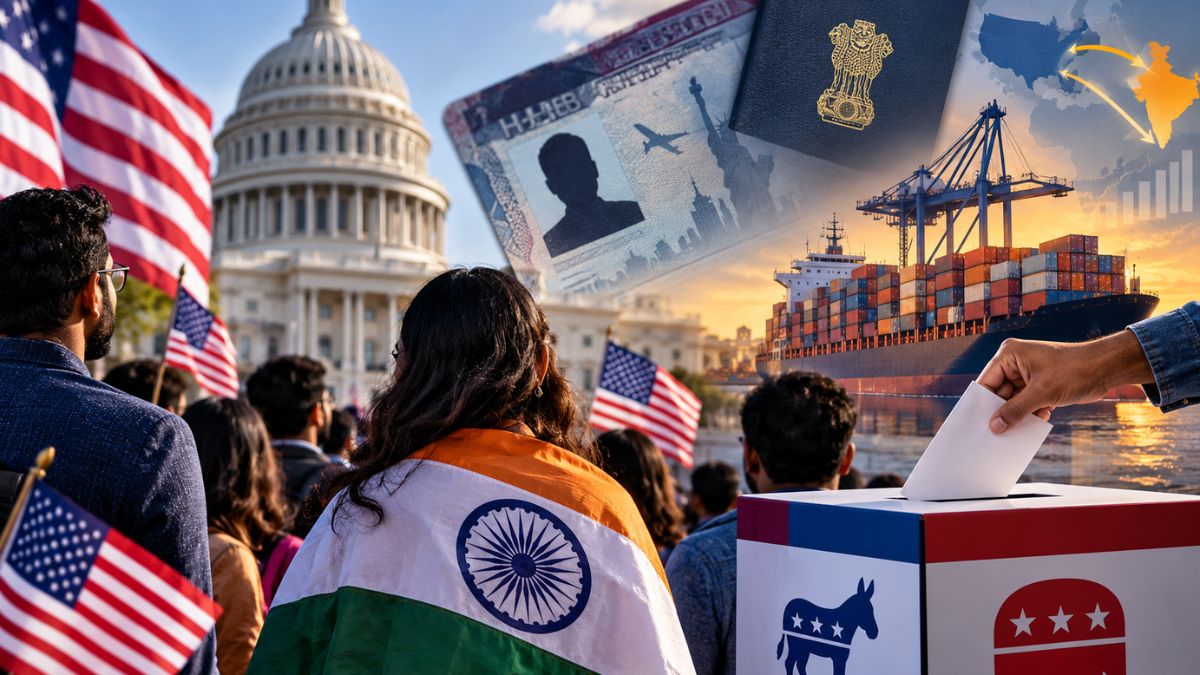
Indian Americans could play an important role in closely contested races in the November 3 US midterm elections. Their influence stems from their presence in key electoral battlegrounds, growing political participation, concerns about immigration policies and ability to contribute to election campaigns. The elections could also have implications for India, particularly on trade, tariffs and work visas.
The results will determine whether President Donald Trump's Republican Party retains control of Congress or faces greater opposition from Democrats. The Indian-American community numbers around 5.2 million, according to estimates cited by the Carnegie Endowment for International Peace. Around 2.6 million Indian Americans are eligible to vote. They make up a small share of the overall US electorate, but their concentration in closely contested states could make their votes important.
Here are the key Indian factors that could influence the 2026 US midterm elections. Why Indian-American voters are important Indian-American voters are a relatively small but politically important group. Their influence depends not only on their numbers but also on where they live, how many turn out to vote and which candidates they support. States such as Pennsylvania, Michigan, Georgia, Texas and New Jersey have sizeable Indian-American communities.
Some of these states have closely contested races, where even a small shift in voter support could affect the outcome. Morgan Stanley flags energy prices as a key risk The Carnegie Endowment for International Peace estimates that the US has around 2.6 million eligible Indian-American voters. Their impact will depend on how many vote and whether their preferred candidates are competing in close races.
The 2026 midterm elections will determine all 435 seats in the House of Representatives and 35 Senate seats. Elections for several state and local offices will also take place. Indian-American voters favour Democrats, but support is changing Indian-American voters continue to lean towards the Democratic Party, although their loyalty to the party has weakened in recent years. The 2026 Asian American and Pacific Islander Voter Survey, conducted by AAPI Data and Asian and Pacific Islander American Vote (APIAVote), found that 66% of Indian-American respondents preferred a Democratic candidate for the Senate.
Around 22% preferred a Republican candidate. For House elections, 66% favoured Democratic candidates, while 18% preferred Republicans. The survey also found that 90% of registered Indian-American respondents planned to vote in the midterms, while 71% said they were certain to vote. These figures suggest strong interest in the elections, although stated intentions do not always translate into actual turnout.
A separate 2026 Indian American Attitudes Survey by the Carnegie Endowment for International Peace found that support for the Democratic Party had declined. The share of Indian Americans identifying as Democrats fell from 52% in 2020 to 46% in 2026. Republican identification increased from 15% to 19%, while the share identifying as independents rose from 23% to 29%. Trump's immigration policies could influence voter choices Immigration is one of the major issues that could shape Indian-American voting preferences in 2026.
The Trump administration's tougher approach to immigration has raised concerns among sections of the Indian-American community, particularly those affected by skilled-worker visa rules. The H-1B visa programme is especially important because it allows US employers to hire foreign workers for specialised jobs. Indian citizens account for a large share of H-1B visa holders, making changes to the programme particularly relevant to Indian professionals and their families.\
These issues also affect Indian students and professionals who hope to work in the US. The Carnegie Endowment's 2026 survey found dissatisfaction with Trump's performance. Around 71% of Indian-American respondents disapproved of his performance as president, including 55% who strongly disapproved. The survey also found dissatisfaction with his handling of immigration, the economy and US-India relations.
However, dissatisfaction with Trump does not automatically mean that every voter will support a Democratic candidate. Economic concerns, individual candidates and other policy issues could also influence voting decisions. Cost of living and jobs remain important concerns Economic issues could be another major factor in the voting decisions of Indian Americans. Inflation, the cost of living, jobs and the economy featured prominently among their concerns in the Carnegie survey.
Indian-American households have a median income exceeding $150,000, according to estimates cited in the available material. Despite their relatively high incomes, economic policies can affect their spending, investments, employment prospects and financial security. Voters could assess candidates on their ability to address inflation, protect jobs and improve economic conditions. Social Security and Medicare, which provide retirement and healthcare benefits to eligible Americans, are also among the issues raised in voter surveys.
The findings suggest that immigration alone may not determine how Indian Americans vote. Their choices are likely to reflect a combination of economic concerns, political preferences and views on the government's performance. Indian-American candidates could lose representation in Congress Indian Americans have gradually increased their presence in US politics over the past two decades. Their representation in Congress has also given the community a more visible role in national political debates.
Democrat Ami Bera's election to California's 3rd Congressional District in 2012 marked an important step in this growth. Ro Khanna, Pramila Jayapal and Raja Krishnamoorthi entered Congress in 2017. Shri Thanedar joined in 2023, followed by Suhas Subramanyam in 2025. The six lawmakers are Democrats and are informally known as the Samosa Caucus. However, Indian-American representation in the House could decline after the November elections.
Krishnamoorthi and Thanedar are preparing to leave the chamber after failing to clear their respective primaries, according to the material provided. Democratic candidates Amish Shah in Arizona and Pia Dandiya in Florida could help maintain the community's representation if they win their closely contested races. The number of Indian-American lawmakers could fall from six to four if neither candidate wins.
Republican Indian-American candidates Ritesh Tandon, Nirav Sheth and Mahesh Ganorkar are also contesting House seats. Their chances of expanding the community's representation are considered limited because they are running in districts described as strongly Democratic. Wealth and campaign donations could add to their influence Indian Americans could influence the elections through campaign donations as well as voting.
Their presence in technology, finance, healthcare, corporate law and commercial real estate has helped create a community with significant economic resources. A median household income exceeding $150,000 gives some Indian-American households the financial capacity to contribute to political campaigns. Business and professional networks can also help candidates raise funds, reach voters and organise campaign activities.
Contributions from Indian Americans during the 2026 election cycle have reportedly exceeded previous midterm fundraising records. However, donations do not guarantee electoral success. Their influence depends on the candidates receiving the money, the competitiveness of individual races and how campaigns use the funds. How the results could affect India-US trade relations The midterm elections could also influence the political environment surrounding India-US trade relations.
Although the elections will not automatically change existing policies, a change in control of Congress could affect how the Trump administration's trade decisions are debated and scrutinised. Trade and tariffs are important to India because they affect the cost of doing business, exports and economic ties between the two countries. A preliminary trade framework announced on February 2, 2026, proposed changes to tariffs imposed by both countries.
The framework included a reduction in the US reciprocal tariff on Indian goods from 25% to 18%, alongside proposed tariff reductions by India on several industrial and agricultural goods. The material provided also states that the US Supreme Court struck down the reciprocal tariffs on February 20, 2026. The status of subsequent legal and policy developments would need to be confirmed before drawing conclusions about the current tariff position.
A Democratic-controlled House could increase scrutiny of the administration's trade policies through hearings and other oversight measures. However, a change in congressional control would not necessarily lead to lower tariffs or a major change in US trade policy. The president would retain significant authority over several trade-related decisions. The election outcome could therefore affect the debate around the India-US trade relationship, even if it does not immediately change the policies themselves.
Why the election is important beyond the Indian-American community The Indian-American vote is unlikely to determine the national outcome on its own. Its influence will depend on turnout, the distribution of voters across competitive constituencies and the margins separating candidates. The elections could also shape the wider political environment for immigration, skilled-worker visas and India-US economic relations.
A change in congressional control could affect the level of scrutiny faced by the Trump administration, even if major policy changes do not follow immediately. For Democrats, the challenge will be to turn their continuing advantage among Indian-American voters into actual votes. Republicans, meanwhile, could seek to attract voters who have become less attached to the Democratic Party.