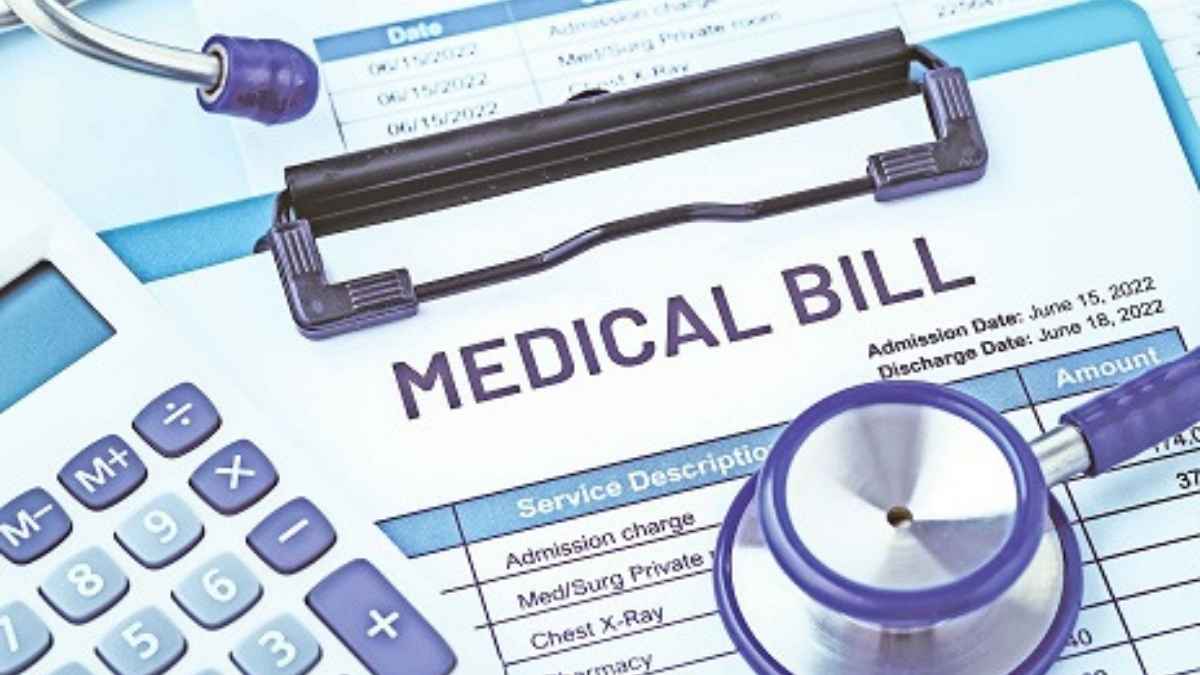
As the government moves to rein in medical billing inconsistencies, know how consumers suffer from markups on medicines and consumables
A recent social media post by Maharashtra Food and Drugs Administration (FDA) commissioner Tukaram Mundhe has brought renewed attention to a longstanding concern in India — inflated medical bills and the need for greater accountability in healthcare pricing. As per an audit conducted by the department, certain consumables were found to be upcharged by even 29 times their original MRP in patients' bills.
Incidentally, the medical bill problem is not confined to the price of a single medicine or consultation. It is the cumulative cost of treatment, such as registration charges, doctors' fees, room rent, nursing charges, diagnostic tests, medicines, consumables, surgical expenses and additional fees for specialised services, that can often make healthcare unaffordable. Even when each component appears relatively modest, the final bill can become substantial.
However, some relief seems to be in sight as the issue has now come under the Supreme Court's scrutiny. The Centre has also demanded transparency from all the states, asking them to clarify pricing obligations, strengthen monitoring and establish accessible complaint mechanisms, so as to help patients understand exactly what they are paying for and how much. Regulating bodies have also been mandated to examine whether existing medicine-price controls adequately cover commonly used treatments and whether stronger safeguards are justified under the Drugs (Prices Control) Order.
Major concerns One major concern ailing Indian healthcare is the lack of transparency even before treatment begins. Patients and their families may not receive a comprehensive estimate covering the expected expenses of a procedure or hospital stay. In emergencies, they have little time to compare providers or negotiate prices. Insurance coverage depends on eligibility, policy conditions, exclusions, hospital networks and the nature of treatment.
Outpatient consultations, long-term medicines and some diagnostic expenses may still leave patients paying substantial amounts themselves. The country does not currently have a consolidated database or system to keep an annual record of billing debts and complaints on medical prices. India already has a framework for regulating medicine prices. The National Pharmaceutical Pricing Authority (NPPA), operating under the Department of Pharmaceuticals (DoP), implements price-control provisions under the Drugs (Prices Control) Order, 2013.
Essential medicines included in the ‘National List of Essential Medicines’ are subject to ceiling prices under the applicable rules, while prices of non-scheduled formulations are subject to limits on annual increases. However, these prices do not tend to be final. At the billing stage in hospitals, hidden charges, excessive services, and upcharge consumables appear in the paperwork, raising the payable amounts significantly for the patients.
Some surveys say that hospital bills can be inflated by 15-40% with such hidden charges. The NPPA is maintaining that cases under legal process currently cannot be discussed with the media, as per Manisha Khuntia, deputy director with NPPA, overseeing enforcement. Statements on the matter are being deferred to the DoP under the Ministry of Chemicals and Fertilisers, as of now. “I cannot speak on policy enforcement while cases are still ongoing,” she told FE.
Solicitor General of India Tushar Mehta has admitted before the Supreme Court that there are loopholes in pricing management, and that measures will be taken to correct the same. The Centre's directive asking states to ensure that hospitals display their rates must translate into consistent enforcement, accessible price lists and clear explanations of what individual charges include. The SC's intervention and the Centre's directions have now brought the issue into sharper focus.
It's a consumable a patient might not be aware enough to even check for. In Maharashtra, for instance, some patients were reportedly paying Rs 325 for an IV infusion set that was bought at Rs 11.05 when procured. That's over 29 times the procurement price that the patient is being charged. The state FDA noted this discrepancy in their audit in September this year. Their report showed very large gaps between procurement prices and prices charged and printed for certain hospital consumables.
Similarly, a patient from Karnataka reported being charged Rs 4,528 for an antibiotic that was actually priced at Rs 80. Further, another patient was charged Rs 7,110 for an injection that was originally priced at Rs 160. These complaints and gaps were unearthed by the Karnataka FDA in an investigation into hospital billings. Among the other recent instances highlighting this problem were from Kerala and Punjab.
In Kerala, a patient reportedly took the matter to the state consumer commission over allegedly inflated medical bills and a disputed signature. The Kerala consumer court found the allegations valid, and later ordered the hospital in question to pay about Rs 1.14 lakh to the patient. In Punjab, a patient had to be compensated after their hospital issued three different bills for the same admission - in this patient's case, the initial estimate for their treatment was vastly different from the final payable amount, almost double — the estimate was made for up to Rs 4.10 lakh, whereas the bill had reflected around Rs 8.47 lakh to be paid.
Grievance redressal The Union Health Ministry's Charter of Patients' Rights says patients and caregivers have a right to information about hospital rates and a right to receive an itemised, detailed bill at the time of payment. It also says hospitals should display key rates prominently and make their detailed schedule of rates available to patients. A disputed bill can become a civil or consumer dispute, and the hospital may pursue recovery of genuinely outstanding dues.
For patients covered by health insurance, the insurer or third-party administrator should also be brought into the dispute. The Insurance Regulatory and Development Authority of India (IRDAI) advises policyholders to first raise grievances with their insurer; and then with the IRDAI’s grievance mechanism. Other consumer forums, state health ministries, and the NPPA also have grievance cells that can be approached in these cases.
Meanwhile, the IRDAI plans to issue a fresh consultation paper to address healthcare billing practices and improve health insurance claims settlement. “On the claims side, we need to understand treatment costs, utilisation, fraud and provider practices. We aim to come out with another consultation paper on that,” said Ajay Seth, chairman, IRDAI, while delivering a special address at the FE Modern BFSI Summit 2026 in Mumbai recently.