The man who tracks bonds for a living is betting against the crowd on the Fed
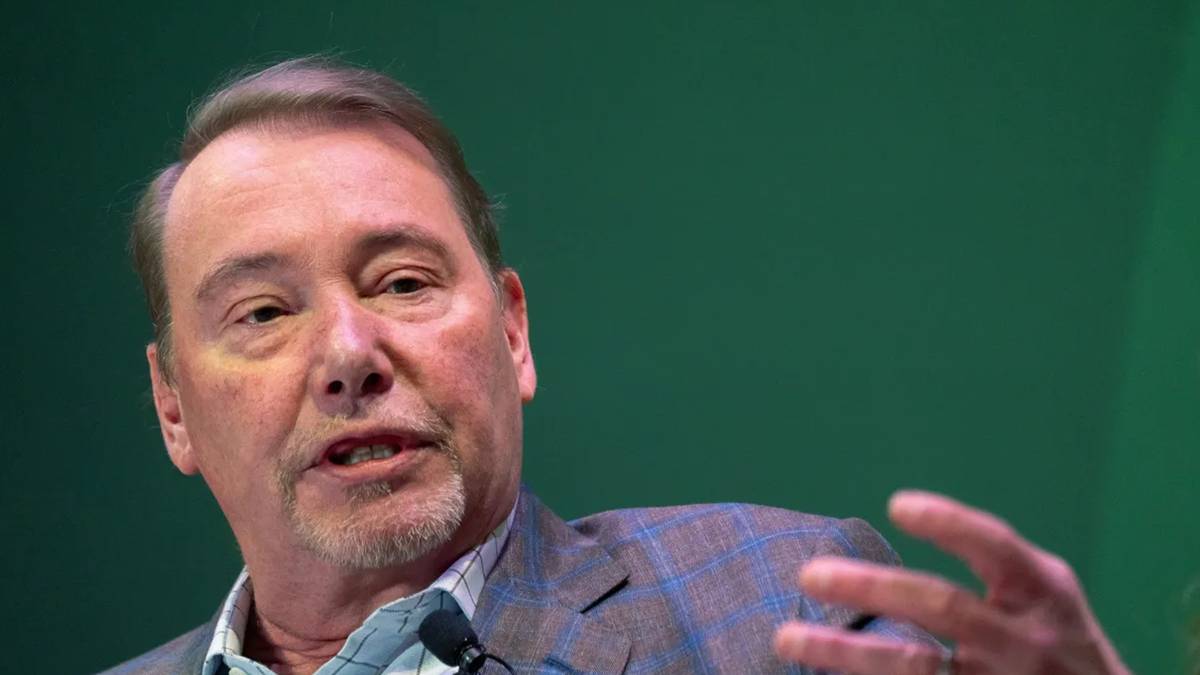
Bond king Jeffrey Gundlach sees the possibility of another US Fed rate hike, even as markets expect rates to remain unchanged. He warns that rising Treasury yields and persistent inflation could keep pressure on financial markets.
DoubleLine CEO and CIO Jeffrey Gundlach, the famous 'bond king' of the fixed-income market, expects the US Fed to raise rates rather than cut them and says a hike in October is possible. This comes against the backdrop of a growing consensus for a rate pause, with a probability of over 85%, according to the CME FedWatch tool. In other words, the man who tracks bond markets for a living is betting against the crowd.
Gundlach also has a stark warning for equity market investors. He says the S&P 500's Shiller CAPE ratio stood at 42.04 as of 31 July, one of the highest readings on record. CAPE compares the index's price with its average inflation-adjusted earnings over the past 10 years, so a high reading means stocks are expensive. He says history offers little comfort. Whenever the CAPE has been above 35, forward 10-year real returns from the S&P 500 have basically never been positive.
As of October 19, the Shiller CAPE Ratio was at 40.71, according to YCharts. In a conversation with UBS’s Solita Marcelli, part of UBS’s annual Back-to-School on the Markets series, DoubleLine CEO and CIO Jeffrey Gundlach made some tough observations on the bond and equity markets. He covered a lot of ground: why Treasury yields are at multi-decade highs, the Fed's tug-of-war between inflation and interest expense, how much a bond should pay above inflation, the rise of commodities and oil, whether inflation will really fall to 2.3% by 2027, his four-part asset allocation, why he thinks AI is past its peak, and what the next recession could do to the deficit and the dollar.
Why Are Bond Yields Rising Across the World? The US Treasury bond yields are at multi-decade highs, and it's not a good thing for the financial markets. The 10-year yield as well as the 30-year bond yield have already crossed 5% for the first time since 2007. Gundlach says it is a global move. Rates are rising across the developed world, including Germany, Japan and the UK. Japanese yields are above 3%, after weakness in the yen led to a change in policy.
His main driver is the supply of bonds. The budget deficit keeps growing, with no end in sight. He noted that the national debt crossed $40 trillion, and that the Treasury signalled Operation Twist the very next day. Operation Twist is a tactic to pull down long-term yields by changing the mix of government debt being bought and sold. He is not impressed. In his words: “$6 billion of buybacks is like a day of the deficit.
It’s like nothing.” Buybacks here mean the Treasury repurchasing its own older bonds. Gundlach’s warning is simple: bigger deficits mean higher yields everywhere. As governments pile on debt, investors demand a bigger “term premium” to hold it. So they dump old bonds for newly issued ones that pay more. Selling pushes prices down and yields up, and a rising yield means lenders want more to keep funding the government.
The Fed's Tug-of-War: Inflation vs Interest Expense Gundlach says the Fed faces a dilemma between inflation and interest expense. Interest expense is what the government pays every year to service its debt. Raising rates worsens the interest bill. Holding off leaves inflation. In his words: “It’s like a waterbed. You push on one spot, and it’s just going to get a bump on the other spot.” In his view, the Fed's two mandates are now inflation and interest expense, not employment.
A Rate Hike in October? He Thinks It Is Possible In January, he says, the bond market expected two Fed cuts this year. He had said there would be no cuts in 2026. Now the market is looking at hikes, possibly in October and December. The debate has moved from when cuts will come to whether hikes are needed. Some dismiss October because it is close to the midterm elections. Gundlach calls that a ridiculous argument.
He says people are already voting early, and a hike is not a real election mover. He thinks the Fed will probably raise rates a couple more times. The 2-year Treasury at 4.9% points the same way, he says. Gundlach says the Treasury does have the means to control rates. He pointed to the 1940s to the mid-1950s in the US, and to Japan for decades. Both are episodes of governments keeping borrowing costs contained.
Japan eventually could not keep yields contained. So, where does that leave long-term yields? He says the path of least resistance is up, until Operation Twist kicks into high gear. Gundlach says bonds are not as overvalued as five years ago, when real rates were hugely negative. With yields near 5%, real rates are positive. But in the 1980s and early 1990s, when investors questioned how debt was managed, they wanted at least a 200 basis point real return.
A basis point is one-hundredth of a percentage point, so 200 basis points is 2 percentage points. He assumes inflation of about 3%, a number he says is probably a little lower than the true rate. On that basis, the 10-year Treasury at 5.14% gives roughly the 200 basis points. For the 30-year, he wants 250 to 300 basis points over inflation. That means about 6%. The 30-year is at 5.44%, the highest in essentially 20 years.
He would not buy long Treasuries unless the yield is around 6%, maybe 6.5% on the 30-year. Put simply, he wants a clear cushion over inflation before lending to the government for decades. What worries investors? Gundlach says many think 5% is a great buying opportunity. He says they are jaded by the years of near-zero rates. He calls zero rates an abnormal condition, not a natural state. Private credit and private equity investors keep waiting for rates to fall so they can exit.
Gundlach says rates will not come down like that. Commodities Lead the Year, While Gold Pauses The Bloomberg commodities index is the top-performing asset class this year, says Gundlach. It has beaten all stock markets and all US bond sectors. Gold, however, is stuck after its big rally last year into the first quarter of this year. On oil, he says the US has depleted its strategic petroleum reserve by a very large amount.
The reserve is the government's emergency stockpile of crude. Global reserves are at their lowest in decades. He does not expect oil to fall to $50 or $60, and thinks perhaps $70 is more likely. He says the effects of high oil prices have not fully spread. Fertiliser prices are likely to rise, and some shipping corridors are up 400%. He put the US average petrol price near $4.40 a gallon. Will Inflation Really Fall to 2.3% by 2027?
Gundlach says he raised this after the last Fed press conference. The Fed's projections show PCE inflation ending this year at 3.7% and falling to 2.3% by the end of 2027. PCE, or personal consumption expenditures, is the inflation gauge the Fed prefers. That is a 1.4 percentage point fall. He sees no logic for it with commodity prices where they are. To reach 2.3%, he says, you would have to hike.
He sees signs that inflation expectations are moving up. He cited a Costco example. The retailer doubled the price of its Kirkland motor oil and told customers it was rationing it. Gundlach says that kind of move can push people to buy in advance. Such a rush to stock up can itself push prices higher. He also sees higher consumer spending and inventory building. He says consumer sentiment surveys from the University of Michigan and the Conference Board show expectations moving higher.
He does not accept the argument, based on TIPS versus nominal bonds, that expectations haven't changed. TIPS are inflation-protected Treasury bonds. He expects inflation to start falling only around the second quarter of next year. Gundlach's Four-Part Asset Allocation So, how is Gundlach shaping up his own portfolio? Gundlach splits asset allocation into four pieces. Equities: He wants out of the epicentre of overvaluation.
Two weeks ago, he moved from market-cap-weighted exposure to equal-weighted. Market-cap weighting gives bigger companies bigger shares, while equal weighting gives every company the same share. Cap-weighted exposure can be 40% to 50% in AI and AI-adjacent stocks. Equal-weighted has almost none. Fixed income: He uses a barbell. A barbell means holding assets at two ends of the risk spectrum rather than the middle.
One side is government and securitised products with no corporate bonds. He likes non-guaranteed mortgage-backed securities issued five or more years ago. These are mortgage bonds without a government-agency guarantee. Gundlach says home prices behind them are up at least 50%, so defaults are unlikely. He puts the spread at about 115 to 130 basis points over Treasuries, or roughly 6.25% to 6.30%. He has added local currency emerging market bonds too.
That is the top-performing traditional bond sector this year, and it gains if the dollar falls. Real assets: About 20% of a portfolio, he says. Of this, 10% should be in a commodity fund. After gold's recent weakness, he thinks it is time to build up gold for the long term. Dry powder: He names this as the fourth piece but does not explain it. The term usually means cash or near-cash kept ready to deploy when better opportunities appear.
He stays conservative on both duration and credit. Duration measures how sensitive a bond is to interest rate changes. Gundlach believes we are past peak AI, a feeling he had by June or July. He describes how the story shifted. First, AI was the best thing in history. Then AI would kill jobs. Now there are claims it could kill us all by the end of the decade. He thinks the last message is designed to prompt government intervention to build moats around existing AI firms, and says that won't help.
When AI enthusiasm turns to scepticism, he expects a big drop in capex. Capex, or capital expenditure, is the money companies spend on data centres, chips and other infrastructure. He does not know whether that happens in six months or 18. He thinks a recession would probably follow within a couple of years. He says the economy has been driven by this unprecedented capex cycle, and that people are extrapolating high earnings growth.
He would fade that idea in a big way. Some of these companies make money, he says, but a lot are bleeding it. Next Recession, Bigger Deficit, Weaker Dollar Gundlach says the deficit is about 6% of GDP, and around 7% with wars and disaster relief counted. In a recession, he thinks it could reach 12%, roughly $3.6 trillion. He expects the dollar to fall at least 20% on the DXY index in the next recession.
The DXY tracks the dollar against a basket of major currencies. He thinks that would help local currency emerging market bonds, non-dollar assets, gold and commodities. Gundlach argues that many of the relationships that investors relied on for decades have stopped working, a new world he calls “backward land.” The clearest consequence is a view that runs against conventional wisdom: “In the next recession, long-term rates will go up” as a downturn pushes the deficit toward 12% of GDP and interest expense toward $3 trillion a year.
Normally, recessions pull yields down as investors rush into safe government bonds. With the government increasingly uncomfortable with where rates are headed, he expects more intervention, starting with a larger Operation Twist. The Bottom Line: Stay Defensive, Wait for Better Yields Taken together, Gundlach's message is one of caution. He sees rates heading up rather than down, stocks priced for perfection, and an inflation path the Fed may be underestimating.
His own portfolio leans towards equal-weighted equities, a barbell in bonds, real assets and gold, and he would buy long Treasuries only when yields are near 6%. In the next recession, he expects wider deficits, higher long-term rates and a weaker dollar. Whether or not investors agree, his message is that the old assumption of falling rates and ever-rising stocks may no longer be a safe one. Disclaimer: This article is for informational purposes only and should not be considered investment advice. Investors should assess their financial goals and risk tolerance and consult a qualified financial adviser before making investment decisions.