Startups step in to give gig workers a place to rest
Startups like Upzy and Nia.one are building dedicated community hubs and affordable housing to address basic amenity and rest facility shortages for India's gig workers.
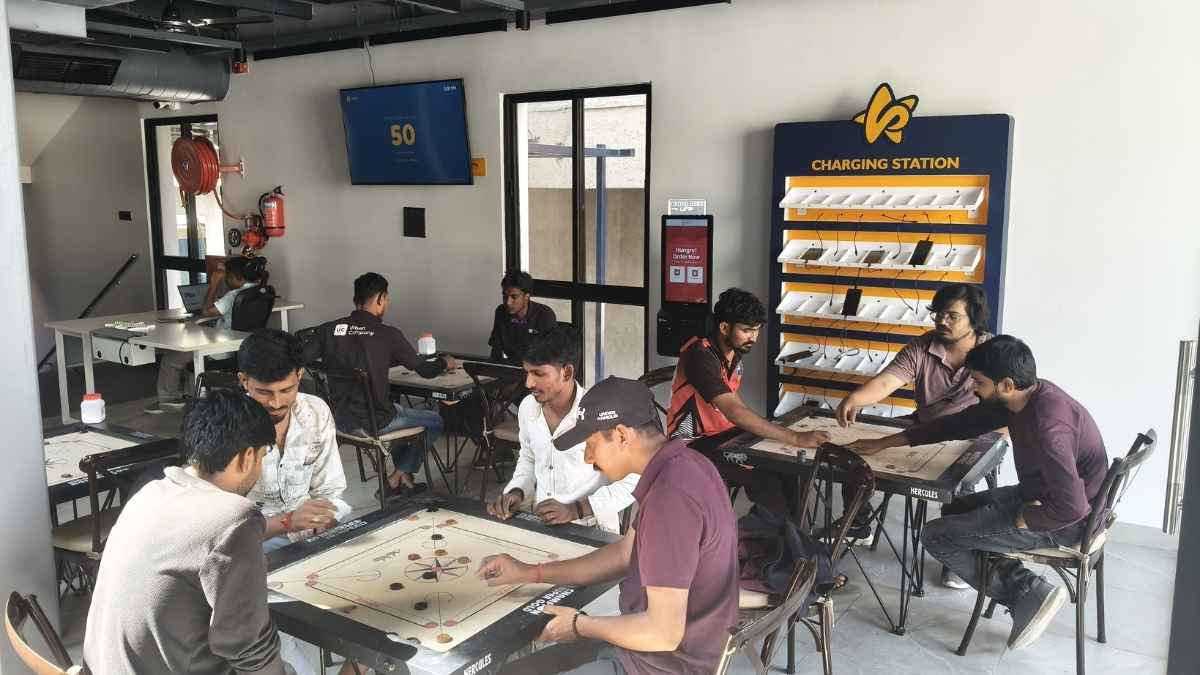
For the workers who keep India’s quick commerce and e-commerce deliveries running, a clean toilet, a meal sitting down and a corner to rest remain hard to find. Riders wait outside dark stores for orders, and some sleep in rooms where electric scooter batteries are charged. A handful of startups are now trying to fill this infrastructure gap. Hyderabad-based Upzy is building community centres for workers.
It opened its first, a 9,000 sq ft facility in Kondapur, Hyderabad, on October 2. It has a canteen, phone charging and battery-swapping stations, washrooms and a co-working space. Membership costs Rs 350 a month or Rs 99 a week, with unlimited visits from 6 am to 11 pm. The centre cost about Rs 4 crore to build. 1 billion, AWS sales rise 39% Mumbai-based Nia.one, meanwhile, provides dormitory-style accommodation for gig and industrial workers.
Its facilities are located near worksites in Bengaluru, Hosur, Chakan near Pune, Gurugram and Chennai. The company says each resident gets 85 sq ft of space, in line with World Health Organization standards for basic living. Rent is Rs 1,500-3,000 a month, with no deposit. The dormitories have bunk beds, drinking water and laundry services. Nia.one also runs an essentials shop selling everyday goods sourced directly from FMCG companies, and a 'Walk to Work' programme that places residents in better-paying jobs nearby.
Residents can access tele-health consultations for 15 a month. Nia.one currently houses about 8,000 gig and factory workers and has an annual revenue run rate of Rs 20 crore. It raised $2.4 million from Elevar Equity last year. Both startups plan to expand. Upzy aims to open 25 centres across Hyderabad over the next 18 months, combining large facilities with smaller 1,500-2,000 sq ft spaces for short breaks, before moving to Bengaluru and other cities.
Nia.one is looking to raise $20-40 million in a Series A round between January and March to develop what it calls "Shram Parks", with up to 1,500 beds near manufacturing clusters. It is also opening centres in Hyderabad and Visakhapatnam, and aims to grow revenue tenfold in two years, said Sachin Chhabra, founder and CEO. Workers' unions want governments to help fund such facilities. Karnataka and Telangana have passed gig worker laws providing for welfare boards funded by a fee on platform payouts.
Governments should use these funds to support restrooms and housing, said Shaik Salauddin, who heads the Telangana Gig and Platform Workers Union and is national general secretary of the Indian Federation of App-based Transport Workers. A parallel network of rest facilities is also being developed by governments and delivery platforms, often free for workers. The Greater Chennai Corporation opened air-conditioned lounges in 2025, and Kerala opened a GigOn centre in September.
Amazon India and Zepto have each agreed to fund five rest centres in Hyderabad. Zomato says it offers more than 5,000 rest points, while Delhivery has opened over 1,000 stops for workers across platforms. Workers said many such facilities remain rudimentary, with a few chairs and a bathroom. Only 30-40% of dark stores across major platforms provide basic amenities such as toilets, drinking water or proper seating, Salauddin said.
Of 4,163 food delivery and quick commerce riders surveyed in Hyderabad, 91% said a clean restroom was the facility they needed most and 88% wanted a decent place to sit and eat, according to Upzy. Housing investment is also beginning to move. HDFC Capital and Godwitt Group formed a platform this month to develop more than 100,000 beds for industrial workers. NITI Aayog estimates India will need about 25 million such beds over the next decade.
The Union Budget for 2024-25 proposed dormitory-style rental housing for industrial workers through public-private partnerships, supported by Viability Gap Funding (VGF). VGF is a government grant that helps make projects with public benefits financially viable for private investors by covering part of their capital costs. NITI Aayog has recommended central funding of up to 30% of project costs, excluding land, with states undertaking regulatory reforms to qualify for the support.
India's gig workforce stood at 12 million in 2024-25 and is projected to reach 23.5 million by 2029-30, according to the Economic Survey and NITI Aayog. Yet affordability remains uncertain. About 40% of gig workers earn less than Rs 15,000 a month, the Survey found; even Nia.one's cheapest bed, at Rs 1,500, would take around a tenth of that income.