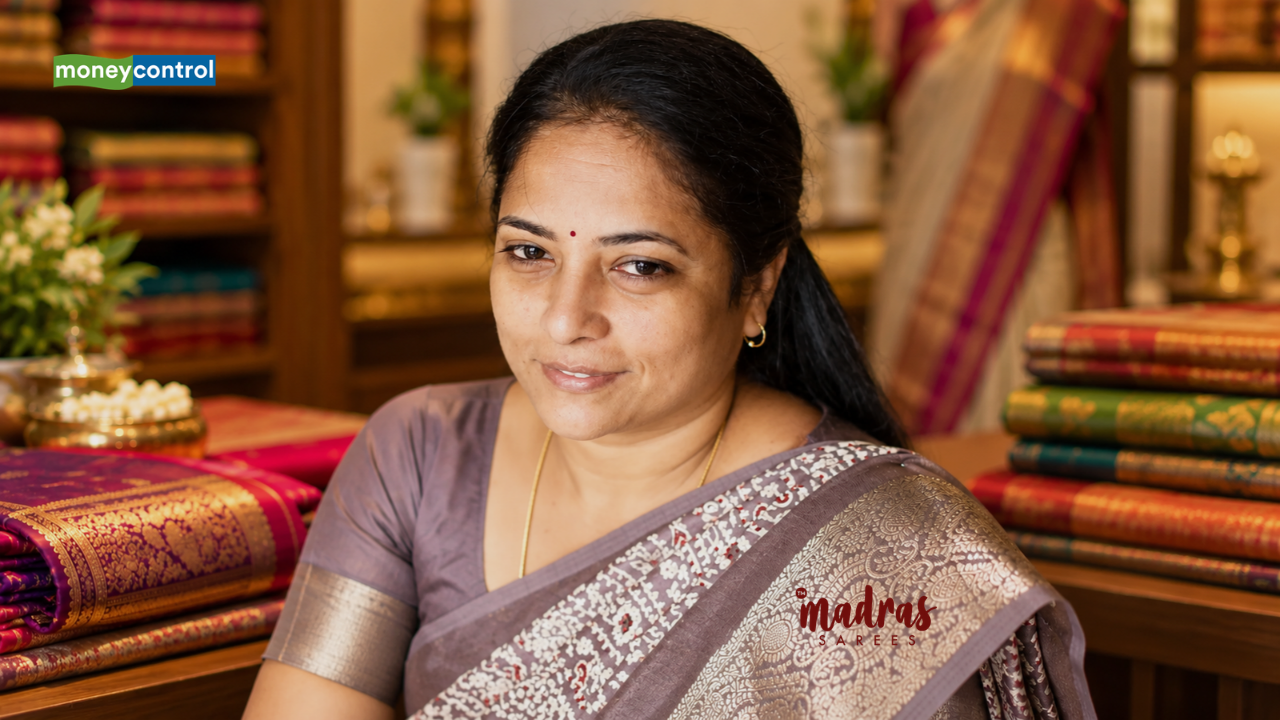
She left TCS, built Rs 12-crore 'Madras Sarees': How Ramya Devanathan turned her passion for sarees into business
After spending 18 years at Tata Consultancy Services (TCS), Ramya Devanathan decided to leave corporate life and build a business around traditional Indian sarees.
After spending 18 years at Tata Consultancy Services (TCS), Ramya Devanathan decided to leave corporate life and build a business around traditional Indian sarees. Starting Madras Sarees in 2021 with an initial investment of Rs 2 lakh, she has grown the venture into a business that reported Rs 12 crore in annual turnover last year, with a projected annual recurring revenue (ARR) of Rs 22 crore this year, according to her account in an interview with The Weekend Leader.
The Chennai-based direct-to-consumer (D2C) brand sells sarees through its online platform, offering a range of fabrics, including cotton, linen, silk cotton, khadi and tussar. Its growth has involved taking a traditional product category online while building the technology, processes and customer relationships needed to operate a digital retail business. Devanathan spent nearly two decades in the technology sector, working in an environment shaped by established systems, processes and delivery mechanisms.
She has described herself as a "Tata product", reflecting the influence of her corporate experience on how she approaches business. The COVID-19 pandemic became a turning point. As consumers increasingly relied on digital platforms to access everyday essentials, Devanathan saw an opportunity to take her interest in sarees beyond a personal passion. "We all got stuck in a room... everything was happening online, be it medicine, groceries, food... so I decided that I should follow my passion," she said in the interview.
She launched Madras Sarees in 2021 with Rs 2 lakh, choosing to start small rather than commit significant capital to an untested business. Her familiarity with technology and project management offered a foundation for building an online retail operation, even though she was entering a sector in which she had no conventional retail background. Madras Sarees initially operated from a small, approximately 10-by-10-foot room.
Orders were managed through WhatsApp, while social media platforms helped the business reach potential customers. In the early stages, Devanathan was cautious about investing in a website or a more sophisticated technology infrastructure. She wanted to establish whether customers would be comfortable buying sarees online from a new business. The concern reflected a challenge specific to online saree retail: customers often want to examine a garment's colour, texture and finish before making a purchase.
Devanathan sought to address this gap by appearing in the brand's content and showcasing its products herself. "I decided that I should be the face of the brand so that I can create trust to the people," she said. Her approach gradually shifted from testing demand through informal channels to developing a more structured online retail operation. The company's experience also highlighted the operational difficulties of managing a growing volume of transactions manually, including payment verification and order processing.
Devanathan has also highlighted the importance of building customer relationships during the company's early years. In a LinkedIn post, she recalled how the business initially relied on friends, relatives and small customer networks, with repeat purchases and word-of-mouth recommendations helping it gain traction. She wrote that the early business grew through repeat customers rather than large-scale advertising, while its operations have since expanded to include automation, systems and teams.
Madras Sarees has been built through bootstrapping, according to Devanathan, who has attributed the company's growth to its initial Rs 2-lakh investment rather than external funding. She has also spoken about the challenges of establishing credibility as a woman running a business. Recalling an interaction with a potential partner, she said the person questioned her financial capabilities because she was a woman.
"He clearly said to me that... women are not capable of doing that," she said, describing the experience. The episode formed part of the challenges she encountered while attempting to build the business. She has also emphasised the importance of remaining committed to the business and being honest in her dealings, rather than prioritising short-term monetary gains. Madras Sarees' development shows how a traditional retail category can be adapted to an online-first model, although the business still has to address the practical challenges of selling a product that customers often prefer to inspect physically. What began as a Rs 2-lakh venture during the pandemic has since developed into a business with a reported annual turnover of Rs 12 crore.