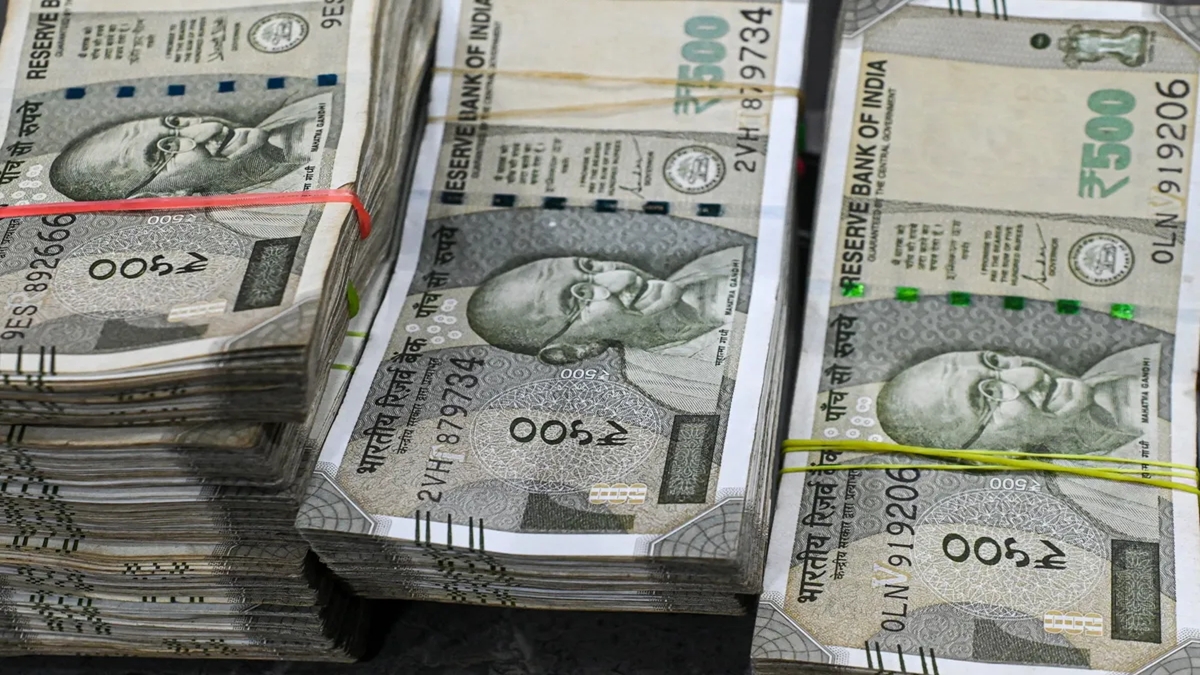
Rs 2.5 lakh crore sent abroad in FY26: What Indians should know about RBI rules
Outward remittances rose from $12.68 billion in 2020-21 to $28.98 billion in 2025-26, with equity and debt investment at $2.65 billion.
Picture yourself eyeing a flat in New York or a few shares of Apple or Nvidia on a US exchange. Your rupees will not work there. You first need dollars. So the first question is: how do you get them? In India, a set of RBI rules decides that. Reserve Bank of India's Liberalised Remittance Scheme (LRS) is the door through which Indians can route their dollars abroad. Think of it as the rulebook for sending money out of the country.
Not many Indians know about it. Yet it applies whether you are investing abroad, going on an international vacation or sending your children abroad for studies. Foreign exchange facilities, such as medical expenses or while travelling, also come under LRS. So if you want to buy US stocks, go for a family vacation or send money to children abroad, LRS rules apply in each case. The full list of LRS categories include: Deposit, Purchase of immovable property, Investment in equity/debt, Gift, Donations, Travel, Maintenance of close relatives, Medical Treatment, Studies Abroad and Others.
Here is the part most people miss. Before any international transaction, you need to convert Indian rupees into dollars. The money that Indians send abroad after converting to dollars or any other nation's currency is referred as remittance. That is true whether you are investing or spending abroad. As an Indian resident, you buy dollars with rupees (INR) from an authorised dealer, which is the bank, in India.
Tax collected at source (TCS) applies to remittances under the Liberalized Remittance Scheme by banks at a rate of 5% unless the amount exceeds Rs. 10 lakhs. In cases where remittance exceeds this threshold for purposes other than education or medical treatment, TCS is collected at 20% on the amount over Rs. 10 lakhs. TCS is collected in advance and can be adjusted against the final income tax liability.
PAN is mandatory and resident individuals have to provide their PAN for LRS transactions. What is RBI'S LRS all about Think of LRS as a yearly pocket-money limit. Every financial year, the RBI gives each resident Indian a fixed amount they can send abroad. Once it is used up, the tap stops until the next financial year begins. Under the current LRS rules, any resident individual is allowed to remit up to 2.5 lakh US dollars (USD 2,50,000) in each financial year.
At an exchange rate of Rs 94 to a dollar, it is about Rs 2,35,00,000 or Rs 2.35 crore. A family of 4 can remit nearly Rs 9.4 crore each year. Every resident, including a minor (countersigned by a guardian), gets the same limit. So a child has a limit too, but a grown-up has to sign. The remittances typically rise at the fag end of the financial year. If one remits 2.5 lakh dollars before March 31 and repeats the process at the start of the next fiscal year, 5 lakh dollars can be remitted abroad per individual over a few days.
RBI's LRS limit and key rules ParticularsDetailsAnnual remittance limit$250,000 per resident individualFinancial yearApril 1 to March 31Equivalent at Rs 94 per dollarRs 2.35 crorePotential limit for a family of fourRs 9.4 crore annually, subject to individual eligibility and applicable rulesMinorsEligible; a natural guardian must countersign the declaration Source: RBI What can the dollars be used for?
Now the rules get a little more detailed. Forex can only be remitted for permissible current account transactions, capital account transactions, or a combination of the two. What counts as a current account transaction? All transactions undertaken by a resident that do not alter his or her assets or liabilities, including contingent liabilities, outside India are current account transactions. In simple words, you spend the money, but you do not end up owning something abroad.
These fall within the 2.5 lakh dollar cap. LRS Data 2025-26 by category Category2025-26Total28979.36Travel16437.99Maintenance of close relatives3539.04Investment in equity abroad2309.74Deposit753.08Purchase of immovable property528.7Others93.3Medical treatment58.55Donations12.12 Source: RBI; In $ million And what is a capital account transaction? If you wish to invest abroad in shares, property and so on, the LRS rules define them as capital account transactions.
This is the bucket where your Apple, Nvidia or New York flat plans sit. Only certain capital account transactions are allowed under LRS. These include opening a bank account abroad, that is a foreign currency account, purchasing real estate property overseas, and making investments overseas. That covers investing in shares, mutual funds and debt instruments, among others. India's outward remittances under LRS Financial yearOutward remittancesFY2020-21$12.68 billionFY2025-26$28.98 billionIncrease over five years2.28 timesPercentage increaseApproximately 128% Source: RBI What happens to leftover dollars?
Think of it like returning unused change. According to the RBI rule, if you have any unused foreign exchange stashed abroad, you must return it within a certain time frame. With effect from 24 August 2022, the foreign exchange realised, unspent, unused and not reinvested, is to be repatriated and surrendered to an authorised person within a period of 180 days from the date of such receipt, realisation, purchase, acquisition or date of return to India.
The rule applies to investors who remit dollars abroad for investment, and to individuals using forex abroad for medical, education or travel needs. Are Indians actually sending more money abroad? Yes, and the numbers are startling and the RBI data shows an increasing trend. In the last five years, the outward remittances have jumped significantly. The outward remittances under the LRS in 2020-21 were $12,684.40 million, about $12.68 billion, which has jumped to $28,979.36 million (Rs 2.56 lakh crore) in 2025-26, about 2.28 times, or up roughly 128%.
According to World Bank’s April 2026 India Development Update, the Indian Rupee depreciated against the US Dollar from an average of around 85 INR/USD in FY25 to 88.3 INR/USD in FY26. There has been an increasing trend towards investing abroad as well. RBI’s LRS data as of July 2026 shows that outward remittances for investment in equity and debt stood at $344.57 million in July 2026. That is up 121% from $156.19 million in July 2025.
The amount sent abroad for equity investments has increased significantly in the last five years. The total remittances in the four months from April to July 2026 add up to $1,403.53 million. That is already about 53% of the $2,652.01 million (Rs 25,175.07 crore at Rs 94/USD) sent for equity and debt investment in the whole of 2025-26. Equity and debt remittances so far this year PeriodAmountApril 2026238.63May 2026363.64June 2026456.69July 2026344.57April to July 20261403.53July 2025156.19Whole of 2025-262652.01Share of 2025-26 covered by April to July 2026About 53% Source: RBI; In $ million The longer-term picture is more impactful.
Indians sent 13.4 times more money for equity and debt in June 2026 compared to June 2020. The full-year total for FY2025-26 was 5.6 times higher than FY2020-21. Disclaimer: This article is for informational purposes only and does not constitute financial, tax or investment advice. RBI rules and foreign exchange regulations may change. Readers should check the latest RBI guidelines and consult their bank or a qualified financial adviser before making overseas remittances or investments.