LTCG Taxation: How India’s capital gains tax compares with other countries
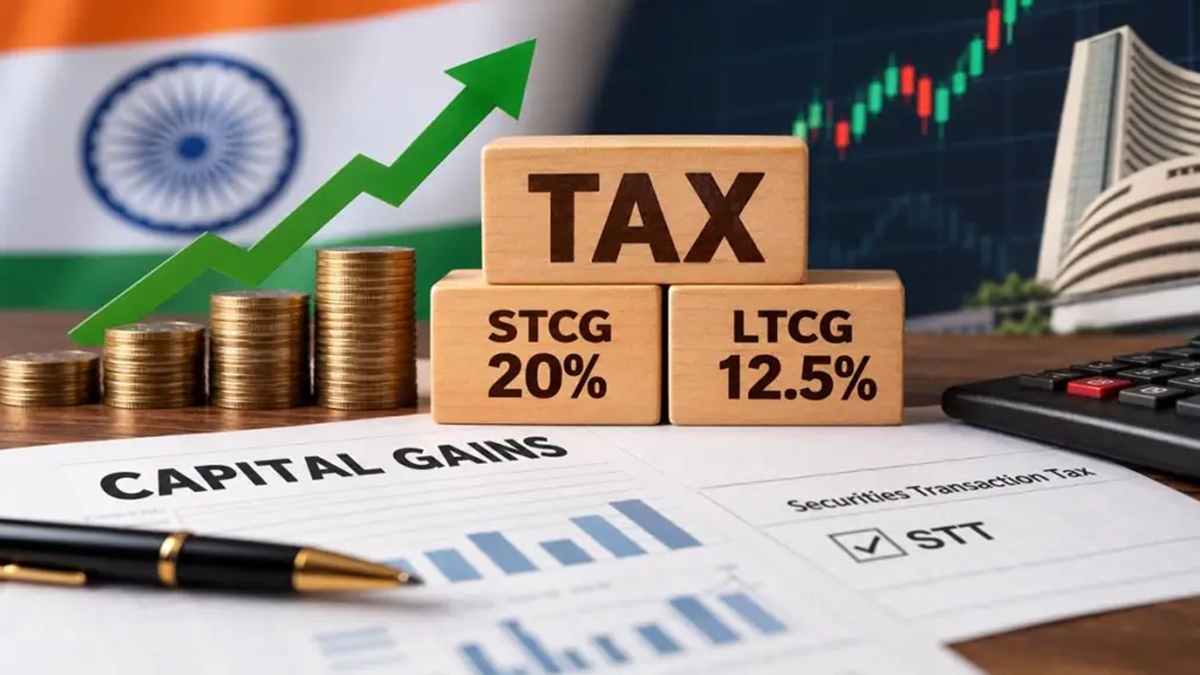
India taxes long-term gains on listed equity at 12.5% above Rs 1,25,000 per financial year, while Hong Kong and Singapore generally do not tax capital gains at all.
Foreign investors are heading for the exit, and India's market regulator may have a plan to slow them down. In a bid to attract foreign investors and anchor retail investors within domestic equity markets, the Securities and Exchange Board of India (SEBI) has recommended the removal of the long-term capital gains tax (LTCG) on foreign investors, as per a source-based report by Reuters, and there is no official confirmation of this.
The proposal is that they be exempted from LTCG if they are selling existing securities to invest in new ones. In simple terms, an investor who sells one holding to buy another would not pay LTCG on the switch. For now, India taxes long-term gains on listed equity at 12.5% above Rs 1,25,000 per financial year, while Hong Kong and Singapore generally do not tax capital gains at all. India: 12.5% Long-Term, 20% Short-Term on Listed Equity In India, long-term gains above Rs 1.25 lakh on listed equity shares, equity-oriented funds and business trust units are taxed at 12.5% for transfers on or after 23 July 2024.
The rate was 10% before that date. This applies when Securities Transaction Tax (STT) has been paid. STT is a tax charged on trades on Indian stock exchanges. Short-term gains on the same securities are taxed at 20%, plus surcharge and cess. Surcharge and cess are extra levies on top of the base tax rate. This Indian taxation regime applies to all taxpayers, including foreign institutional investors (FIIs).
The Union Budget 2024 significantly altered India's capital gains tax regime. LTCG tax rates rose from 10% to 12.5%, and the indexation benefit was removed. Indexation had let investors adjust their purchase price for inflation before calculating the taxable gain. How Other Economies Tax Capital Gains Here we look at the capital gains taxation framework of a few other countries. The capital gains tax structure of India applies to all taxpayers, including FIIs.
The UK, Japan and US figures are headline rates for individuals. For Taiwan, Thailand and Indonesia, gains fall under personal income tax. PIT, or personal income tax, is the tax individuals pay on their income, so gains are added to income and taxed at the usual slab rates. Hong Kong: Capital Gains Generally Not Taxed Onshore gains that are capital in nature are not taxable. Since 1 January 2024, onshore gains on disposing of equity interests are treated as capital if the investor holds at least 15% of the investee for at least 24 months.
So a long-term strategic stake can fall outside tax if the conditions are met. Singapore: No Capital Gains Tax, With a Trading Caveat Capital gains are not taxed. But the tax authority can treat buying and selling stocks or shares as a trade, in which case the gains are taxable. It decides case by case on the facts. Frequent traders therefore cannot assume their profits are tax-free. How India compares with other economies CountryCapital gains treatmentApplies toIndia12.5% long-term (above INR 125,000), 20% short-term on listed equityAll taxpayers, including FIIsHong KongGenerally not taxed; equity gains treated as capital if the investor holds at least 15% for at least 24 monthsOnshore gainsSingaporeNo capital gains tax, but gains can be taxed if treated as tradingCase by caseUnited Kingdom18% basic rate, 24% higher rateIndividualsJapan20.315% on stock gains, up to 39.63% on propertyIndividualsUnited States20% headline rate; long-term after 12 monthsIndividualsTaiwanNormal personal income tax rate, except securities and real propertyIndividualsIndonesiaNormal personal income tax rate, except final-tax itemsIndividualsThailandNormal personal income tax rateIndividuals Source: PwC and EY Worldwide Corporate Tax Guide 2026.
United Kingdom: 18% and 24% for Individuals The headline individual rate is 18% for basic-rate taxpayers and 24% for higher-rate taxpayers. Certain assets are taxed at different rates. Japan: 20.315% on Stock Gains Individual gains from selling stock are taxed at 20.315% (15.315% national plus 5% local tax). United States: 20% Headline Rate, 12-Month Holding Test Gains on assets held for more than 12 months are long-term, and those held for 12 months or less are short-term.
The headline individual rate is 20%. Indonesia: Normal PIT Rate, Except Final-Tax Items Capital gains are taxed at the normal PIT rate, except for certain items subject to final income tax. (Last reviewed 11 June 2026.) A final tax means the tax is settled at that rate, with no further tax to pay on the item. Thailand: Taxed at the Normal Personal Income Tax Rate Capital gains are taxed at the normal PIT rate.
For investors putting money in other jurisdictions, the capital gains rate is only one part of the picture. Several other factors come into play, including the double taxation regime and the tax laws for foreign income. Many countries also tax residents on their global income, so gains made abroad may still be taxable at home, and some countries apply withholding tax or reporting rules on foreign holdings.
The rates above do not capture these, so investors should check the rules in both the country where they invest and the country where they live. The Bottom Line India sits between two extremes. Hong Kong and Singapore largely leave capital gains untaxed, while Japan taxes property gains at up to 39.63%. For listed equity, India's 12.5% long-term rate is lower than Japan's 20.315% on stock gains and the UK's 24% higher rate, though it is above the UK's 18% basic rate and carries surcharge and cess.
The big question is whether the government will exempt foreign investors from capital gains tax while still taxing Indian residents. Last year’s collections may hold the answer. In July, Minister of State for Finance Pankaj Chaudhary told Parliament that LTCG on equity brought in Rs 1,29,158 crore in AY 2025-26 (FY 2024-25). That is up about 79% from Rs 72,249 crore a year earlier. With that much revenue at stake, and the government saying it has no proposal to scrap the tax for retail and domestic investors, a foreign-only exemption would be costly.