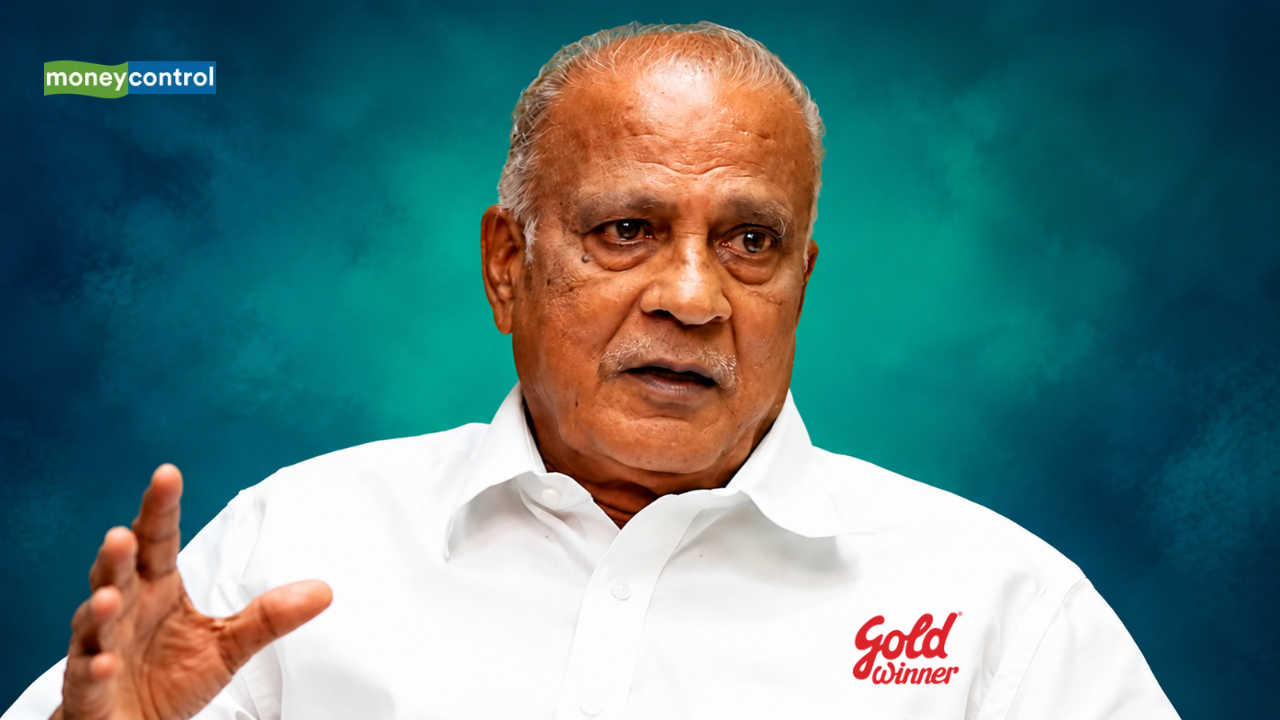
Left home at 15 with Rs 1, built Rs 6,000 crore business: Story of Gold Winner founder G Munusamy
G Munusamy was 15 when he left home to look for work. His first job was at a grocery shop, where he learnt the basics of trading, inventory management and customer relationships.
In 1962, G Munusamy arrived in Chennai with just Rs 1, beginning a journey that would eventually lead to the creation of Kaleesuwari Refinery, the company behind the Gold Winner edible oil brand. More than six decades later, the business has grown into a company with consolidated revenue of Rs 5,862 crore in FY25, according to Tracxn data. Munusamy was 15 when he left home to look for work. His first job was at a grocery shop, where he learnt the basics of trading, inventory management and customer relationships.
Rather than formal business training, his early education came from observing how a shop operated and understanding what customers wanted. In a YouTube podcast with Gobinath, Munusamy recalled the values instilled in him by his parents, who encouraged him to earn his livelihood through his own labour rather than depend on handouts. That experience shaped his approach to business, particularly his emphasis on understanding the market and maintaining close control over operations.
Munusamy moved from employment to running his own business in 1968. Kaleesuwari's business journey subsequently took shape in Chennai, where the company established its presence in edible oils in 1973. At the time, cooking oils were commonly sold loose, with bulk trading forming a significant part of the market. Munusamy saw an opportunity to build a consumer-facing business around packaged oil, where product consistency and brand recognition could help differentiate the offering.
This thinking led to the development of Gold Winner, which became the company's best-known consumer brand. The strategy involved building consumer trust rather than focusing exclusively on immediate profits. In a category where buyers repeatedly purchase everyday essentials, consistency could help turn a first-time buyer into a regular customer. The edible oil market continued to evolve, requiring the company to adjust its product mix as consumer preferences changed.
As palm oil gained ground, Munusamy identified the growing opportunity in sunflower oil. His approach was to monitor demand and adapt production rather than remain tied to an established product or trading model. Rather than treating rising prices as an opportunity to withhold inventory, he has argued for ensuring that products remain accessible to customers. Over time, Kaleesuwari developed a broader edible oils portfolio.
Its products span refined cooking oils, coconut oil, sunflower oil and other categories, alongside offerings for different consumer and commercial requirements. In March 2026, Gold Winner expanded its portfolio to include groundnut, gingelly, coconut and rice bran oils, extending its presence beyond its established sunflower oil business. The company also has an international footprint, with products exported to markets including Singapore, Oman, Qatar, the United Arab Emirates, Sri Lanka, Malaysia, Australia and the United States.
Kaleesuwari's financial performance reflects the expansion of its operations, although revenue and profit have not moved in a straight line. According to Tracxn data, the company's consolidated revenue increased from Rs 3,289 crore in FY16 to Rs 5,862 crore in FY25. Revenue reached Rs 5,584 crore in FY22 before declining to Rs 5,330 crore in FY23 and Rs 4,742 crore in FY24. The business returned to growth in FY25, with revenue rising approximately 24 percent year on year to a new high.
Profitability has followed a more uneven trajectory. Net profit increased to Rs 414 crore in FY21, before declining over the following three financial years to Rs 110 crore in FY24. It subsequently recovered to Rs 233 crore in FY25, more than doubling from the previous year. Despite the scale of the business, Munusamy has emphasised financial discipline and cautioned against excessive borrowing. His approach favours building earnings, reinvesting capital and allowing the business to grow without taking on unnecessary financial risks.
Kaleesuwari's journey shows how a business that began in the grocery trade evolved into a large edible oils enterprise through branded products and changes in consumer demand.