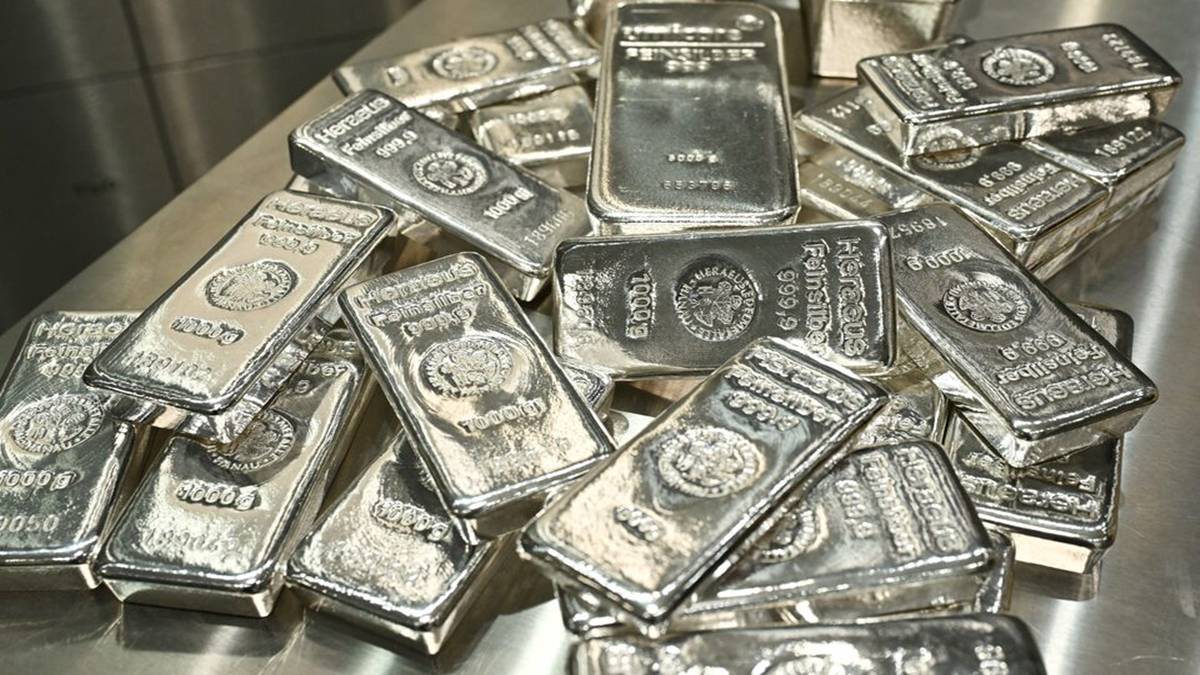
Large silver import quota may ease prices, boost festive supply
Allocation exceeds immediate demand, yet six-month window may be fully used up
The government’s decision to allow 6,500 tonnes of silver imports over the next six months—nearly 90% of the total imports contracted in FY26—may help cool domestic prices and curb gold demand to an extent during the ongoing festive season. Silver prices have fallen sharply to around Rs 1.95 lakh per kg from a record high of Rs 4 lakh a year ago. The Directorate General of Foreign Trade’s (DGFT) notification has further depressed local open-market premiums, which fell sharply to Rs 1,000-1,500 per kg on Friday from Rs 6,500 on Monday.
The government had raised the customs duty on silver imports from 6% to 15% on May 13, 2026, and placed the metal on the restricted import list in June, making prior permission mandatory. The latest release of a large quota appears at odds with that restrictive policy. Allowing substantial imports despite elevated domestic prices could help moderate silver jewellery inflation, which remained above 100% from January to August before easing to 88% in September.
Radhika Piplani, chief economist at Motilal Oswal Financial Services, said the quota allocation could help ease domestic supply constraints and moderate price pressures. With demand typically firming up during the festive and wedding season, additional imports could help bridge the demand-supply gap and contain domestic price volatility, she said. However, the extent of the impact will depend on import volumes and global silver prices.
“While silver may offer consumers an alternative to gold amid elevated gold prices, the primary objective is more likely to improve domestic availability rather than directly substitute gold demand,” Piplani said. However, the quota's size has raised questions about the rationale for retaining import restrictions. “If substantial imports are acceptable to it, the government should abolish quotas and restore licence-free imports while retaining the applicable customs duty.
Requiring permission serves little purpose when the allocation itself undermines the case for controlling volumes,” said Ajay Srivastava, founder of trade research outfit GTRI.Even though relatively low demand at present might prevent an immediate scramble for import licences, the liberal quota could still be exhausted over time. However, despite the expanded quota and the recent price correction, some analysts expect imports to remain subdued.
Adarsh Diwe, research consultant at London-headquartered bullion research firm Metals Focus, said India’s silver imports could fall nearly 30% in 2026.Chirag Thakkar, director of Amrapali Gujarat, one of the country’s largest silver industry players, noted that silver demand has fallen 40% this year. 1 billion in FY26, driven by strong domestic demand and soaring prices. However, imports fell by nearly a quarter in the first half of the current fiscal year following the customs duty hike and the imposition of quantitative restrictions.According to Metals Focus data, India imported 7,222 tonnes of silver in 2025.
In the first nine months of 2026, imports stood at just 2,818 tonnes, down 35% year-on-year.According to the DGFT notification, bullion traders are eligible to obtain import licences. All imports must be routed through nominated banks or agencies, or the International Bullion Exchange. Licences issued two days ago are valid for six months and cannot be extended.Although there is no explicit bar on utilising the quota to import silver from the UAE under a concessional duty of 6%, sources said the DGFT is asking applicants to give an undertaking that the preferential tariff route would not be used.
However, analysts said this might not be legally tenable. The concessional duty, a commitment under the bilateral Comprehensive Economic Partnership Agreement (CEPA), cannot be unilaterally rescinded. The CEPA, effective May 1, 2022, provides for reducing basic customs duty on qualifying silver bars to zero over 10 years through annual one-percentage-point reductions.Srivastava said the quota regime also imposes administrative costs and creates uncertainty for importers. Repeated applications to the DGFT and uncertainty over allocations and permits can delay purchases and disrupt commercial commitments, he said.