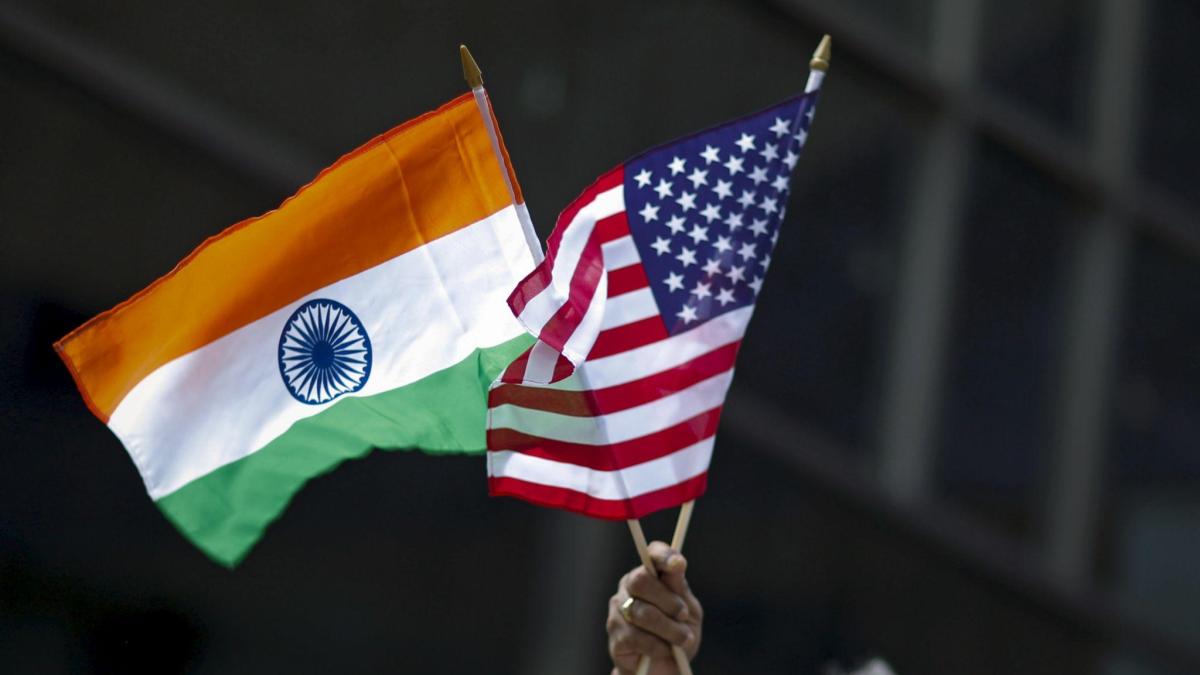
Analyzing the complex US-India relationship, this article highlights historical strategic interests, the evolving tech partnership, and advocates for India's diversified global collaboration for sustainable growth.
By Nirvikar Singh There is an easy conceptual pairing between India and the United States, the world’s largest democracy and the world’s oldest. India’s role in the development of the US software sector—jumpstarted by the Y2K problem and the agility of a few Indian information technology firms—has been the most prominent example of US-India ties. These headline examples often translate into the idea of a special US-India relationship.
In reality, there has been nothing special about relations between India and the US. The US has always been driven by its strategic and commercial interests. During the Cold War with the Soviet Union, including the rapprochement with China, India was peripheral or even an obstacle to US global strategy. It is only in recent years, with China now viewed as a major geopolitical rival and even a threat, that the US has wooed India as a strategic partner.
Indeed, in several cases US-sponsored overthrows of elected governments have been closely tied to the interests of its multinational corporations. In some cases, oil or other natural resources have been the target, as they continue to be to this day. But US corporate interests tied to agriculture have also been important. This history is good to keep in mind when thinking about current US-India ties.
There are many interactions at the governmental level, of course, typically in Washington, DC. But California’s status as a technology hub makes it stand out. In the past few months, the University of California at San Diego, University of California at Santa Cruz, and Stanford University have all hosted conferences with organisations that focus on US-India technology and business connections. Despite the negative impacts of recent changes in federal funding for university research, universities like these three (and many others) remain important sources of innovation and technical education.
They are part of a value chain that has developed over decades, helping to transform the global economy. A few years ago, the US government’s policies seemed to favour deeper strategic and commercial engagement between India and the US. But dramatic changes under the current administration call for a re-evaluation of what India’s strategy should be. History actually teaches us that the US has not been a reliable commercial partner for India.
In fact, many of the products and services that the US produces are not well suited for India—American cars and appliances are often too big, or not engineered well for Indian conditions, or designed for a different geographic scale, one with abundant land. Aside from a narrow set of frontier technologies where the US lead matters, India’s economy can benefit more from collaborations with any number of other economies, including Japan, South Korea, Germany, the UK, and many others.
The point is that, while there are understandable reasons why US universities have an interest in supporting the US-India relationship in technology and innovation, and developments in the last two decades have favoured that alignment, for India, a more diversified approach to acquiring know-how and capital makes sense. The other countries with which it can collaborate are not authoritarian, and they often have versions of social democracy that are more appealing than the US approach to capitalism, so a match of political systems is not unique to the US-Indian pairing.
What are the practical implications for India, if it recognises and seeks to implement a more diversified approach to acquiring the capabilities it needs for sustained economic growth? Indian students are already shifting from the US (which is raising visa barriers along with racist rhetoric from government officials) to other countries for higher education. The presence of Indian-origin faculty and graduates of its universities in the US create some inertia.
But building educational hubs in India—for Indian students but also for those from other countries, with faculty attracted from around the world—is a more flexible strategy for diversifying India’s connections to the global economy than sending students abroad. Those students make connections and they learn about the ecosystems that exist around the universities they attend. But this is costly, restricts access for many Indian students, and stunts the development of India’s own ecosystems of innovation and training.
China began to build its own domestic knowledge ecosystems decades ago. The payoff has been coming in recent years, with China becoming a leader in all kinds of products and technologies. Policies to reduce frictions in international trade and investment will also be needed, as will tax policies that encourage more domestic risk-taking, and greater public investment in frontier research. Much of what Indian policymakers need to do is independent of how they strategise with respect to the US-India relationship.
That relationship is important, and it will stay important going forward. But it should be a smaller part of India’s portfolio of global trade, investment, and technology connections than it has become in the last two decades. The writer is Professor of Economics, University of California, Santa Cruz Disclaimer: The views expressed are the author's own and do not reflect the official policy or position of Financial Express.