India's IPO market could double to Rs 4 lakh crore in 2027: Pantomath's Mahavir Lunawat
India's IPO fundraising could hit Rs 4 lakh crore by 2027, fueled by robust SIP inflows, alternative investments, and economic growth.
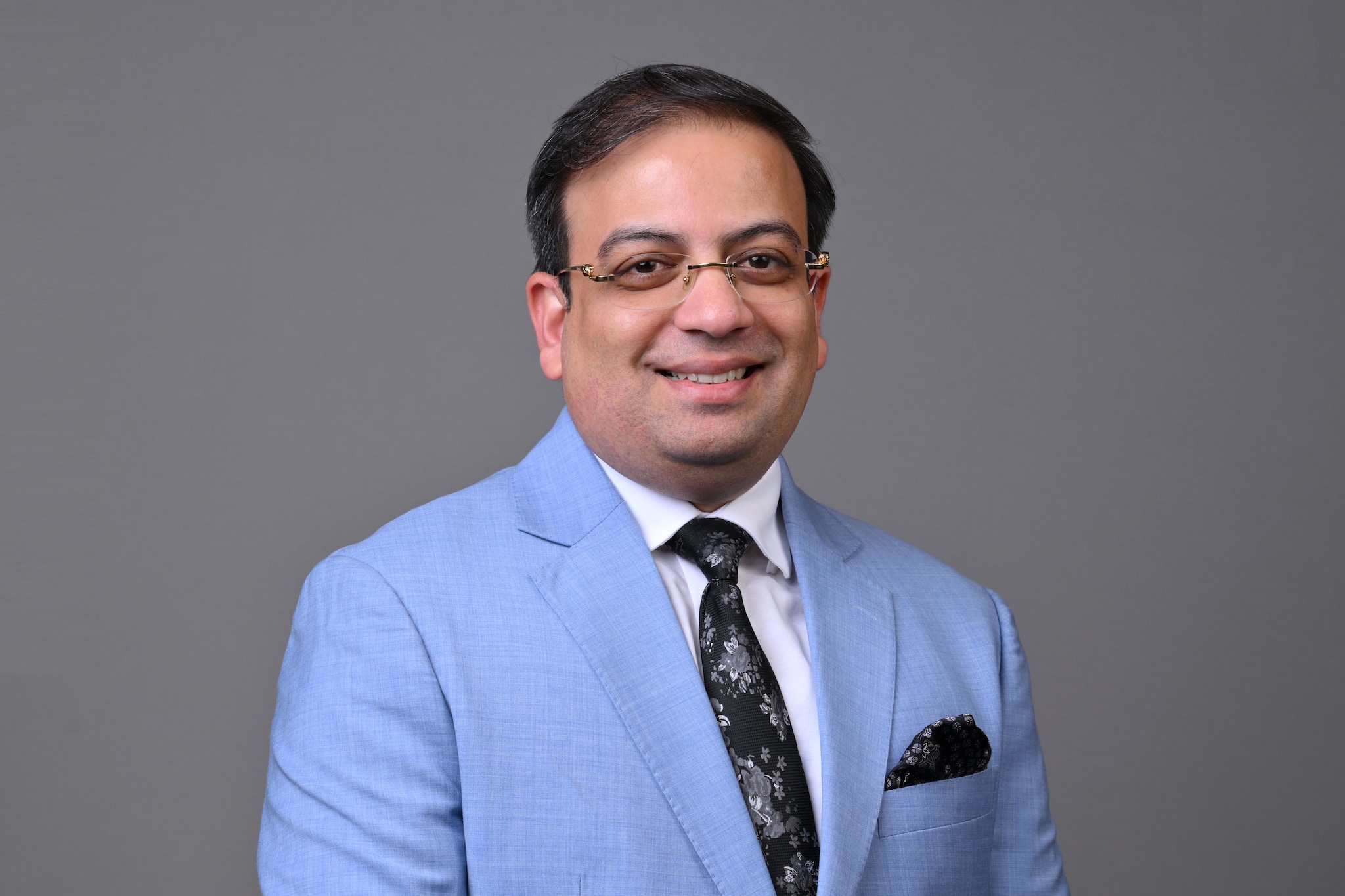
India's fundraising through IPOs could touch Rs 4 lakh crore in 2027, according to Mahavir Lunawat, the founder of Pantomath Financial Services Group, as rising domestic liquidity, growing mutual fund participation and interest from FIIs come together to create room for a larger primary market. At the current juncture, Lunawat said that the market is only scratching the surface. Based on the country's capital formation needs and investor demand, the IPO activity over the next few years is likely to see a sharp expansion.
Q: We are seeing a flurry of IPOs across sizes, but the concentration is in small- and mid-sized offerings. As a result, there are concerns about the quality of companies coming to market. What is your assessment? I think the data suggests otherwise. IPOs have generated better returns this year than the secondary market. Smaller IPOs have also generated better returns than larger ones, as some reports have shown.
I would not judge the quality of an IPO simply by its size. Overall, society has matured, and so have the markets. We need to look at the liquidity available on one side and India's GDP growth aspirations on the other. In a report released in December last year, we projected IPO fundraising of more than Rs 2 lakh crore, and not many people believed that would be possible at the start of the year. The first six months were relatively quiet, but activity picked up considerably over the subsequent months.
Till date in the current calendar year, around 110 mainboard IPOs have raised nearly Rs 1.6 lakh crore, the third consecutive year when the Rs 1 lakh crore mark had been crossed. We would not be surprised if IPO fundraising reaches Rs 4 lakh crore in the next financial year. Q: What factors could drive IPO fundraising to Rs 4 lakh crore? On one side, we have annual SIP inflows of around Rs 3-4 lakh crore.
We also have a rapidly growing pool of alternative investments, which has crossed Rs 7 lakh crore. Consider the structure of the IPO market. If we are talking about Rs 2 lakh crore of IPO fundraising, roughly half of that is accounted for by one part of the investor base - around Rs 1 lakh crore for QIB participation. Within that, mutual fund participation accounts for approximately one-third of the anchor portion of IPOs, translating into around Rs 30,000-35,000 crore of mutual fund participation.
That is equivalent to just one month's SIP inflows. If we do not have a sufficient number of companies coming to market, investors will end up backing stocks at higher valuation multiples. We are already approaching that equilibrium, which is a positive development in some respects. But we need newer companies to enter the market. Secondly, if India wants to double its GDP over the next six to seven years, we will need capital formation of around Rs 6-7 lakh crore, We are currently at around Rs 2 lakh crore in IPO activity.
Both the demand and supply sides need to expand by at least two to three times. Ideally, we would need three times the activity we are seeing today. People may feel that we are experiencing an IPO frenzy, especially when the secondary market is not performing well. But from our perspective, we are only scratching the surface. Q: What feedback are you receiving from foreign investors on Indian IPOs?
As a participant in the primary market, we can say that India is attracting foreign investors in this segment. Investors are receptive, and we expect to see some good names coming up in the next few issues as well. Data also clearly shows that while FIIs are selling in the secondary market, they are buying new paper comig to the market. Q: Foreign investors were traditionally seen as determining the final price of an IPO.
Has that responsibility shifted towards mutual funds? Mutual funds are definitely leading IPO pricing. There is no doubt about that, and we are proud that domestic funds are taking the lead. We are in an unprecedented situation in a positive sense, with large global companies looking at India to raise capital. Q: Aren't global companies coming to India because Indian investors are willing to pay a significant valuation premium that the foreign firms may not get in their home markets?
That is precisely the point. Our markets are becoming deeper in terms of both the number of investors and the value of capital available. This makes our markets structurally more resilient rather than merely cyclical. We will see more large IPOs and more global companies coming to India, primarily because of the valuations available here, backed by liquidity. Q: Many companies are now reducing their valuations or trimming their IPO sizes, either by cutting the fresh issue or the offer-for-sale component.
Does this mean that companies are less confident about raising the full amount? I do not think this is necessarily about confidence. The absolute availability of capital is not the main concern in a market that has substantial liquidity. The issue size is primarily determined by management's capital-raising plans and dilution priorities. For example, if a company wants to dilute only 10-12% of its equity at this stage, it can choose to raise the remaining capital through a second round of dilution later.
Resizing an IPO is therefore a way of managing the dilution programme rather than a reflection of insufficient capital availability. Q: Do you expect this trend to continue, companies listing with limited dilution and then undertaking block deals? Yes. If IPO activity not only sustains but doubles or triples over the next two to three years, we will naturally see more block deals and secondary-market transactions.
We could also see more follow-on public offers (FPOs), whether as part of minimum dilution requirements or for other reasons. As primary-market activity expands, corresponding secondary-market transactions will increase as well.