
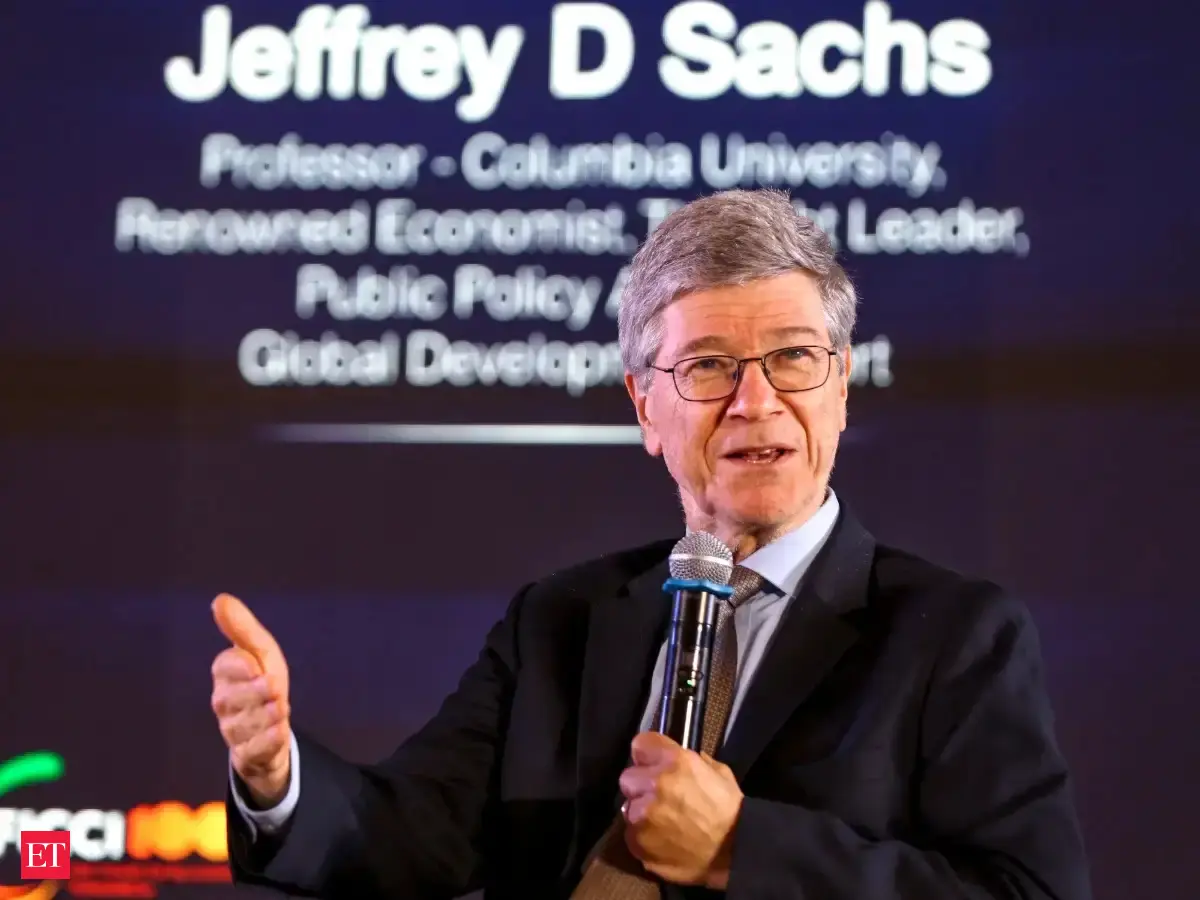
India will become the world’s largest economy by end of the century, predicts top economist Jeffrey D Sach
Economic Times

Gold ETFs attracted an estimated ₹3,300 crore in October, down from ₹4,450 crore in September, as fund houses suspended…

Foreign portfolio investors have invested $2.28 billion in Indian equities over the past 10 days, with Jio Platforms' re…

The company is expecting to price the offering at $116 per share, the people said, asking not to be identified because t…
In This Category
More IPO News
Equities and bond yields dip with AI jitters and economic data in focus

Blackouts hit Indian factories as coal crunch feeds into economy- Moneycontrol.com

Sahajanand Medical Technologies IPO booked 47% so far on Day 2; retail investors lead dema…

Bonfiglioli Transmissions IPO subscribed 99% on Day 2; GMP at 24%- Moneycontrol.com

India shuns costly Russian crude as West Asia flows recover- Moneycontrol.com
Equities and bond yields dip with AI jitters and economic data in focus
Blackouts hit Indian factories as coal crunch feeds into economy- Moneycontrol.com
Sahajanand Medical Technologies IPO booked 47% so far on Day 2; retail investors lead dema…
Bonfiglioli Transmissions IPO subscribed 99% on Day 2; GMP at 24%- Moneycontrol.com
India shuns costly Russian crude as West Asia flows recover- Moneycontrol.com

Trust Mutual Fund, Carnelian Asset, Abakkus buy over 3% stake in SFC Environmental Technol…

Equitas Small Finance Bank names Balaji Nuthalapadi interim CEO after Vasudevan exit

Trade Setup for November 4: Top 15 things to know before the opening bell

Markets extend gains for fourth day; FPI buying highest in a year

Corn futures hit four-month low on big US crop, export worries
Trust Mutual Fund, Carnelian Asset, Abakkus buy over 3% stake in SFC Environmental Technol…
Equitas Small Finance Bank names Balaji Nuthalapadi interim CEO after Vasudevan exit
Trade Setup for November 4: Top 15 things to know before the opening bell
Markets extend gains for fourth day; FPI buying highest in a year
Corn futures hit four-month low on big US crop, export worries