How ISRO’s NVS-03 satellite launch could improve navigation on smartphones
Narayanan called NavIC a strategic national asset that gives India independent Position, Navigation and Timing services. It also supports civilian applications, including real-time tracking of trains, vehicles and ships.
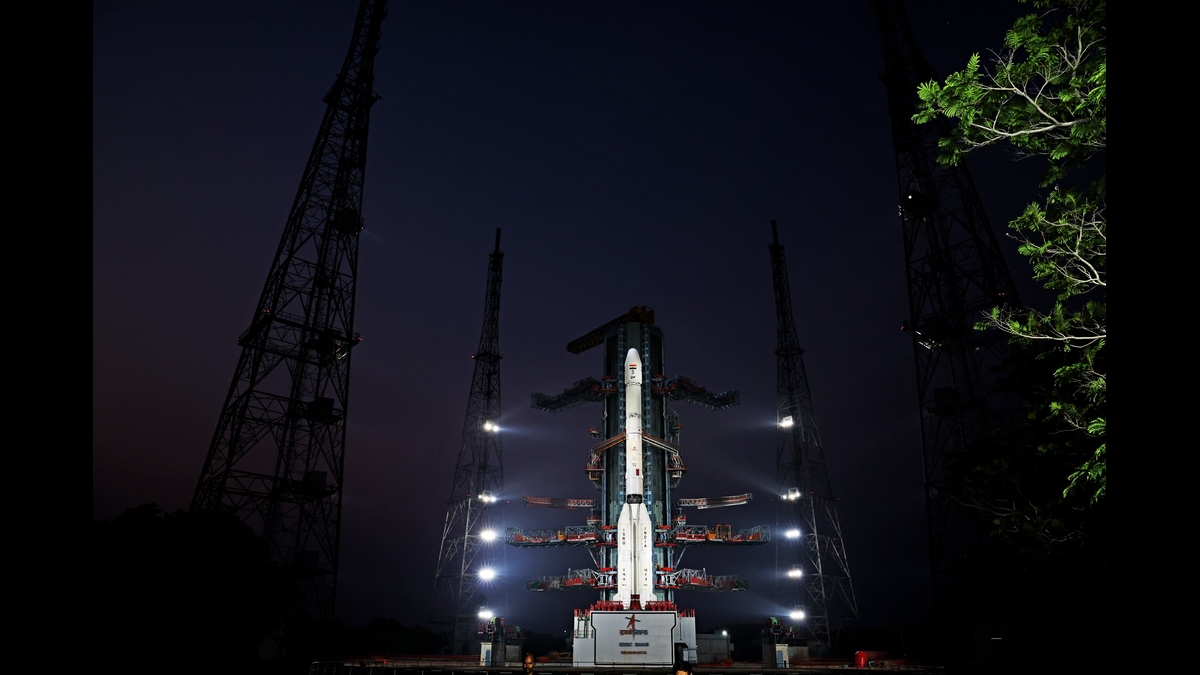
India’s own satellite-navigation network got a boost on Friday as the Indian Space Research Organisation (ISRO) successfully launched NVS-03. ISRO Chairman V Narayanan said the mission restored NavIC to the minimum four-satellite configuration needed for basic standalone positioning services. The satellite was carried into space by the GSLV-F18 rocket from the Satish Dhawan Space Centre in Sriharikota on October 30 (Friday).
After a flight of about 18 minutes, NVS-03 was injected into its intended Geosynchronous Transfer Orbit (GTO) early on Saturday. The satellite must still reach its final operational orbit. It will use its onboard propulsion system to move from the transfer orbit to its final geosynchronous position. Mission Success! GSLV-F18 has successfully placed NVS-03 in the intended orbit. Congratulations! Watch live: Mission details: #GSLVF18 #NVS03 #ISRO #NavIC— ISRO (@isro) October 30, 2026 Boost for NavIC NavIC—short for Navigation with Indian Constellation—is India’s own regional satellite navigation system, often described as the Indian equivalent of GPS.
Unlike GPS, its coverage is regional rather than global. It is designed to serve India and an area extending up to 1,500 km beyond the country’s borders. Speaking after the launch, Narayanan said, “With the success of this launch, the NavIC constellation is restored to the minimum operational configuration with 4 satellites.” This is important because at least four operational satellites are needed for basic standalone positioning services.
Before this launch, three satellites—including NVS-01—were available for positioning, navigation and timing applications. However, the government told Parliament in July that NavIC could not provide standalone positioning with only three satellites, although its timing service remained functional. Narayanan described NavIC as a “strategic national asset” that provides India with independent access to position, navigation and timing (PNT) services.
He said the system is also used for civilian purposes such as real-time tracking of trains, vehicles and shipping vessels. These 2 listed stocks offer a backdoor entry What is the indigenous atomic clock and why it matters An atomic clock is central to a navigation satellite’s accuracy. It keeps time with extraordinary accuracy, allowing the satellite to send precisely timed signals. Navigation devices on Earth use signals from several satellites to calculate location, speed and time.
NVS-03 carries an indigenous rubidium atomic clock along with procured atomic clocks. The indigenous clock is especially significant because imported atomic clocks in some older NavIC satellites had failed, highlighting the importance of developing this technology domestically. The government had previously confirmed failures in Swiss-made clocks used in NavIC satellites. Speaking after the launch, Narayanan told ANI that NVS-03 carried India’s third indigenous atomic clock into orbit.
“Till now, two indigenous clocks are already functioning perfectly in orbit, and today we have placed the third indigenous clock also in orbit,” Narayanan said. 🚀 Another milestone in India’s space journey! ISRO successfully launches GSLV-F18 carrying NVS-03, the third satellite in India’s next-generation navigation satellite system, strengthening the country’s indigenous space-based navigation capabilities.
The satellite carries Indigenous Atomic clock, along with the procured Atomic clocks. #ISRO #GSLVF18 #NVS03 #SpaceTechnology #AatmanirbharBharat #IndiainSpace— Ministry of Information and Broadcasting (@MIB_India) October 30, 2026 NVS-03: Key details NVS-03 is the third satellite in ISRO’s next-generation NavIC series. It is intended to ensure continuity of navigation services for NavIC, formerly known as the Indian Regional Navigation Satellite System (IRNSS).
FeatureDetailsSatelliteNVS-03 Launch vehicleGSLV-F18 Launch siteSatish Dhawan Space Centre, SriharikotaLaunch time11:51 pm IST on October 30Satellite massAbout 2,232 kg Initial orbitGeosynchronous Transfer Orbit Final orbital slot32.5 degrees EastNavigation signalsL1, L5 and S bands Key payloadIndigenous Rubidium atomic clock, plus procured atomic clocks Why the L1 signal matters NVS-03 carries an L1 navigation signal alongside L5 and S-band signals, continuing an upgrade introduced with NVS-01.
This is important for wider adoption because L1 is widely used by commercial navigation chips and consumer devices around the world. In simple terms, L1 can make it easier to build NavIC support into smartphones, vehicles and other navigation equipment. Some handsets already support NavIC, so wider adoption is an expansion of an existing capability. However, Narayanan said wider public and mobile-phone integration will take more time.
“Not for the common public immediately…for mobile integration it will take some time because we have to complete the entire constellation,” he said. Navigation for transport, fisheries, agriculture and disaster-response operations. Precise timing for banking, telecommunications, power grids and digital infrastructure. Narayanan said NavIC is also an important component of India’s “One Nation, One Time” initiative, which seeks to ensure that systems across the country use a common, reliable Indian Standard Time reference.
NavIC helps disseminate the time maintained by the CSIR-National Physical Laboratory. For national security, an independent navigation system reduces reliance on foreign constellations such as GPS. It gives India sovereign control over its navigation and timing infrastructure for both civilian and strategic uses. Shortest gap between GSLV launches The mission also demonstrated ISRO’s improving launch efficiency in terms of turnaround record for GSLV.
Narayanan said NVS-03 was launched just 56 days after the previous GSLV mission—the shortest interval between successive GSLV flights so far. GSLV project and mission director Thomas Kurian said the launch campaign was completed in 47 days, while the four L40 strap-on boosters were prepared in a record 37 days. “This is a special moment for the entire ISRO family and for our country,” he said. Prime Minister Narendra Modi posted on X, "Congratulations to our scientists and engineers at ISRO on the successful launch of GSLV-F18 carrying NVS-03.
This mission marks an important step in strengthening NavIC, our indigenous satellite navigation system. Equipped with enhanced capabilities, NVS-03 will further our pursuit of self-reliance in critical technologies and support navigation services that benefit our people. The dedication and ingenuity of our space scientists continue to make our nation proud." Congratulations to our scientists and engineers at ISRO on the successful launch of GSLV-F18 carrying NVS-03.
This mission marks an important step in strengthening NavIC, our indigenous satellite navigation system. Equipped with enhanced capabilities, NVS-03 will further our pursuit of self-reliance in critical technologies and support navigation services that benefit our people. The dedication and ingenuity of our space scientists continue to make our nation proud. @isro— Narendra Modi (@narendramodi) October 31, 2026 Union Minister of State (Independent Charge) for Science and Technology Jitendra Singh congratulated ISRO, saying the achievement reflected India’s growing space capability and commitment to sovereign indigenous navigation.
“This remarkable achievement reflects India’s growing prowess in Space technology and our unwavering commitment to strengthening sovereign indigenous navigation capabilities,” Singh said in a social-media post. Congratulations Team #ISRO for the successful launch of GSLV-F18/NVS-03 mission! This remarkable achievement reflects India's growing prowess in Space technology and our unwavering commitment to strengthening sovereign indigenous navigation capabilities.
With revolutionary Space reforms announced by PM Shri @narendramodi ji in recent years, India's success stories in Space vindicate the dream of founding fathers Vikram Sarabhai and Satish Dhawan. Today is the celebration of another proud moment for India!— Dr Jitendra Singh (@DrJitendraSingh) October 30, 2026