Home services firms look beyond bookings to products
Platforms tap existing customers to build new revenue streams, but face fresh costs and competition
Home services platforms are looking to turn their access to households into a bigger business, moving beyond service bookings to sell everything from air conditioners and smart locks to skincare products. The shift reflects an effort to earn more from existing customers, create new revenue streams and improve margins, even as product businesses bring their own costs and competitive challenges. Urban Company, which has built its Native brand around water purifiers and smart locks, has secured in-principle board approval to explore residential air conditioners.
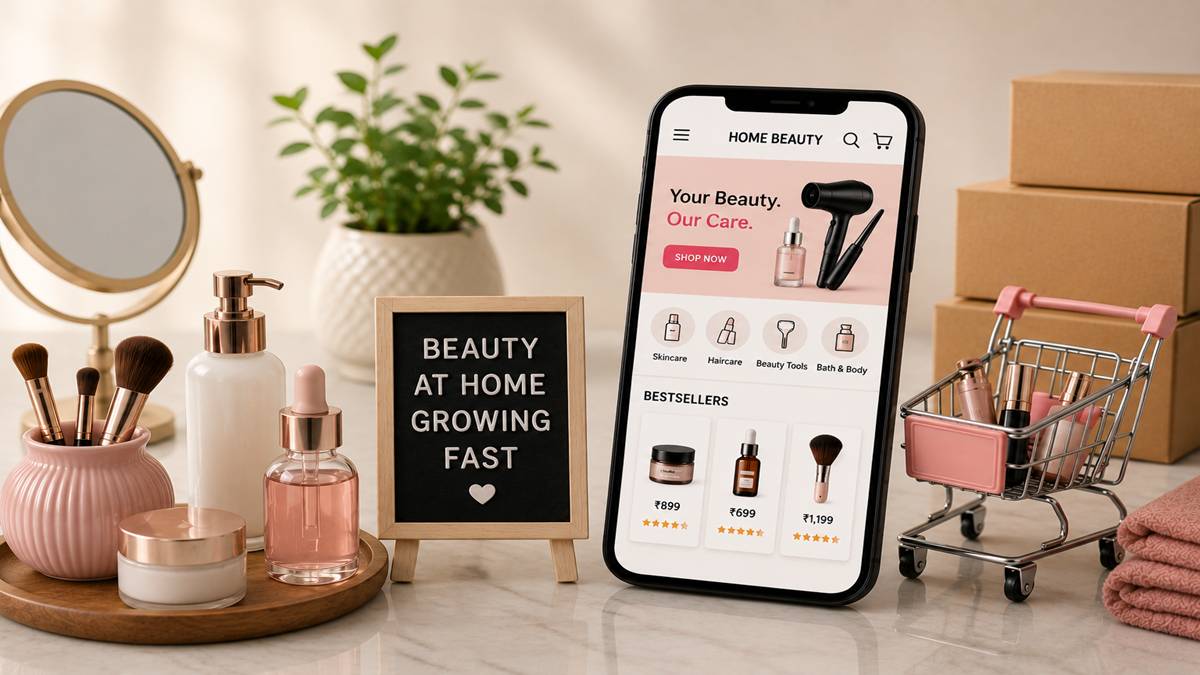
At-home beauty platform Yes Madam has launched Sokora, its in-house skincare and haircare range, on its app, website and e-commerce marketplaces. Mygate, the housing society management platform, entered consumer electronics with smart door locks in September 2024, while Naturals Salon launched its direct-to-consumer skincare brand NXTFACE in November 2025. A household that books an AC service or a salon appointment could also buy products from the same platform, allowing companies to expand their share of customer spending without having to acquire an entirely new set of consumers.
“There’s a limit to how much you can charge for the service. But in products you can sell more, their margins are better,” Satish Meena, founder of Datum Intelligence, said. Private-label products can also improve service margins when providers use their own products instead of third-party brands, he added. For Urban Company, the product business is already gaining traction. Native generated Rs 267 crore in net revenue in FY26, up 130% year-on-year.
In the September quarter of FY27, its net transaction value rose 35% year-on-year to Rs 132 crore, while net revenue increased 40% to Rs 105 crore. The proposed AC business would take the company into a much larger market, but one dominated by established brands such as Voltas, Daikin, Samsung and Godrej. Urban Company CEO Abhiraj Singh Bhal said the platform handles almost 10 times as many AC servicing, repair and installation orders as water purifier orders.
The addressable market for ACs was also roughly 10 times larger than that for water purifiers, according to the company’s assessment. But air conditioners are expensive, long-term purchases, and customers may be reluctant to switch from established brands to a relatively new entrant. “The service is an added bonus which you are providing,” Meena said, pointing to the importance of competitive pricing.
Urban Company expects the next year or two to be a learning phase, with initial sales largely confined to its app to gather consumer feedback. The opportunity is different in beauty and personal care, where product purchases can follow naturally from salon treatments. Yes Madam said strong demand for Sokora’s professional range, used in services such as Korean facials and waxing, prompted it to make the products available for home use.
“We have also focused on making the range convenient for everyday use. The strong response to our professional range gave us the confidence to now make Sokora available to consumers for use at home as well,” Aditya Arya, co-founder and CEO of Yes Madam, said. However, moving into products also means taking on inventory, working capital, distribution and customer support costs. Urban Company relies on contract manufacturers for its product offerings rather than operating its own manufacturing facilities, Meena said.
The risk is that a push for new revenue could divert attention and resources from the core services business. The platforms have an advantage in customer access and service capabilities, but that alone will not ensure success. Their ability to build trusted brands, maintain product quality and generate repeat purchases will determine whether selling products becomes a meaningful second engine of growth or an expensive extension of their original businesses.