Gujarat’s electricity demand hits all-time high—Can the state avoid a power crunch?
Gujarat government officials linked the rise to high temperatures after a weak monsoon, El Niño, increased use of cooling appliances, irrigation needs and higher industrial activity ahead of Diwali.
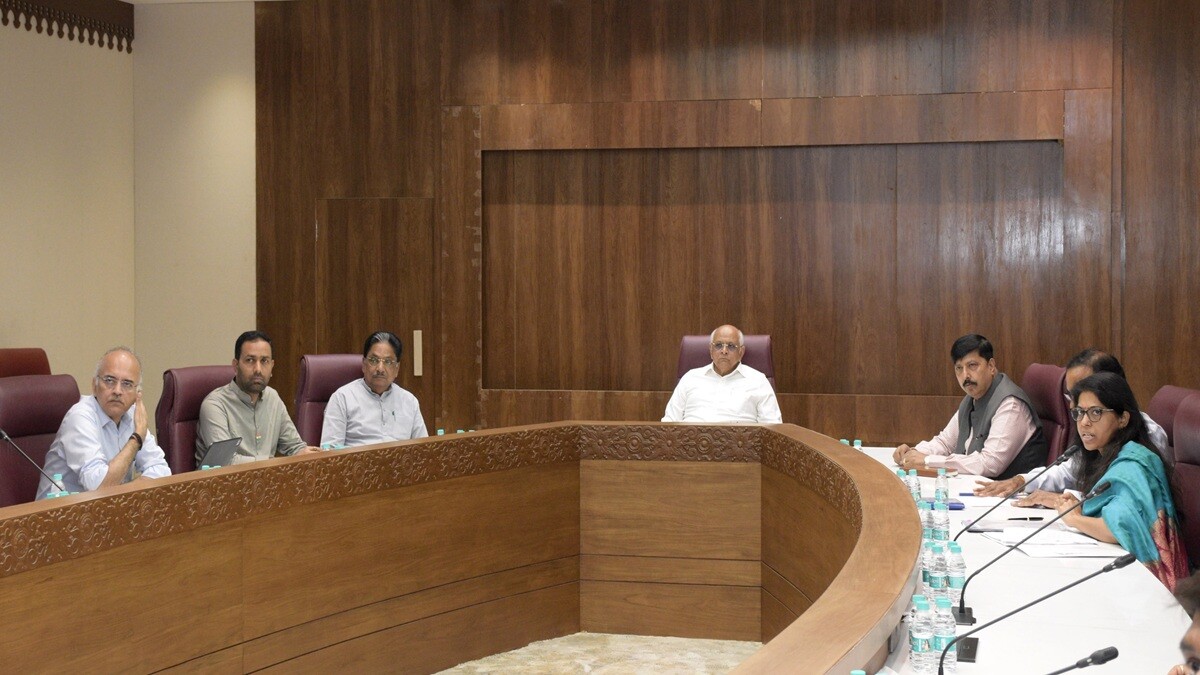
Gujarat’s power sector has entered a critical phase as the state confronts its highest-ever electricity demand, driven by heat, irrigation needs, industrial activity and a weaker-than-normal monsoon. Chief Minister Bhupendra Patel chaired a high-level review meeting with the Energy Department on October 20, directing officials to secure fuel, maximise solar use and accelerate storage and generation plans to keep electricity flowing to homes, farms and factories.
Reliable power is not merely a public service; it is a core input cost and a key production-risk factor for industry. Any disruption during the pre-Diwali manufacturing season could affect industrial output, supply chains, employment and investor confidence. To address this, the state government’s response combines: Short-term measures: Fuel management and power procurement to maintain supply during the peak-demand period.
Long-term investments: Capacity additions across thermal, nuclear, solar and battery-storage sources to strengthen energy security. Together, these steps will ensure a steady power supply and build a stronger, more diverse electricity system to support future industrial growth. Record demand, rising costs Gujarat Energy and Petrochemicals Department reported an all-time-high electricity demand of 29,822 MW on October 16, 2026, up 36.6 per cent from 21,822 MW in October last year.
Daily consumption also climbed to 574 million units, compared with 457 million units a year earlier—an increase of about 27 per cent. According to the presentation made at the Chief Minister’s review meeting, the surge is not limited to a single day as the electricity demand during September and October has risen by roughly 12 per cent, or nearly 4,000 MW, compared with previous years. Rising demand makes reliable electricity supply essential for energy-intensive sectors such as textiles, chemicals, pharmaceuticals, engineering, ceramics and agro-processing.
It also puts pressure on power utilities to buy costlier electricity during peak hours, maintain coal and gas stocks, and keep the grid stable without adding unnecessary costs for consumers. Why demand has surged Gujarat government officials attributed the spike to a combination of weather and economic factors. Persistent high temperatures after a weak monsoon, the influence of El Niño, greater use of cooling appliances, agricultural irrigation requirements and increased industrial activity ahead of Diwali have all pushed consumption upward.
Agriculture has emerged as a major pressure point. To protect standing crops and support irrigation, the government says it is ensuring adequate electricity to farmers; agricultural power demand has reached a daily peak of about 12,000 MW. The regional spread of consumption shows PGVCL accounting for about 30 per cent of total electricity supplied, followed by DGVCL and UGVCL at 22 per cent each, MGVCL at 10 per cent and other distribution companies at 16 per cent.
Solar generation drops to zero after sunset, while wind generation remains variable. As a result, coal- and gas-based plants must carry a larger share of supply during the evening peak from 5:00 pm to 11:00 pm. Hydropower generation has also fallen because of below-normal rainfall in Gujarat and neighbouring states, even though October and November are normally stronger months for hydro output. Lower wind speeds have further affected wind-power generation.
The State Load Despatch Centre and distribution companies are working round the clock to balance supply and demand, maintain grid frequency and ensure stability. Coal, gas and central support To manage the immediate crunch, the state has intensified coordination with the Centre. High-level discussions in New Delhi have secured an assurance from the Union Ministry of Coal for 10–11 railway rakes of coal daily until November, rising to 13–14 rakes per day from November onwards, for Gujarat State Electricity Corporation Limited (GSECL).
The state has also obtained 329 MW from NTPC’s Farakka plant for November and a long-term allocation of 551 MW from the Centre’s power-generation share in Assam. Existing power-purchase arrangements for 716 MW from NTPC’s Bara-I and Dadri-I thermal stations have been extended until March 2028. Gujarat has additionally sought 500 MW from the unallocated share of Central government-owned power stations.
Overall, the state has secured allocations of more than 1,300 MW from central thermal stations and more than 1,200 MW from central hydropower stations, expected in phases from 2028–29. Solar by day, storage by night The government wants to use Gujarat’s roughly 12,000 MW of solar capacity more aggressively during daylight hours. A plan is being prepared to concentrate agricultural electricity consumption during solar-generation hours, reducing dependence on conventional power in the evening.
Battery Energy Storage Systems (BESS) are central to this strategy. Gujarat currently has 192 MW of operational BESS capacity, while contracts have been finalised for new projects totalling 2,742 MW / 5,517 MWh. The Energy Department expects 500 MW / 1,000 MWh to become operational by March 2027, with tendering underway for another 1,000 MW / 4,000 MWh. Storing daytime solar power for evening use could reduce peak-hour procurement costs, improve renewable utilisation and make the grid more resilient—key considerations for industries that depend on uninterrupted operations.
GUVNL is expected to soon issue a tender for 4,000 MW of power under the 'SHAKTI scheme', with supply expected from 2030–31. An MoU has been signed with Nuclear Power Corporation of India Limited for a 4,200 MW nuclear power project, with the first unit expected to begin operations in 2032. An 800 MW thermal plant at Ukai is under construction and scheduled to start generation in September 2029. Land acquisition and in-principle approvals are also underway for new thermal projects at Sinor, Wanakbori and Gandhinagar.
For 2031–32, the state has requested an additional allocation of more than 5,000 MW from central thermal power stations to match projected electricity requirements. The government says its main goal is to keep electricity available for farmers, factories and homes without interruption. Chief Minister Bhupendra Patel has asked the Energy Department to act faster on managing demand, arranging power supply and planning future capacity.
Industries require continuous electricity from increased coal supplies, central power allocations and existing plants, while farmers depend on a steady supply for irrigation and households need reliable power in the evening when cooling demand is high.