Gandhi’s ‘Fifth Son’: The man behind India’s Rs 14 lakh crore business empire
Jamnalal Bajaj renounced his inheritance in 1906 but later led the Bajaj Group's expansion from cotton trading to sugar and steel, becoming a key industrialist and Gandhi's close ally. The Group celebrates its centenary year in 2026.
In 1906, a teenager in Wardha wrote a letter giving up everything he was due to inherit. The letter followed an angry accusation. His adopted father, Seth Bachhraj Bajaj, had told him he was taking for granted a wealth and privilege he had not earned. The boy decided to leave Wardha. In the letter, he renounced every right he had gained as an adopted son, and he set out to catch a train to Haridwar and Rishikesh.
Bachhraj read the letter and rushed to the railway station. He got there before Jamnalal could board the train and pleaded with him to come home. Jamnalal went home. The business he had tried to refuse became the work of his life. Over the years he widened it, gave it a formal corporate structure and moved the family into sugar and steel. The Bajaj Group, founded in 1926, is celebrating its centenary year this year.
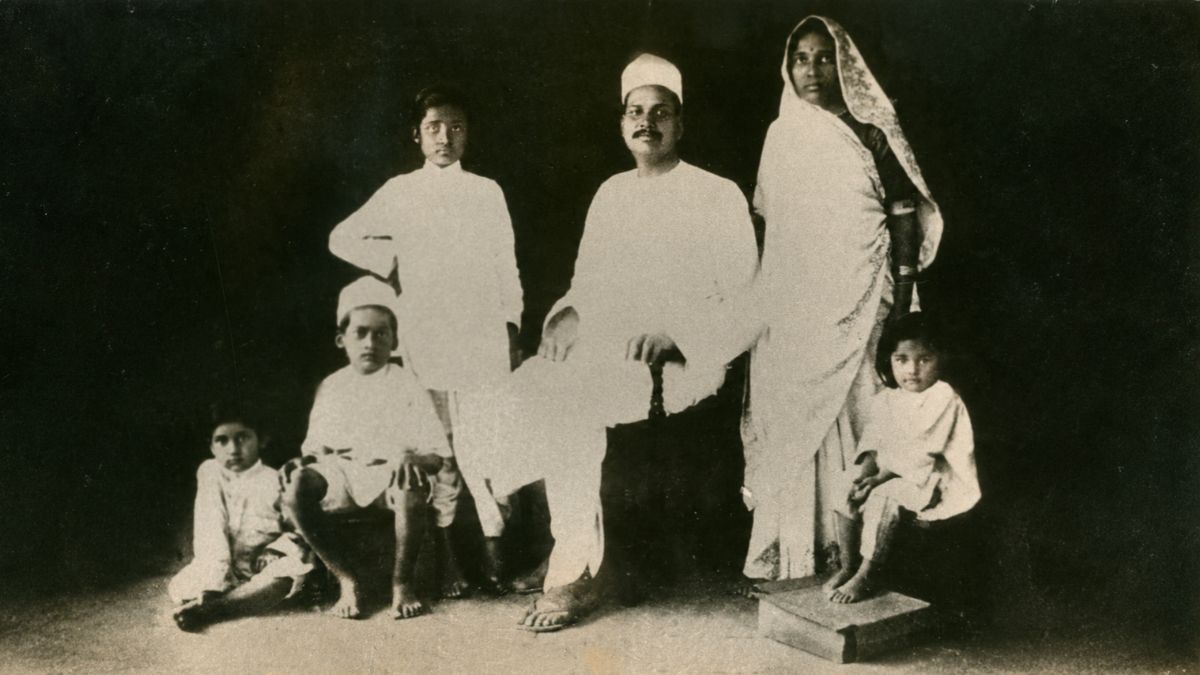
A Young Jamnalal Bajaj. (Source: Bajaj Group) He also became the man Gandhi called his fifth son, and for about two decades he was the Congress’ regular financier and banker. The early years: Renunciation and adoption in Wardha Jamnalal Bajaj was born on 4 November 1889 in Kashi Ka Bas, a village near Sikar in Rajasthan. His parents, Kaniram and Birdibai, belonged to a small Marwari family. Kashi Ka Bas, Sikar.
(Source: Bajaj Group) In 1894, a wealthy Marwari trader from Wardha travelled to the village. Seth Bachhraj Bajaj and his wife Saddibai had lost their adopted son, Ramdhan Das. They met the young Jamnalal and decided to adopt him. He was five. The two families were acquaintances and not relatives, the group's records say. Kaniram refused any payment for his son. He asked for only one thing, a well for the village.
Jamnalal grew up in Wardha, where the family business was based. He had little formal schooling. What he learnt, he learnt by working under Bachhraj, which meant trading, bookkeeping, the buying and selling of commodities and the reading of markets. In 1902, when he was about 12, he married Jankidevi, who was born on 7 January 1893 and was younger still. Then he built one of India’s most trusted business empires What happened after the letter Bachhraj died in 1907, a year after the letter.
Jamnalal was still in his teens. His elder biological brother Madhav, who had worked with Bachhraj, helped him run the family business. Four years later, Madhav died of typhoid, and the whole task of running the business fell on Jamnalal. Jamnalal Bajaj (Source: Bajaj Group) The Group’s published history begins in 1905, when Bachhraj set up a cotton-ginning factory in Wardha. It is the earliest commercial milestone on the Group’s timeline.
Jamnalal travelled widely, met people in the cotton trade and kept himself on top of market trends. In 1915, he opened an office in Bombay under the trade name Bachhraj Jamnalal. It took a regional cotton business onto a larger trading stage. From cotton ginning to corporate incorporation Until 1926, the business was a Hindu Undivided Family concern that traded as Bachhraj Jamnalal and ginned and pressed cotton at Wardha.
On 27 August 1926, Bachhraj Factories Private Limited was incorporated. It took over the entire business through an agreement with the family concern. This is the date the Group counts as its beginning. The new company carried on the ginning and pressing of cotton, and its reach grew. Factories were opened or acquired between 1929 and 1961 at some 30 locations, which means the story runs well beyond Jamnalal’s own lifetime.
The list starts at Wardha and takes in Nagpur, Amravati, Khamgaon, Jalgaon and Bhusaval. It also reaches Bombay, Bhavnagar and Karachi, and Burma, where the company had three factories. A second company followed within months. Bachhraj & Co. Private Limited was incorporated on 12 January 1927 to buy and sell cotton and cotton seeds. It also acted as a commission agent and broker and handled the transport of cotton, for both immediate and future delivery.
It was a separate company from Bachhraj Factories. Keshavdeo Nevatia, who signed its memorandum of association, was its managing director and looked after Jamnalal’s business interests. In 1930 came Deccan Ayurvedashram Pharmacy Limited, which has changed its name twice since. It became Bajaj Corp Limited in October 2007, when it was converted into a public limited company, and Bajaj Consumer Care Limited on 1 January 2019.
It was set up at Golagokarannath in Lakhimpur Kheri district, in the Terai region of Uttar Pradesh, an area rich in sugarcane. The idea was Jamnalal’s own, and he sought Gandhi’s blessings for the venture. The mill was meant to serve what the Group calls a critical national mission. There were barely 30 sugar factories in the country at the time, and cheap imported sugar, mainly from Java, met most of its needs.
The imports hurt the young Indian sugar industry. They also hurt the producers of gur, which in effect meant that sugar-cane growers across the country were put to great hardship. The work of organising the mill went to Rameshwarprasad Nevatia, the young nephew of Keshavdeo Nevatia, who was married to Jamnalal’s eldest daughter Kamala. The company was renamed Bajaj Hindusthan Sugar Limited in 1988.
Bajaj Auto's corporate office in Pune. (Source: Bajaj Group) More names followed in quick order. Batala Engineering Co. Limited came in 1933 and was later merged with Mukand Limited. The Hindustan Housing Co. Limited came in 1934. Jamnalal Sons Private Limited and Radio Lamp Works Limited arrived in 1938. Between them sat Jeewan Limited, incorporated on 23 November 1937. It was a managing agency, which was how Indian business groups of the period organised and ran several companies together.
One firm managed and coordinated the operations of many. Jeewan was set up to promote Mukand Iron & Steel Works Limited and to take over the iron and steel businesses that Lala Mukand Lal operated in Lahore. These included Mukand Iron Works, Mukand Steel Rolling Mills and Mukand Steel Foundry. Jamnalal Bajaj inspecting a Mukand Iron and Steel Works unit in Lahore. (Source: Bajaj Group) Steel came in 1939.
Lala Mukand Lal had set up Mukand Iron & Steel Works in Lahore in 1937 but could not run the plants. Jamnalal took it over, and the Group says he did so on Gandhi’s suggestion. The acquisition took the family from cotton and sugar into heavy industry. The company was renamed Mukand Limited in 1989, and Mukand International Limited was also incorporated in 1939. In 1941, two more companies were incorporated within weeks of each other.
Baroda Industries Private Limited came on 14 February and Bajaj International Private Limited on 9 March. Their stated objectives ran wide. Between them they covered cotton, wool and jute textiles, spinning and weaving, oil extraction and refining, soap, cattle feed, fertilisers and flour milling. They also planned trade in grains and seeds, and import and export. It was never a single leap. It was a steady widening, from cotton ginning and trading to a Bombay office, then a formal company in 1926, then sugar in 1931 and steel in 1939.
The Group says his businesses were known for quality because he refused the unethical cost-cutting that was common in trade. Balancing business and working for the freedom movement Once he joined the freedom movement, the daily running of the companies fell to others. Keshavdeo Nevatia, as managing director of Bachhraj & Co., looked after his business interests. Nevatia’s nephew Rameshwarprasad organised the sugar mill.
In 1938, Jamnalal’s elder son Kamalnayan joined the company to see to the business. Banker to the freedom movement: The Mahatma's 'Fifth Son' When Gandhi returned from South Africa, Jamnalal was drawn to his principles. Non-violence appealed to him, and so did the idea that home-made goods could answer poverty. He took his wife and children to live at Sabarmati Ashram for a time. He wanted Gandhi closer to home.
He donated land to him in Wardha and later helped build Sevagram. After the Dandi March in 1930, Gandhi settled near Wardha. Jamnalal Bajaj with Gandhi. (Source: Bajaj Group) Gandhi called Jamnalal his fifth son. In 1942, he wrote that there was no work of his in which he did not receive Jamnalal’s fullest cooperation in “body, mind and wealth.” Bajajwadi, the family home in Wardha, became something of a national guesthouse and meeting place for Congress leaders.
The first draft of the Quit India resolution was written at Sevagram Ashram in Wardha. His own record in the movement was long. In 1920 he chaired the reception committee for the Nagpur session of the Congress. That year he also joined the Non-Cooperation Movement and renounced his titles. He had been made a Rai Bahadur in 1918, and he had been an honorary magistrate since he was 19. He gave up both.
In 1923, he was arrested in the Nagpur Flag Satyagraha and held from 17 June to 3 September. On 14 March 1929, when the Simon Commission arrived at Nagpur, he headed a procession with black flags, along with Abhyankar and N.B. Khare. The Salt Satyagraha came in 1930. He was jailed on 7 April that year and sentenced to two years, but he was released on 2 February 1931. He reportedly preferred C-class prisoner status.
In 1938 and 1939, he was president of the Jaipur Rajya Praja Mandal and led the Jaipur Satyagraha, and he is credited with helping resolve the Bijolia and Sikar struggles. In 1941, he took part in the anti-war individual satyagraha. The banker to Congress who lived like a man of modest means Through all of this, he was also the Congress’s treasurer. He was appointed in 1921, and the Group says he held the post until his death.
He was treasurer of the All India Spinners Association in 1925 and the first treasurer of the managing committee of Jamia Millia Islamia from 1927. For about two decades he was a regular financier and banker of the Congress. In 1921, the Tilak Swaraj Fund raised more than Rs 1 crore, and Jamnalal contributed Rs 1 lakh to help it reach that mark. He gave Rs 2.5 lakh to the Gandhi Seva Sangh and Rs 1.3 lakh to the All India Village Industries Association.
Historians put his recorded charitable giving at nearly Rs 25 lakh, and they note that many gifts went unrecorded. Jamnalal Bajaj with his beloved cow Kaushalya at Gopuri. (Source: Bajaj Group) Despite his wealth, he lived a lower-middle-class life. In later life, he applied Gandhi’s idea of trusteeship to his own business, which held that wealth is kept in trust for the common good. Gandhi held him up as a near-perfect model of it.
Social reformer: Opening Mandirs and ending Purdah Jamnalal believed reform began at the threshold of his own house. In 1928 he opened the family’s Laxmi Narayan Mandir in Wardha to Dalits. The Jamnalal Bajaj Foundation calls it the first temple in India to do so. He also opened the wells on his land to Dalits. Purdah was closer still. He had prepared a speech for the Agrawal Mahasabha that referred to its removal.
He knew his wife and her sister-in-law followed the tradition, and he had picked them for this change as well. Jankidevi was hesitant at first. She gave up purdah in 1919 after she understood the significance of relinquishing the veil. Two years later she adopted khadi, and she encouraged other Marwari women to do the same. He set up the Mahila Ashram in Wardha and the Mahila Shiksha Sadan in Ajmer for women’s education.
He was founder-president of the Gandhi Seva Sangh and chairman of the All-India Khaddar Board, and he toured Rajasthan and then the whole country for khadi and village industries. He presided over the Hindi Sahitya Sammelan, and his address at Madras is widely cited. With C. Rajagopalachari, he co-founded the Dakshin Bharat Hindi Prachar Sabha, and he started the Sasta Sahitya Mandal publishing house.
He also brought Vinoba Bhave to live in Wardha and supported his Paunar ashram. He was the first publisher of Vinoba’s Gitai. The household followed him. Jankidevi was imprisoned in 1932 and walked on Vinoba’s padyatras. On a tour of Bihar, she travelled with her daughters Madalsa and Kamla, and all three spoke at assemblies. Kamalnayan and Ramkrishna had their early schooling at Vinoba Bhave’s ashram.
Post-1942 stewardship: Carrying the empire forward Jamnalal Bajaj died at his Wardha home on 11 February 1942. He was 52, and the cause was a cerebral haemorrhage. In Harijan, Gandhi wrote that whenever he wrote of wealthy men becoming trustees of their wealth for the common good, he had this “merchant prince” principally in mind. He called Jamnalal a true trustee and said he had hoped Jamnalal would carry on his constructive work after him.
Kamalnayan took over the businesses and expanded them. The Group credits him with heading international delegations, building trade relations and steering the Group through Partition, when it lost property, factories and people. Radio Lamp Works, which was established in 1938, was acquired by Kamalnayan in 1954. In 1945, three years after Jamnalal’s death, Bachhraj Trading Corporation Private Limited was incorporated on 29 November.
It later changed its name to Bajaj Auto Limited and is the company now in the automobile business. Kamalnayan also entered politics. He was elected to the Lok Sabha from Wardha for three consecutive terms between 1957 and 1970. He died on 1 May 1972. His younger brother Ramkrishna Bajaj co-founded the Council for Fair Business Practices and the Advertising Standards Council of India. He presided over FICCI, IMC, ASSOCHAM, the Maharashtra Chamber of Commerce and the World Assembly of Youth.
He had also been to jail, first during the Individual Satyagraha in 1941 and then during the Quit India Movement, from 1942 until his release on 9 July 1945. Jamnalal’s grandson Rahul Bajaj later led Bajaj Auto. Jamnalal Bajaj’s legacy The Bajaj Group reported revenue from operations of Rs 49,532.91 crore and a profit after tax (PAT) of Rs 10,867.53 crore for Q1FY27, as per the group. The group’s combined market capitalisation stands at approximately Rs 14 lakh crore.
The Government of India issued a commemorative stamp in his name in 1970. The Jamnalal Bajaj Foundation was established in 1977 and inaugurated on 4 November by the then Prime Minister Morarji Desai, which was Jamnalal’s birthday. The Jamnalal Bajaj Awards date from 1978. Jamnalal Foundation. (Source: Bajaj Group) The Gitai Mandir at Gopuri, conceived by Kamalnayan with Vinoba Bhave, had its foundation stone laid on the same date in 1969.
It was inaugurated on 7 October 1980. In 1990, the Government of India officially celebrated his birth centenary year. His name also lives on at the Jamnalal Bajaj Institute of Management Studies and in the Mumbai locality of JB Nagar, short for Jamnalal Bajaj Nagar, in Andheri. After his death, a separate trust, the Jamnalal Bajaj Seva Trust, was created. It began with Rs 5 lakh, which was his entire share in the family wealth.
His father had asked for a well when he gave up his son. The son opened his own wells to Dalits, and his wife went on to lead the koopdan movement, going from house to house asking wealthy families and villagers to give funds or resources to dig wells for landless farmers. This year, the Bajaj Group turns 100, counting from 1926. Editorial Note: This profile is based on original reporting, including direct communication with Bajaj Group.
To ensure a comprehensive perspective, FinancialExpress.com corroborated this information with public records and third-party sources. FinancialExpress.com retains full editorial independence and final authority over all editorial decisions.