From rejecting modelling at 13 to building a ₹15 crore fortune: An Indian athlete’s story
Manika Batra turned down modelling contracts at 13, rejected a Swedish scholarship at 16, and then sued the very body that was supposed to protect her. Now she owns equity in a fitness startup and has a net worth most Indian athletes only dream about.
The WhatsApp message arrived mid-match. Anthony Amalraj was sitting courtside at the 2018 Commonwealth Games in Gold Coast, Australia. On the other side of the world, in a room in Delhi, coach Sandeep Gupta was watching the semi-final on television. Manika Batra was trailing against Feng Tianwei, the World No. 4 from Singapore. Gupta spotted something. A flaw in how Feng was returning serve. He typed a note on his phone and hit send.
Amalraj leaned forward and shouted the adjustment to Batra between games. She listened. She changed her returns. She won. That moment, equal parts improvisation and trust, captures something essential about how Batra has built her career. No blueprint. No safety net. Just instinct, and people willing to stand behind it. Batra was the youngest of three children. Her older siblings, Anchal and Sahil, played table tennis at the regional level.
It was Anchal who first put a bat in her sister's hand and then kept pushing her to be better. By age eight, Batra had won the Delhi State Under 8 Championship. That result brought her to the attention of Sandeep Gupta, who ran an academy at Hans Raj Model School in Punjabi Bagh. On his advice, the family moved her to that school, which agreed to bend its academic schedule around her training. Her mother, Sushma Batra, became the quiet engine of everything that followed.
Her father, Girish Batra, was dealing with long term mental health struggles. So it was Sushma who drove her to practice, sat outside the training hall for hours, managed her meals, and made sure the logistics of a rising athlete's life did not collapse. She chose sport over school results. She chose her daughter's future over conventional expectations. Then came the offers, and the refusals. Between 13 and 16, Batra received multiple modelling contracts.
She was tall, striking, and marketable. She said no to every single one. At 16, the Peter Karlsson Academy in Sweden offered her a scholarship. She turned that down too, choosing to stay in Delhi and keep working with Gupta on a playing style that most coaches would have dismissed as unconventional. After school, she enrolled at Jesus and Mary College, University of Delhi. She finished one year of her Bachelor of Arts degree and then dropped out.
Table tennis was not going to wait. Breaking the machine To understand what Batra did at the 2018 Commonwealth Games, you need to understand what she was up against. Singapore had never lost the women's team event at the Commonwealth Games. Not once since table tennis entered the programme in 2002. They were the machine. India was the afterthought. Batra changed that. She beat Feng Tianwei and Zhou Yihan in the team final, leading India to a gold medal that rewrote the record books.
Then she kept going. Gold in women's singles, beating Feng again in the semi-finals and Yu Mengyu in the final. Silver in women's doubles with Mouma Das. Bronze in mixed doubles with Sathiyan Gnanasekaran. Four medals. One tournament. A nation that barely noticed table tennis suddenly could not look away. The government noticed too. She received the Arjuna Award in September 2018. The ITTF gave her the Breakthrough Star Award.
But the real disruption was still to come, and it would not happen on a table. The long pimple problem Batra plays table tennis in a way that frustrates opponents and confuses casual viewers. She stands 1.80 metres tall, which gives her reach that most players in the women's game simply do not have. She uses a shakehand grip, but her racquet is set up asymmetrically. On her forehand, she plays with high tension inverted rubber built for speed and topspin.
On her backhand, she uses long pimpled rubber, where the pimples bend on contact and send the ball back with unpredictable spin. Then there is the twiddling. Mid rally, she rotates the racquet 180 degrees in her hand, swapping which rubber faces the ball. Her opponent sees one setup, expects one kind of return, and gets something entirely different. The ball slows down, changes direction, dies on the table.
It is not pretty. It is effective. This is not the way the sport is taught in China or Japan, where the emphasis is on clean technique and relentless topspin. Batra's style was built in Delhi, with a coach who was willing to experiment, and a player stubborn enough to trust it. That same stubbornness showed up in how she handled her federation. The fight nobody wanted In March 2021, at the Asian Olympic Qualification Tournament in Doha, national coach Soumyadeep Roy allegedly asked Batra to lose a match on purpose.
The beneficiary would have been his own academy student, who needed the result to qualify for Tokyo. Batra refused. She won the match. But something broke that day. She could no longer trust the person sitting in her corner. At the Tokyo Olympics, she competed without Roy by her side. Her personal coach, Sanmay Paranjape, sat in the stands and tried to communicate tactics from a distance. The Table Tennis Federation of India sent her a show cause notice for refusing national coaching support.
She responded with a detailed account of the match fixing allegations. In September 2021, after the TTFI left her out of the Asian Championships squad, Batra did something no Indian table tennis player had done before. She went to the Delhi High Court. Justice Rekha Palli heard the case and ordered an independent inquiry. A three-member committee led by former Supreme Court Justice Vikramjit Sen was set up on November 17, 2021.
The committee confirmed what Batra had claimed. Roy had tried to fix the match. Senior federation officials had tried to bury the complaint and pressure her into silence. On February 11, 2022, the Delhi High Court suspended the TTFI Executive Committee for six months and installed a Committee of Administrators to run the federation. Batra had not just won a legal battle. She had forced a national sports body to answer for how it treats its athletes.
The business of being Manika While the court case was unfolding, Batra was quietly building something else. A brand. A portfolio. A second career that most athletes in India, especially outside cricket, never get to build. In November 2022, she became the first Indian woman to win a medal at the ITTF ATTU Asian Cup, beating World No. 6 Hina Hayata of Japan in the bronze medal match. At the 2024 Paris Olympics, she went further than any Indian table tennis player had ever gone, reaching the Round of 16.
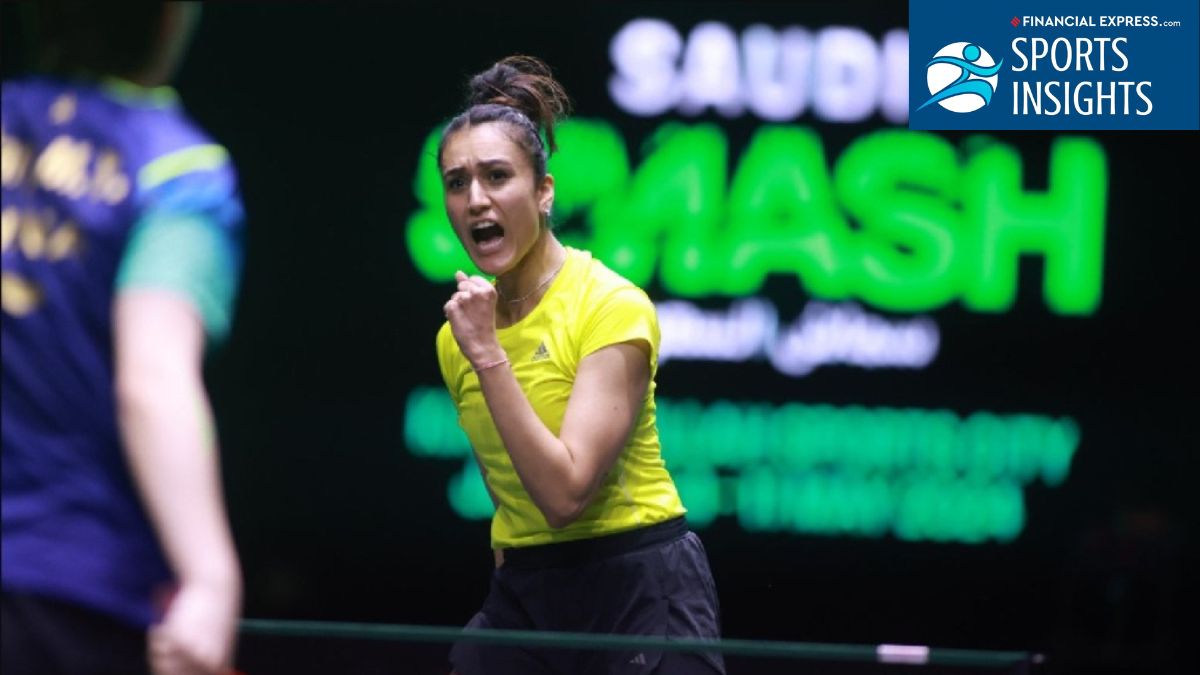
Earlier that year, at the Saudi Smash, she had beaten former world champion Wang Manyu of China, a result that pushed her to a career high world ranking of No. 24. Sponsors were watching. Adidas signed her as a global brand ambassador. Herbalife India brought her on as a long term sponsored athlete, alongside cricketer Smriti Mandhana, to promote nutrition products and the vritilife Ayurvedic skincare line.
She became a Senior Officer at Indian Oil Corporation, which gave her the kind of salary stability and travel support that government jobs provide to elite athletes in India. In the Ultimate Table Tennis league, the Ahmedabad SG Pipers retained her for ₹27 lakh per season. Then, in April 2026, she made a move that changed the equation entirely. Batra invested her own money in Boldfit, a Bengaluru based direct to consumer fitness and sports equipment brand.
Cricketer KL Rahul and venture fund Symphysis LSV were also in the round. But Batra was not just writing a cheque. She joined as a brand athlete, with plans to help develop table tennis equipment and indoor sports gear that Indian players actually need. "I liked the idea of making bold moves," she said about the investment, echoing the company's name and her own approach to career decisions. Her estimated net worth now sits between ₹15 crore and ₹18 crore, roughly $2.0 to $2.2 million.
Financial Express has not verified these numbers independently. Brand endorsements account for about half her income. League fees and tournament prize money form a key part of her income, while government support through the Target Olympic Podium Scheme and her Indian Oil salary provide additional financial stability. Equity appreciation adds another source of wealth, with the potential to grow further as Boldfit expands.
Cricket players in India can become equity holders, brand owners, and startup investors before they turn 25. Most other athletes are lucky to get a steady salary and a few endorsement deals. Batra is closing that gap, not by waiting for the system to change, but by making moves that force the system to catch up. Her investment in Boldfit is not just a financial bet. It is a statement that table tennis players deserve equipment designed for their sport, not hand me downs from other disciplines.
Her legal battle was not just about one match in Doha. It was about whether a national coach can pressure an athlete to lose, and whether the athlete has any recourse when the federation protects the coach instead of the player. The ₹27 lakh she earns from UTT matters because it shows that a professional table tennis league in India can retain its biggest stars at prices that make the sport viable as a career.
The ₹15 to ₹18 crore net worth matters because it proves that a non-cricket athlete in India can build real financial security without leaving the country or switching sports. The Academy She Never Had Batra wanted to build a table tennis academy for children from economically weaker backgrounds. She knows what it costs to make it in this sport. She knows how many talented kids drop out because coaching is expensive, equipment is imported, and nobody is watching.
Her mother waited outside training halls for hours so that her daughter could become something. Now Batra wants to make sure the next generation does not need that kind of luck. She still wears nail art in the colours of the Indian flag when she competes. She has appeared on the covers of Vogue India, Femina, and Cosmopolitan China. She turned down modelling at 13 and ended up doing it on her own terms at 30.
Back to the Message Remember the WhatsApp message. A coach in Delhi, a player in Australia, a friend courtside, and a tactical adjustment that changed a match. That is how Batra has always operated. She finds the people who believe in her, she trusts them completely, and she ignores everyone else. It worked against Feng Tianwei in 2018. It worked against her own federation in 2021. It is working in boardrooms and funding rounds now.
The girl from Naraina Vihar who said no to every easy option is still saying no. No to losing on purpose. No to staying quiet. No to being just a brand ambassador when she could be an owner. The ball is still in play. Editorial Note: This is an independent profile. Manika Batra and their representatives were contacted but did not respond prior to the time of publication. In the absence of direct comment, this article was reported using publicly available records and regulatory filings, where applicable. This content was produced in accordance with FinancialExpress.com’s editorial guidelines.