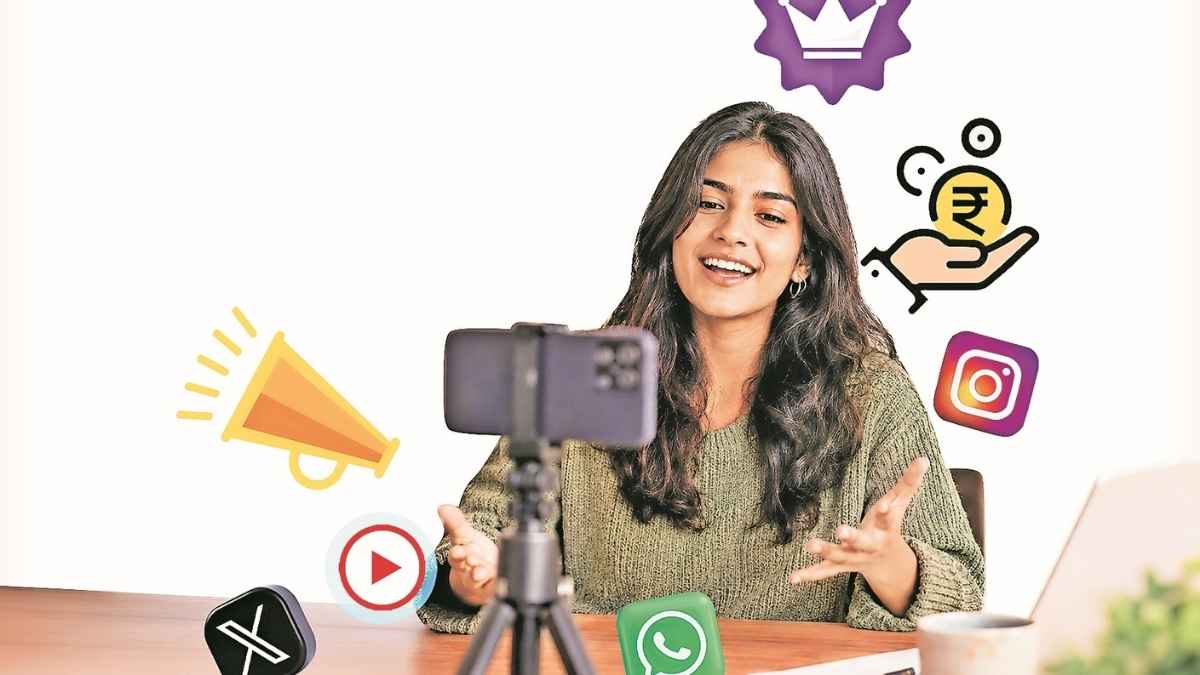
How exclusive content, special badges and closer access are now becoming another revenue stream for creators and a new business opportunity for social media platforms
For years, social media creators have made money through brand deals and advertising revenue generated by their followers and views. Now, some are asking audiences to pay directly for exclusive content, special badges and closer access to their lives. The shift is creating another revenue stream for creators and a new business opportunity for social media platforms. Retired Major Rishabh Singh Sambyal, who has around 3 million followers on Instagram, is among those exploring this model.
He became widely known after serving as Aide-de-Camp to President Droupadi Murmu and leading the Jat Regiment contingent at the Republic Day Parade. He charges Rs 199 a month for an Instagram subscription for iPhone users and Rs 180 for Android users. Subscribers get exclusive content, a special badge, access to social channels, question-and-answer sessions and coaching. At Rs 199 a month, 1,000 subscribers would generate Rs 1.99 lakh in gross monthly collections.
These are estimates, not confirmed earnings, and exclude fees and taxes. Actor Neha Sharma has also offered paid Instagram subscriptions, with a reported monthly price of Rs 299 for exclusive photographs and behind-the-scenes content. This example shows how celebrity access and lifestyle content can become paid products. In a July 2022 announcement, the company described the feature as "a way for you to establish a closer connection with your community while earning predictable, monthly income".
Eligible creators can offer subscriber-only posts, Stories, Reels, live sessions and chats, while keeping their public feeds open to everyone. YouTube offers a similar model through channel memberships. YouTube CEO Neal Mohan had also highlighted the role of fan funding in diversifying creator income. In a February 2024 letter, he wrote, "Creators are truly entrepreneurs, and we're helping them diversify the ways they make money on YouTube."
He cited US legal commentator Emily D Baker, whose membership earnings grew by more than 50% in 2023, with memberships accounting for the majority of her YouTube revenue. The model extends beyond India and the two largest video-sharing platforms. On Twitch, a platform popular with gamers and livestreamers, American creator Kai Cenat crossed 1 million active subscriptions during his September 2025 Mafiathon 3 live streaming event, setting a platform record.
Subscribers can receive benefits such as custom emotes, badges and access to subscriber-only chats. The model works because audiences return regularly to watch streamers and participate in their communities. Musician Amanda Palmer uses Patreon, a platform built around paid memberships and direct fan support. Fans can pay monthly for exclusive material and other benefits. Unlike Instagram and YouTube, Patreon is designed specifically to help creators build paid communities, giving artists another way to earn directly from supporters.
But not every form of fan funding involves a subscription. YouTube offers Super Chat, Super Stickers and Super Thanks, which let viewers make one-off payments to support creators. The revenue split varies by platform. YouTube pays creators 70% of net revenue from channel memberships after applicable taxes and fees are deducted. If Rs 1.99 lakh were eligible for the revenue split, the creator would receive about Rs 1.39 lakh and YouTube would retain Rs 59,700.
Meta has said it would not take a revenue share from creator subscriptions, although payment processing and app-store charges may affect the final amount depending on the purchase route. Apple's and Google's charges, where applicable, are separate from Meta's own commission. For creators, recurring subscriptions offer a potentially more predictable income stream than advertising, which fluctuates with views and advertiser demand.
The challenge is retaining subscribers, who expect regular updates and benefits that justify the monthly fee. Creators must also contend with platform rules and the risk of losing access to their audiences.