Elon Musk’s SpaceX-Tesla merger: How the deal could reshape his trillion-dollar fortune
See how a possible SpaceX-Tesla merger could reshape Elon Musk’s fortune, compensation and control while raising shareholder risks.
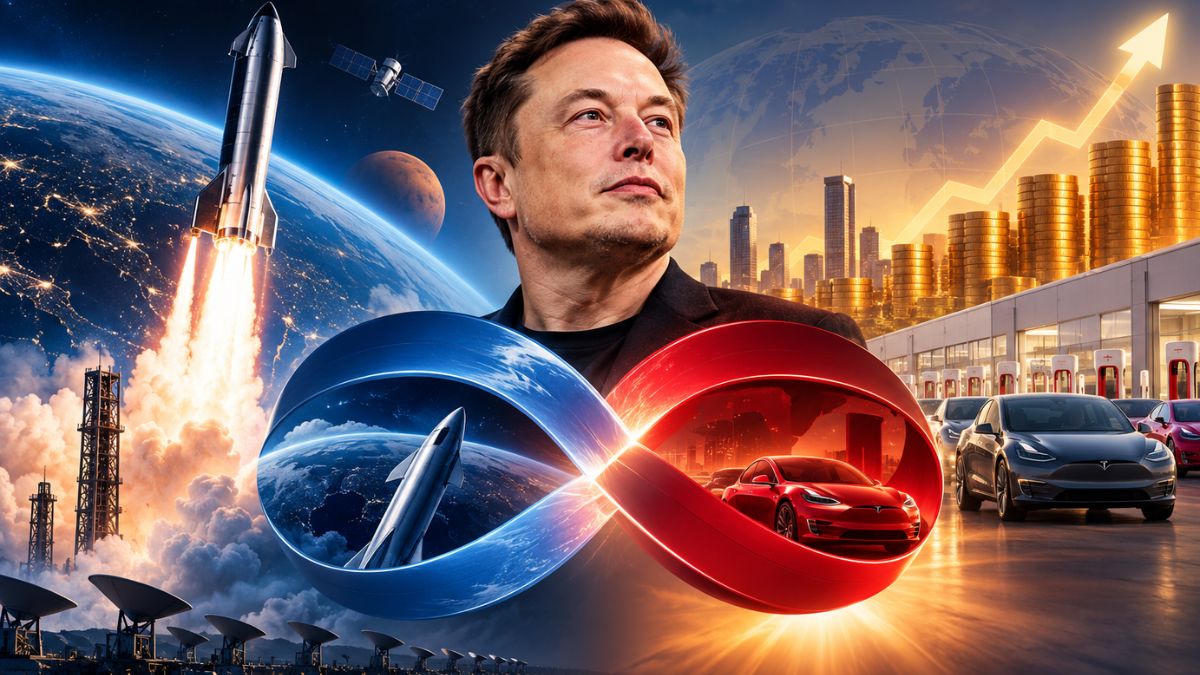
Elon Musk is considering bringing two of his biggest businesses, electric carmaker Tesla and space technology company SpaceX, under one roof. If the deal goes through, it could create one of the world’s most valuable companies and significantly change how Musk controls his businesses and builds his wealth. The proposed merger could also unlock billions of dollars in compensation for Musk, depending on how the deal is structured.
However, the two companies have not agreed on the terms, and the merger is far from certain. According to Reuters, Musk confirmed on October 20 that both companies had formed special committees of independent directors to examine the possibility of a merger. He stated that the combination as a good idea but cautioned that the committees might never reach an agreement. Here is what the potential merger means, why Musk wants it, and how it could affect his net worth.
Tesla is best known for its electric cars, batteries and self-driving technology. SpaceX, meanwhile, develops rockets, operates the Starlink satellite internet service and is expanding into artificial intelligence (AI) and data centres. A merger would bring these businesses together under a single corporate structure. It could allow them to share technology, infrastructure and investment plans more closely.
According to the BBC, Tesla was valued at around $1.5 trillion, SpaceX was valued at approximately $2 trillion in the reports covering the discussions. A combination could therefore create a business worth several trillion dollars, although the final valuation would depend on the deal's terms. Reuters reported that the discussions could result in SpaceX acquiring Tesla. However, neither company has announced a final agreement.
Musk said the businesses had much to gain from working together on AI software, chip design, robotics and satellite connectivity. 4 bn profit, 161% revenue growth & a Tesla merger in sight Why does Musk want to bring the companies together? The two businesses already have several areas of overlap. Tesla develops batteries, vehicles, robotics and AI technology, and SpaceX operates rockets, satellites and communications networks and is investing heavily in AI computing infrastructure.
According to Fortune, SpaceX already buys Tesla Megapack batteries and Cybertrucks. Tesla has also invested in Musk's AI business, xAI, which SpaceX acquired, the companies share involvement in the Terafab chip project. Integrating the two companies under one structure could make it easier for Musk to coordinate these investments and direct resources towards common goals. For example, Tesla's robotics and self-driving technology could potentially benefit from SpaceX's computing infrastructure and satellite network.
SpaceX could also draw on Tesla's battery technology and manufacturing expertise. The goal is linked to Musk's plans for AI development and, eventually, establishing a human settlement on Mars. However, the benefits remain potential rather than guaranteed. The merger would also combine two businesses that require enormous amounts of money to finance their future plans. How could the merger increase Musk's net worth?
The biggest financial impact could come from changes in the value of Musk's existing holdings and the compensation he receives from Tesla. Musk owns significant stakes in both companies. Their market valuations can change the estimated value of his wealth, even when he does not sell any shares. Forbes reported that Musk's estimated net worth rose by more than $60 billion on October 21, reaching around $989 billion by the market close.
His wealth had briefly crossed $1 trillion earlier in the day, according to Forbes' Real-Time Billionaires list. The increase followed a sharp rise in SpaceX shares after its strong quarterly results and gains in Tesla shares amid news of the merger discussions. The figures show how Musk's estimated fortune can change when investors reassess the value of his companies. They do not mean he received tens of billions of dollars in cash.
A merger could have a further effect by changing the value, ownership and terms attached to his shares and compensation awards. The $110 billion compensation question One of the biggest potential benefits for Musk involves his earlier Tesla compensation package. According to Bloomberg Billionaires Index calculations, a merger could accelerate the vesting of Tesla shares worth more than $110 billion that would otherwise not vest until 2028.
Vesting means that shares or stock awards become fully earned under the terms of a compensation agreement. Once shares vest, the recipient generally has a stronger ownership claim over them, although restrictions on selling may still apply. Musk's 2018 Tesla compensation award originally involved approximately 304 million options linked to performance targets. After the required milestones were achieved, an arrangement negotiated with Tesla allowed him to receive shares through a process that reduced the cash needed to cover taxes and exercise costs.
Under the reported arrangement, approximately 286 million shares were due to vest in January 2028. The agreement includes a change-of-control provision. If a merger triggers that provision, the shares could vest earlier. Could the deal unlock billions more in Tesla pay? Musk also has a separate Tesla compensation package approved last year that could be worth nearly $1 trillion if he meets its ambitious conditions over 10 years.
According to Bloomberg, the package includes targets linked to delivering one million Optimus humanoid robots, operating one million robotaxis commercially and delivering 20 million vehicles. The agreement also includes market capitalisation targets. A merger could change how these conditions apply. Under certain change-of-control circumstances, the operating milestones could be disregarded and the payout calculated using Tesla's value in the transaction.
Jason Schloetzer, an associate professor of accounting at Georgetown University's McDonough School of Business, told Bloomberg that shareholders should examine Musk's incentives and the steps taken by the committees overseeing the deal. Why the merger could face opposition The deal may benefit Musk, but it could raise difficult questions for investors. Fortune argued that SpaceX shareholders could be taking a significant financial risk by combining the company with Tesla.
Its analysis noted that Tesla's profits have declined from earlier levels, while SpaceX is investing heavily in AI infrastructure. Fortune estimated that a transaction involving a 30% premium over Tesla's then-current market value could cost SpaceX nearly $2 trillion in shares. Such a deal could substantially dilute existing SpaceX shareholders' ownership. Dilution means that existing shareholders own a smaller percentage of the combined company because additional shares are issued to complete the transaction.
The merger would also combine two businesses with large investment requirements. Reuters reported that SpaceX's capital expenditure reached $19.6 billion in the third quarter, while the company expected to spend $35 billion to $40 billion in the fourth quarter. Tesla is also investing in robotics, robotaxis and AI infrastructure. BBC reported that Tesla shareholders would need to approve the transaction, with Musk describing the required support as a high hurdle.
Independent committees will have to examine the terms and the interests of shareholders. The merger remains under consideration. The formation of special committees means the companies are formally examining the possibility, but it does not guarantee a deal. If the merger proceeds, it could create a powerful combination of electric vehicles, robotics, rockets, satellite communications and AI infrastructure.
It could also give Musk greater influence over the combined business and potentially accelerate the vesting of valuable Tesla shares. The key question is whether the financial and technological benefits justify the cost and risks for shareholders.The deal could mean more than combining two companies. It could reshape how Musk's wealth is held, how his compensation is calculated and how much control he exercises over his business empire.
The final outcome will depend on the transaction's structure, the companies' valuations, shareholder approval and the compensation provisions that apply. Until those details are settled, any estimate of how much richer Musk could become remains conditional.