El Niño could be strongest in 40 years, UN weather agency warns: How India is preparing
India's preparedness is focused on limiting the potential impact on crops, ensuring the availability of essential commodities, monitoring water resources and maintaining adequate electricity supply.
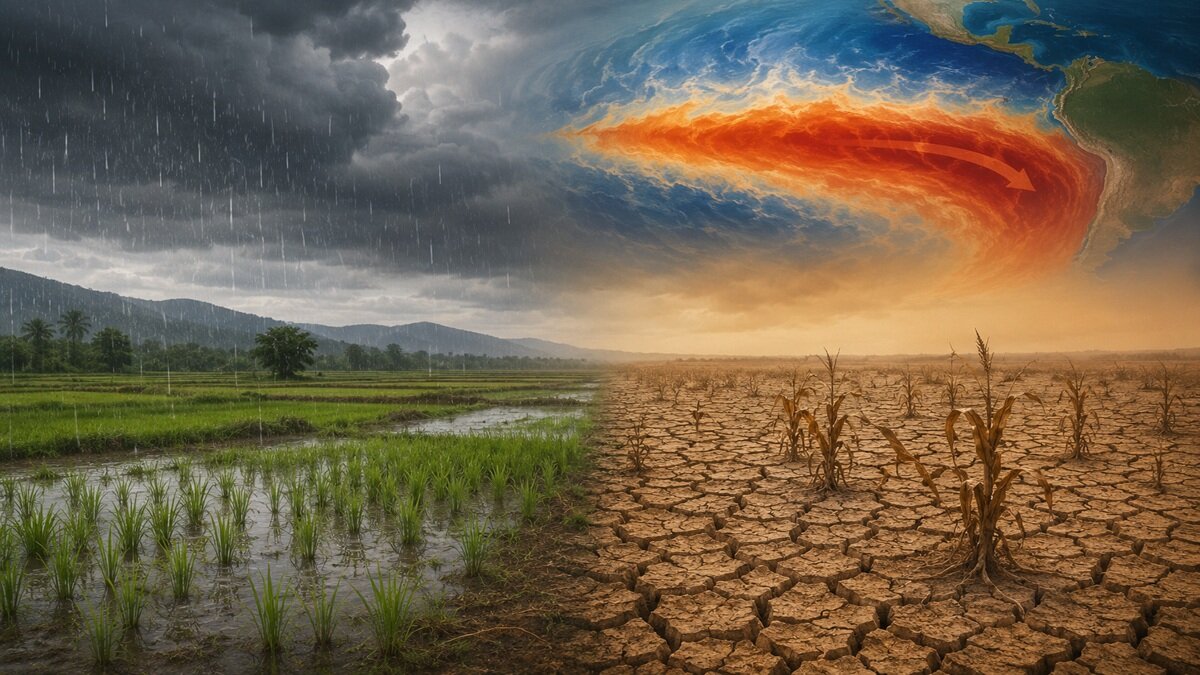
India is stepping up preparations across agriculture, food supplies, water management and electricity amid fears of an El Niño that the United Nations weather agency says could be “unprecedented in strength” and “off the charts” compared with anything seen in the last four decades. Celeste Saulo, Secretary-General of the World Meteorological Organization, has warned that El Niño is expected to bring heatwaves to some areas and disrupt rain patterns, causing severe drought in some regions and flooding in others.
The Centre and state governments have put contingency measures in place to protect farming activity and essential supplies. On Wednesday, the World Meteorological Organization's chief, Celeste Saulo, said that El Niño could be unprecedented in strength, going beyond what has been observed over the past four decades, Reuters reported. The weather phenomenon can bring intense heat and disrupt rainfall patterns, increasing the risk of drought in some regions and flooding in others.
India's preparedness is focused on limiting the potential impact on crops, ensuring the availability of essential commodities, monitoring water resources and maintaining adequate electricity supply. In a July 30 response in Parliament, the Ministry of Earth Sciences said El Niño conditions had been weak in June before intensifying to moderate levels in July. It also clarified that neither the World Meteorological Organization nor IMD officially defines a "Super El Niño" category.
The government said the intensity and impact of El Niño over India would depend on the evolution of ocean-atmosphere conditions, with El Niño being one of several factors influencing the country's weather. Agriculture: Contingency plans for vulnerable districts The Centre had reviewed the potential effects of El Niño on agriculture, particularly in areas vulnerable to deficient rainfall and limited irrigation.
Source: PTI At a high-level review meeting on July 7, the Prime Minister's Office said district agriculture contingency plans had been updated for 262 vulnerable districts. The Indian Council of Agricultural Research had also issued standard operating procedures on managing El Niño risks in agriculture for Krishi Vigyan Kendras. Weekly Crop Weather Watch meetings with states are being used to monitor rainfall, reservoir storage, crop sowing, availability of agricultural inputs, market trends and emerging pest and disease risks.
The Agriculture Ministry had also stressed the need to ensure the timely availability of seeds and fertilisers and to maintain coordination with state governments. Earlier, on June 23, the Centre had identified as many as 315 districts as potentially vulnerable to weak monsoon conditions. Its contingency strategy included promoting short-duration and low-water-consuming crops, crop diversification, intercropping and mixed farming.
Pulses, millets and oilseeds were among the crops revealed as alternatives for areas facing water constraints. The government also called for additional seed stocks in vulnerable districts to support resowing where necessary. These measures are intended to give farmers alternatives if rainfall conditions become unfavourable. Their effectiveness will depend on local rainfall patterns, water availability and implementation at the district level.
Water security faces key test as multiple states flag crisis Food prices: Buffer stocks and essential supplies under watch A weak or erratic monsoon can affect agricultural output and potentially put pressure on food prices. The government has therefore included food stocks, retail prices and agricultural input supplies in its preparedness reviews. At the July 7 meeting, the Department of Consumer Affairs presented the status of retail prices and the adequacy of buffer stocks of rice, wheat and pulses.
The Department of Fertilisers reported sufficient availability and a likely opening balance for the rabi season. The Centre asked the departments to continue monitoring the availability of essential commodities and fertilisers at both the national and local levels. In a separate review on July 3, Union Home Minister Amit Shah and Agriculture Minister Shivraj Singh Chouhan discussed the impact of below-normal rainfall and possible drought conditions in parts of the country.
The government said essential foodgrain stocks, including rice and wheat, were adequate and prices of essential commodities remained stable at that time. However, these assessments reflect the position reported during the respective reviews. The extent to which food prices could be affected by a stronger El Niño will depend on subsequent rainfall, crop performance, demand and the government's response.
Water security: Reservoirs and drinking water prioritised Water availability is another key concern, particularly for districts dependent on rainfall and irrigation reservoirs. Source: Canva During the July review, the Prime Minister’s Office directed officials to prioritise drinking-water availability in vulnerable districts and regularly monitor reservoir levels. Authorities were also asked to promote judicious water use and ensure optimal utilisation of available reservoir supplies.
The Centre has called for coordination between ministries and state governments to address local shortages and take remedial action where required. The Agriculture Ministry’s contingency planning has also emphasised water conservation, harvesting structures and more efficient use of available water. Such measures are intended to help vulnerable regions manage rainfall gaps and reduce pressure on irrigation supplies.
The latest reservoir and groundwater data will be important in determining whether the existing measures are sufficient to address the risks posed by a stronger El Niño. Power demand: Tamil Nadu reports a sharp increase The electricity sector faces a different set of risks, including higher demand during periods of persistent heat and possible pressure on generation and supply. In Tamil Nadu, Power Minister R Nirmal Kumar said on October 13 that the state’s electricity demand had increased from 16,800 MW in the corresponding period last year to 21,700 MW.
He attributed the increase to persistent El Niño-related heat, along with shortfalls in central power allocations and wind generation. The minister defended the state government’s decision to invite short-term power tenders, citing the strain on the grid. The figures indicate the scale of the demand challenge described by the state government, but they do not establish that El Niño alone caused the increase.
Weather conditions, generation availability and power allocations can all influence the supply-demand balance. At the Centre’s July 7 review, the Power Department presented the status of electricity generation and availability. The Prime Minister’s Office called for coordinated monitoring and preparedness across ministries and states. On October 10, Telangana Chief Minister A Revanth Reddy asked officials to prepare an action plan covering drinking water, irrigation, agriculture and electricity requirements through June 2027.
The chief minister described the coming eight months as crucial and called for coordinated planning to address the potential effects of El Niño. The move illustrates how states are approaching the risk across multiple sectors rather than treating it solely as an agricultural or monsoon issue. Telangana’s planning horizon extends into the next summer, when water availability and electricity demand could become particularly important.