$12.5 billion impact of Indian-American businesses revealed ahead of Rubio talks in Mumbai
Ahead of Marco Rubio's visit to India, the Indian diaspora's $12.5 billion contribution to the US Southeast economy highlights strong India-US trade ties amid delayed bilateral trade deal talks.
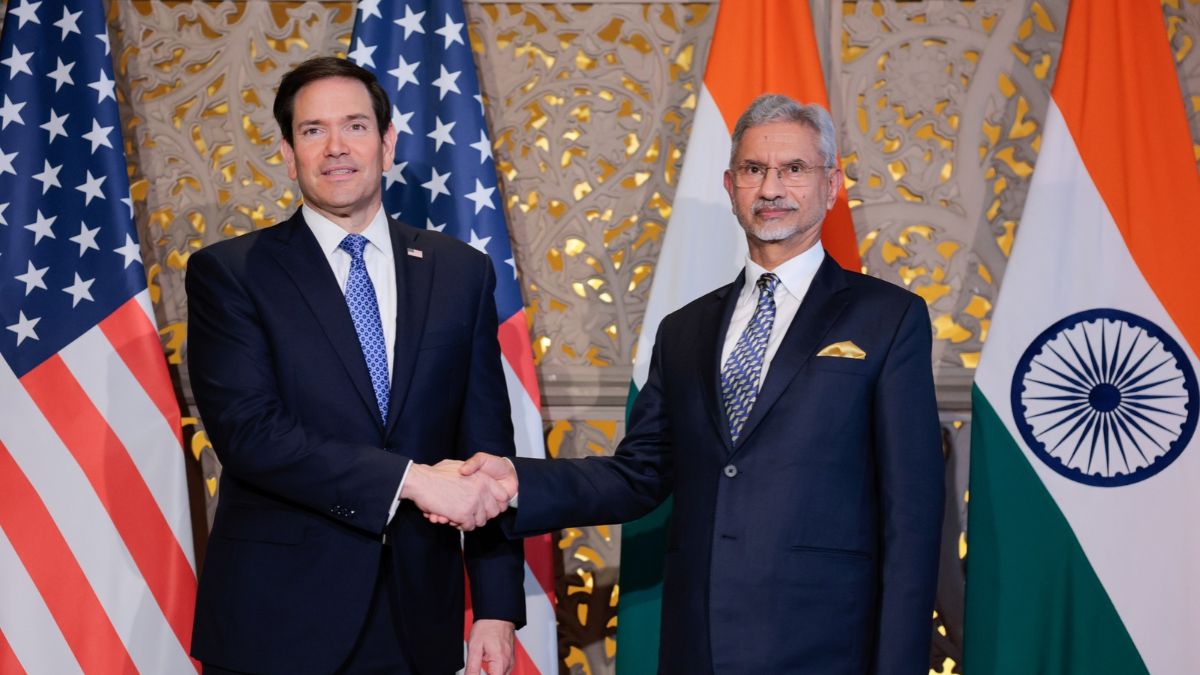
India's Consulate General in Atlanta, USA, on Tuesday shared a valuable insight about the Indian diaspora's contribution to the US economy in the Southeast region, drawing on much-reiterated statements about the strategic partnership between the two countries. The official post was shared on X hours before US Secretary of State Marco Rubio was set for talks with External Affairs Minister Dr S Jaishankar in Mumbai.
The development also comes against the backdrop of the repeatedly delayed India-US bilateral trade deal, for which negotiations have extended nearly a year. Just yesterday, the US Secretary of State affirmed once again that the awaited trade pact also played a significant role, among others, in US President Donald Trump's decision to call off Russia-related sanctions and tariffs shortly before they were set to go into effect.
Investments by Indian Americans take centre stage "Indian Americans in the Southeast are building more than businesses," the Indian Consulate General in Atlanta said on X. "They're building communities." 5 billion across four key sectors and through those investments supported around 12,500 local jobs. Of those, $9.6 billion has gone into the hospitality sector across over 2,000 hotels; $1.5 billion into the retail industry across more than 3,000 small businesses; $1.3 billion into Real Estate across 5,000+ rental properties; and $100 million into healthcare across more than 400 hospitals and clinics.
Hailing the Indian diaspora's contributions to local economies and communities, the 'India in Atlanta' account added, "From hotels and small businesses to rental properties and healthcare, Indian American entrepreneurs are a vital part of the Southeast’s economy, with key hubs in Atlanta, Nashville, Greenville, Birmingham, Tampa, Jacksonville, Miami and Orlando." The official disclosure of the multi-billion highlight of Indian Americans' contributions to the local US economy starkly contrasts the arguments raised by the Trump administration on the immigration front.
While the diplomatic mission here celebrates the diaspora's investments in the US, the official disclosure of the multi-billion highlight of Indian Americans' contributions to the local US economy starkly contrasts the arguments raised by the Trump administration on the immigration front. Trump administration officials have sternly accused US employers of "replacing" American workers with international workers, especially those on H-1B visas.
Notably, Indian nationals have dominated this non-immigrant work visa category in recent years. More Indian-American Investments Revealed Similar takeaways were shared ahead of Marco Rubio's first official visit to India in May. The US Embassy and Consulates in India took note of how Indian industry leaders committed $20.5 billion in investments into the United States at the 2026 SelectUSA Investment Summit, reinforcing the increasing role of Indian companies as investors and partners in the US economy.
The official statement revealed the grand multi-billion-dollar pool of investments spanned various sectors, such as pharmaceuticals, advanced manufacturing, energy infrastructure, and emerging technologies, backed by the expectation of job creation by thousands. Additionally, the US president announced Mesabi Metallics' (backed by India's Essar Group) $18 billion investment to create a fully integrated US steel company in late September.
The agreement centers on uniting the Mesabi's iron ore mine on Minnesota's Mesabi Iron Range with a new steel complex in Iowa. It marks the largest single investment in a US steel complex and will further improve trade and investment ties between New Delhi and Washington. Although numbers may have fluctuated, but US Census Bureau estimates indicate approximately 5.2 million people in the United States identified as Indian in 2023, with Indian Americans making up the second-largest Asian origin population living in the US.
Pew Research's analysis of the figures suggested that they accounted for about 21% of the USA's Asian population. This group incorporates people living in the US who self-identify as Indian, meaning their family origins trace back to India, and people who identify as strictly Indian, and other who identify as Indian in combination with another race or ethnicity. The Pew Research report further detailed that the median annual income of Indian-headed households was $151,200 in 2023, adding that an Indian immigrant household head had a higher median annual income than those with an American-born Indian household head.
More investments and deals could follow amid India-US talks Following his arrival in India on Tuesday, Rubio will be meeting government officials and business leaders, including EAM S Jaishankar and Indian billionaire Mukesh Ambani, chairman of Reliance Industries, which runs the world's largest refining complex at Jamnagar. However, he stressed at the same time that the trade pact would be operationalised only if India gains competitive advantage over peer countries.
Before heading to India, Rubio kicked off this week's official trip in Uzbekistan, where he told reporters that finalising a trade deal had been a factor in Trump's decision to waive potential tariffs on India. "You've got countries like India, for example, that have voluntarily diversified their energy portfolio, but are still getting a substantial amount of energy from Russia because it's hard to pivot from one day to the next," Rubio said on Sunday, adding that the Trump administration was entering a 60-day review period.
During this time, the US government will determine whether new tariffs are needed to be imposed, if any. India has felt prolonged pressure to cut ties with Russia over its purchase of oil amid the ongoing Ukrainian conflict. Trump's latest U-turn on the Moscow-related tariffs (in addition to the agreed-upon diesel deal with Russia) on the largest buyers of Russian oil, including India and China, has opened the room for easier trade discussions between the United States and India.
Tariffs of up to 100% on the top five importers of Russian crude under the Graham Act were one of the major factors delaying the trade deal between New Delhi and Washington so far.